
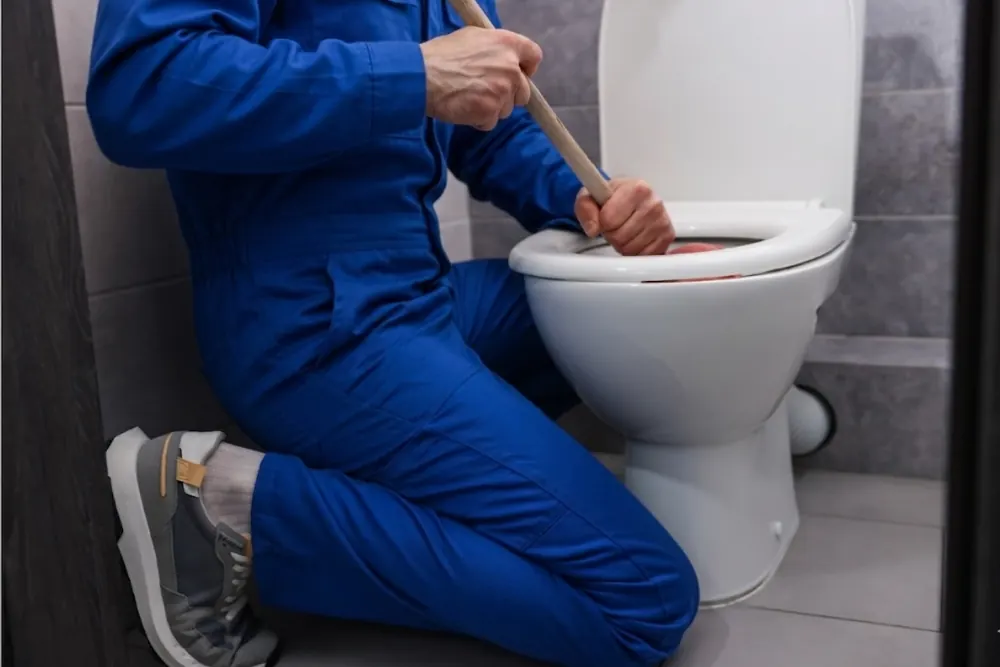
Toilet problems we repair, and what can cause them
The table is a guide from general plumbing practice. It matches what you see or hear to a possible cause, so you know what you are dealing with before you call.
| What you notice | Possible cause | Quick check |
|---|---|---|
| Water runs into the bowl all the time | Worn flapper or flush valve seal, or a fill valve that will not shut off | Dye test (below) |
| Cistern refills by itself every few minutes | Slow leak from cistern to bowl | Dye test, and listen for the refill hiss |
| Hissing or trickling sound after the cistern is full | Fill valve not closing, or float set too high | Look for water running down the overflow pipe |
| Weak flush, or you need two flushes | Low water level, clogged rim holes, partial blockage, or flush volume set low | Check the water line inside the cistern |
| Handle feels loose, or flush does nothing | Broken or disconnected chain, lever or push-button linkage | Lift the lid and look |
| Cistern fills very slowly or noisily | Partly closed supply valve, debris in the fill valve, or a worn valve | Open the supply valve fully |
| Puddle at the base of the toilet | Failed seal at the waste outlet, or a leaking supply connection | Dry the floor and watch where it reappears |
| Water drips from the cistern or its bolts | Cracked cistern, perished bolt washers or a leaking inlet | Dry everything and trace the drip |
| Toilet rocks or moves | Loose fixings, a failed seal or an uneven floor | Press on the pan from both sides |
| Droplets all over the outside of the cistern | Condensation, not a leak | Dye test comes out clear |
| Gurgling, slow drain, bubbling when you flush | A drain problem, not a cistern fault | See toilet unblocking |
If your symptom is in the last row, you need a blockage cleared, not a repair. The rest of this page covers faults in the toilet itself.
How a toilet works, and which parts wear out
Knowing four parts makes every fault on this page easier to follow. A standard cistern holds a volume of water above the bowl, and the flush releases it in a rush.
- The fill valve refills the cistern after a flush and shuts off when the water reaches the set level. It is the most common part to fail by sticking open.
- The flush valve and flapper form the seal at the bottom of the cistern. When you press the button or handle, the seal lifts, the water drops into the bowl, and the seal closes again. This is the part that wears and leaks quietly.
- The overflow pipe is a safety tube. If the fill valve fails, water runs down it into the bowl instead of onto your floor. Water going down the overflow pipe tells you the fill valve is stuck open.
- The linkage connects the button or handle to the flush valve. It can be a chain, a lever, a cable or a push rod. It can snap, slip or go out of adjustment.
Below the cistern sits the pan, the bowl itself, with a trap that holds water to block drain smells. It joins the drain at the waste outlet, sealed with a ring or a rubber connector. That seal is the one that leaks at the base.
Most flats and villas in Dubai have one of two layouts. In the first, the cistern is visible, either mounted on the back of the pan or on the wall above it. In the second, the cistern is hidden inside the wall or a boxed-in frame, and only a flush plate shows. Both work on the same principle, but the second needs a different approach to repair, and we cover it in its own section further down.
Dual flush: what the two buttons do
Most modern cisterns have two buttons or a split plate. The small button releases a short flush for liquid waste, and the large button releases the full volume. Many concealed-cistern valves let the installer set the volume of each flush inside a range. If the small flush never seems to clear the bowl, the setting may be too low, or something is partly blocking the flow.
Toilet repair in Dubai: a three-minute diagnosis
You do not need tools to find out what is wrong. Three simple checks tell you which part has failed, and you can send us what you find over WhatsApp.
Listen and watch
Stand next to the toilet when the house is quiet. After a flush, the cistern should refill with a hiss and then fall silent within a minute or two. If the sound starts again by itself minutes later, water is leaking out of the cistern and being topped up. If the hissing never stops, the fill valve is not closing.
Then lift the cistern lid, if it is a visible cistern, and look. Check three things:
- Water level. Look for a mark inside the cistern or on the fill valve, and check your cistern's instructions. The water should sit below the top of the overflow pipe.
- Water in the overflow pipe. If water is spilling into it, the level is too high or the fill valve is stuck.
- The chain or linkage. It should have a small amount of slack. A chain pulled tight holds the flapper open slightly. A chain with too much slack may not lift it fully.
The dye test for silent leaks
The dye test finds the leak you cannot hear. It is the standard first check for a cistern that leaks into the bowl.
- Put food colouring in the cistern, not in the bowl. Dark colours are easier to see.
- Do not flush. Leave the toilet alone and tell everyone in the home not to use it.
- Look at the bowl. If colour has appeared in the water, the flapper or flush valve is leaking. The faster the colour appears, the bigger the leak.
- Flush straight afterwards so the dye does not stain the cistern.
On a concealed cistern, you cannot reach the tank without removing the flush plate. Some plates lift off with a small amount of force and give access to the inside. Do not force a plate that does not come away, and tell us the brand instead.
The timing test for fill valves
Flush once and time the refill. A healthy cistern refills and stops. If the water keeps flowing into the overflow pipe or the hiss never ends, the fill valve is the fault. If the refill ends but starts again minutes later without a flush, water is escaping into the bowl, and the dye test will show it.
Three typical call-outs
This section sets out the faults and how the checks point to the repair.
"It hisses all night." The cistern refills and the sound continues. Water is running into the overflow pipe. The fill valve is not shutting off, so we replace it and set the water level.
"It flushes by itself." The toilet seems to flush on its own, or the cistern refills every ten minutes without anyone touching it. The dye test shows colour in the bowl. The flapper no longer seals, so we replace the seal or the whole flush valve.
"Water around the base." The floor beside the pan is wet each morning. We dry the floor, put tissue around the base and the supply connection, and see which gets wet. If the base is the source, the waste seal has failed and the toilet has to be lifted and refitted.
Running toilet repair: the most common fault
A running toilet is the fault people notice first and fix last. It is quiet, it does not stop the toilet working, and the cost shows up in the next water bill. The cause is one of five things.
1. A worn or dirty flapper or flush valve seal
The flapper is a rubber seal. Over the years it hardens, warps, collects mineral deposits or perishes, and stops closing tightly. Flappers are inexpensive rubber parts that can build up minerals or decay over time. A slight gap lets water creep from the cistern into the bowl.
In-tank cleaning tablets can contribute to flapper damage. If you have bleach or cleaning tablets in the cistern, remove them. That is a fix you can make today.
The repair: replace the flapper or the whole flush valve seal with the correct part for the model, then reset the chain length. A flapper that is the wrong size or shape for the valve will leak straight away, so matching it matters more than the price.
2. A fill valve that does not shut off
If the dye test is clear but water still runs, look at the fill valve. Debris can lodge in the seal, the diaphragm can wear, or the float can sit too high. A change in water pressure in the home can leave a fill valve stuck open.
The repair: clean the valve if the fault is debris, adjust the float if it is set too high, and replace the valve if the seal is worn. Valve replacement is a short job on a visible cistern.
3. A water level set too high
If the water sits above the top of the overflow pipe's rim or touches the pipe opening, water spills over continuously. The valve is working but set wrongly. The fix is a quick adjustment of the float, or the height setting on the valve body, until the level drops to the marked line.
4. A chain that is too short or too long
A chain that is too tight keeps the flapper slightly open. A chain that is too long can slip under the flapper and stop it closing. Setting the chain so it has a little slack, and no more, cures both.
5. A cracked or pitted valve seat
Over time, grit and mineral deposits can cut tiny marks into the seat where the flapper sits. Small cuts from grit or sediment can cause leaks between the valve and the flapper. A new flapper will not seal against a damaged seat. We clean the seat first, and if it is pitted, we replace the flush valve assembly.
What a running toilet costs you in water
A flapper leak is silent, so it is easy to underestimate. Here is a worked example with the arithmetic shown, using an assumption, not a measurement.
Suppose a 6-litre cistern leaks into the bowl and refills every 10 minutes. That is six refills an hour and 144 a day. At 6 litres each, the toilet wastes 864 litres a day, or about 26,000 litres a month, before anyone uses it. Your own leak could be smaller or larger. The dye test tells you whether there is one, and the time between refills tells you how fast.
A fill valve stuck open is worse, because the flow does not stop at all. If you hear water running into the overflow pipe, close the supply valve under or beside the cistern and WhatsApp us.
Phantom flushing and a cistern that refills by itself
The toilet refills with no one near it, or it refills briefly every few minutes. This is a slow leak from the cistern into the bowl. Each time the level drops a little, the fill valve opens, tops it up, and closes again. The cistern is not flushing, it is leaking and refilling.
The cause is the flapper or flush valve seal in almost every case. The dye test confirms it. The repair is the same as for a running toilet: new seal or valve, correct chain length, and a retest with dye.
On a concealed cistern, the same fault shows up as a toilet that refills every few minutes with no visible cause. The valve is behind the wall, and the repair needs the flush plate removed.
Weak flush, double flushing and a bowl that will not clear
A weak flush has several causes, and the fix differs for each. Work through them in this order.
- Low water level in the cistern. If the level sits well below the marked line, the flush has less water behind it. Raise the float or valve setting until the level is correct.
- A flush volume set too low. On a dual-flush cistern, the large flush may be adjusted down. A plumber can reset it to the manufacturer's range.
- A flapper that does not lift fully. A chain that is too long, or a linkage that no longer travels far enough, lets the seal drop early and cuts the flush short.
- Clogged rim holes. Water enters the bowl through small holes under the rim and through a jet at the bottom. Mineral scale can narrow them, which weakens the swirl. Scale in rim holes is a cleaning job, done with descaler and a small tool, and it can restore the flush.
- A partial blockage. A toilet that flushes slowly and gurgles may have a partial blockage in the trap or the drain beyond it. That is a drain job, so see our toilet unblocking service.
- A wider drainage fault. If several fixtures in the same bathroom drain slowly, the cause is in the wider drainage, not this toilet.
The first three are cistern adjustments and take minutes. The fourth is a cleaning job. The last two are drain problems that we diagnose on site. Do not keep flushing a toilet that is not clearing: it can overflow.
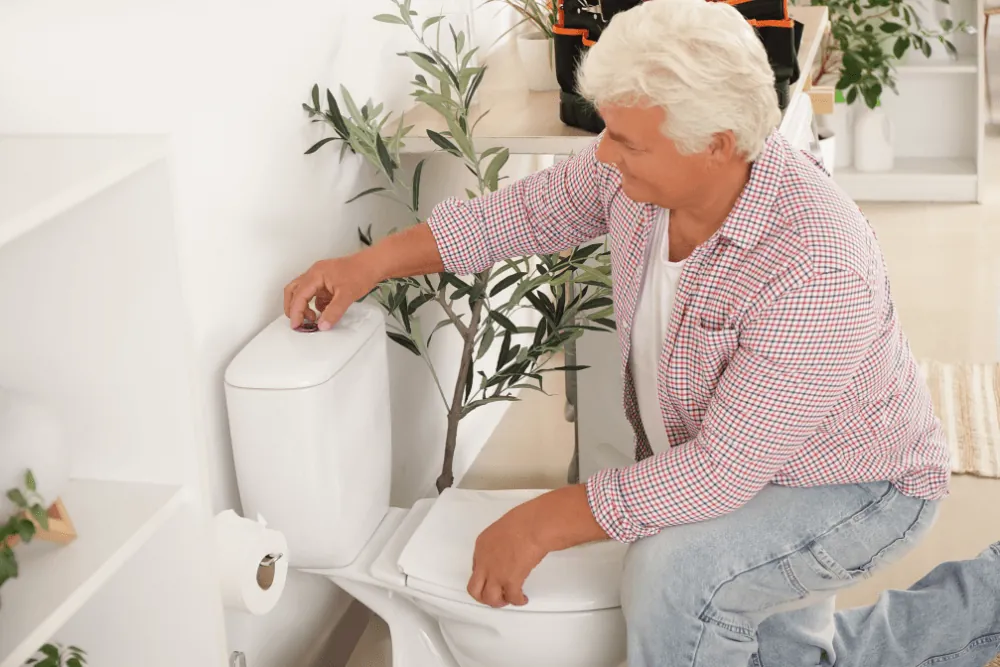
Toilet that fills slowly, noisily or not at all
After a flush, a cistern should refill and go quiet within a minute or two. If it takes much longer, or the filling sounds like banging or whistling, check these.
- The supply valve. The small isolation valve on the pipe feeding the cistern may be partly closed. Turn it fully open.
- Debris in the fill valve. Sand or scale from the pipes can block the small inlet. Closing the supply valve and cleaning the inlet filter clears it.
- A worn fill valve. An old valve fills slowly because the inside has scaled up or the seal has softened.
- Low pressure in the building. If the basin tap also runs weakly, the cistern is not the problem. See our low water pressure page.
- Noise. A banging or whistling fill points to a worn valve or a supply valve opened only a little. A quiet-fill valve is one replacement option.
Toilet leaks: base, cistern, supply and bolts
A toilet can leak from four different places, and the repair is different for each. Always find the exact spot before buying parts, because a wet floor can come from any of them.
Leak from the base of the toilet
Water around the base means the seal between the pan and the waste outlet has failed, or the pan has loosened. The seal may be a wax ring, a rubber connector or a flexible gasket, depending on the toilet. A seal that has compressed, dried out or been disturbed no longer holds, and water escapes on each flush.
Base leaks need the toilet lifted, the seal replaced, and the toilet refitted and secured. We also look at the floor flange for damage, because a corroded flange gives a new seal nothing to bed against. A toilet that has leaked at the base for a long time can also have damaged the floor below it, so we check that before refitting.
If water comes up from the base only when you flush, the seal is the first suspect. If water appears even when no one has used the toilet, look at the supply connection and the cistern.
Leak from the supply connection
The flexible hose or pipe that feeds the cistern joins it at the bottom or side, and joins the wall at a small isolation valve. Any of those joints can drip. A dry tissue held against each joint shows the wet one quickly.
A leaking connection can have a loose nut or a perished rubber washer inside. Tightening a little may fix it. If the hose has corroded, bulged or cracked, replace it. The isolation valve itself can also fail and drip from the stem, and we replace it if so. Our hoses and flexible connectors page covers these parts.
Leak from the cistern or its bolts
Cisterns that sit on the back of the pan are held on by bolts that pass through the cistern floor and are sealed with rubber washers. When the washers perish, water drips from the bolts onto the pan or floor. The repair is to drain the cistern, undo the connection, replace the washers and refit, with the seal between cistern and pan renewed at the same time.
A cracked cistern is different. If the porcelain itself is cracked, no washer will stop the leak, and the cistern has to be replaced. Sometimes a hairline crack is hard to see, which is why we dry the whole cistern and trace the water before deciding.
Condensation: the leak that is not a leak
Cold water inside a cistern, in a warm and humid bathroom, can form droplets on the outside of the porcelain. They run down and wet the floor, and they look like a leak. If the dye test is clear and the water is only on the outside surface, the cause is condensation. A leak shows colour in the bowl, or wet joints and bolts, and condensation does not.
Condensation is not a repair job. Better ventilation reduces it.
Wobbling and loose toilets
A toilet that rocks is already damaged or about to be. Every movement works on the seal at the base and can start a leak.
- Loose fixings. Tighten the bolts gently, alternating from one side to the other so the pressure is even. Do not over-tighten, because porcelain cracks under strain.
- An uneven floor. The toilet is shimmed until level. Plastic shims, or brass or stainless washers, are suitable. Wood is not, because it rots near water.
- A failed seal. If a wobbling toilet has leaked, the seal needs replacing, and that needs the toilet lifted.
- A damaged flange. The flange that joins the toilet to the drain can corrode or crack. It has to be repaired or replaced before the toilet is refitted.
A wall-hung toilet is held by a frame inside the wall. If one moves, do not tighten anything yourself. The fixing is behind the wall, and the frame or its bolts need a plumber's attention.
Concealed cisterns and wall-hung toilets
A concealed cistern sits inside the wall or a boxed-in frame, and only the flush plate and the pan are visible. You may have one without knowing it. A fault in the cistern is then a fault you cannot see, and the repair starts with the flush plate.
What can be fixed through the flush plate opening
On most concealed systems, the plate lifts or unclips, and behind it is an opening into the cistern. Through that opening, a plumber can reach the fill valve and the flush valve, which are the parts behind most faults. Many concealed cisterns are built so that faulty fill and flush valves can be replaced through the service opening, which means an older cistern does not need replacing when one valve fails.
That covers the common jobs:
- A running or phantom-refilling cistern: replace the flush valve seal or the whole flush valve.
- A fill valve that hisses or will not shut off: replace the fill valve.
- A weak or short flush: reset the flush volume, or replace the valve.
- A flush plate that sticks, rattles or does not trigger: adjust or replace the actuator linkage behind it.
What needs a wall opened
Some faults sit outside the reach of the opening: a leak from the cistern body itself, a leaking joint on the supply pipe behind the wall, or a damaged frame or wall bracket. These need a larger access point. We confirm the fault first, then propose where to open, the smallest opening that reaches it, and what the finish will need afterwards. Our own team does the tiling and restoration after the plumbing work.
Identify your system before you call
Take a photo of the flush plate, and if it is easy to lift off, a photo of the opening behind it. Send both on WhatsApp. The brand and model of the cistern decide which valve and which parts fit, and a photo can save a second visit.
When the flush plate opening is too small
A concealed cistern needs a way in. If the opening behind your flush plate is too small to work through, tell us. A proper service panel is better than opening tiles each time a part fails, and we can discuss one with you and your building management. Some buildings ask for approval before any work touches a wall, so check with your property manager first.
Wall-hung toilets
A wall-hung pan is fixed to a steel frame inside the wall, and the cistern is part of that frame in some designs. When a wall-hung toilet moves, the fixing bolts have loosened or the frame has shifted. Stop using it and call. Do not sit on a toilet that shifts, because the pan can pull away.
Bidet sprays, hoses and the valve behind the toilet
A hand bidet spray, also called a health faucet or shattaf, is a fitting beside a toilet, and its hose and valve can leak. The signs are a dripping spray head, water at the wall valve, or a damp patch beside the toilet that appears after use.
- A dripping spray head. The internal washer or valve has worn. Replacing the head or its cartridge cures it.
- A leaking hose. Flexible hoses crack at the ends where they bend. Replace the whole hose.
- A leaking wall valve. The wall-mounted valve that supplies the spray can drip at its spindle or its connection. We reseal or replace it.
- A spray that runs weakly. Check the isolation valve, and then look for scale in the head.
If you want a new spray fitted, see bidet and health faucet fitting.
Fixes you can make yourself, and how to do them safely
Some toilet faults are quick to fix and low in risk. These are the ones worth trying.
- Know your isolation valve. Find the small valve on the pipe feeding the cistern, at floor level behind or beside the toilet. Some close with a quarter turn and others with a screwdriver slot. Closing it stops the water if the cistern overflows.
- Empty the cistern before any work. Close the valve, flush, and hold the handle until the tank is nearly empty.
- Adjust the chain. The chain should have a little slack with the flapper closed. Move the clip along the chain by a link at a time and test.
- Adjust the float. Most modern fill valves have a screw or a sliding clip to set the height. Lower the water level by a small step and flush again.
- Clean the flapper seat. Wipe the rim where the flapper sits, with a cloth, and wipe the flapper face. A thin film of scale or grit can stop the seal.
- Remove tank cleaning tablets. In-tank cleaners can contribute to flapper damage.
- Retest with dye after each change.
What not to do
- Do not use a spanner hard on porcelain. Cracked cisterns and bowls cannot be mended.
- Do not force a concealed cistern plate. Tell us the brand and send a photo.
- Do not use a drain chemical in a toilet that has not been diagnosed. A mixed or strong chemical in a bowl that will not drain is unsafe to plunge or splash. A blockage needs mechanical clearing.
- Do not ignore a small leak. Water that reaches the floor under a toilet can reach the unit below.
- Do not leave a running toilet for weeks. The cost grows, and so does the wear on the part that is failing.
When to stop and WhatsApp us
Call the same day if any of these apply:
- Water is on the floor and you cannot find or close the isolation valve.
- Water is running from a concealed cistern and the plate is wet or dripping.
- The porcelain is cracked, or a cistern is leaking from its body.
- The toilet moves under you, wall-hung or floor-mounted.
- You smell sewage, or other drains in the bathroom gurgle when you flush.
- You have tried a float or chain adjustment twice and the toilet still runs.
- Water is reaching a neighbour's ceiling.
If water is flooding, close the isolation valve first. If you cannot close it, close the main supply to the flat or villa and then call. For urgent faults out of hours, see our emergency plumber page.
Repair or replace: how we decide
Some faults are not worth repairing.
| Situation | Repair or replace | Why |
|---|---|---|
| Worn flapper, fill valve or flush valve | Repair | The parts are small and the toilet itself is sound |
| Failed base seal, no damage to the pan | Repair | The toilet is lifted and refitted with a new seal |
| Leaking supply hose or isolation valve | Repair | A fitting, not the toilet |
| Hairline crack in the cistern | Replace the cistern | Cracks spread and cannot be sealed reliably |
| Crack in the pan or trap | Replace the toilet | The pan cannot be made watertight |
| Cistern parts that cannot be bought | Replace the cistern or toilet | If no matching valve exists, repair is not possible |
| Repeated faults across several parts | Replace | The toilet has reached the end of its life |
| Stained or etched bowl that will not clean | Replace if you wish | A cosmetic issue, not a fault |
| Old toilet with a large flush volume | Replace if you want to save water | A newer unit uses less water per flush |
We tell you which it is on the day, and what each costs. Our toilet installation and replacement page covers replacement.
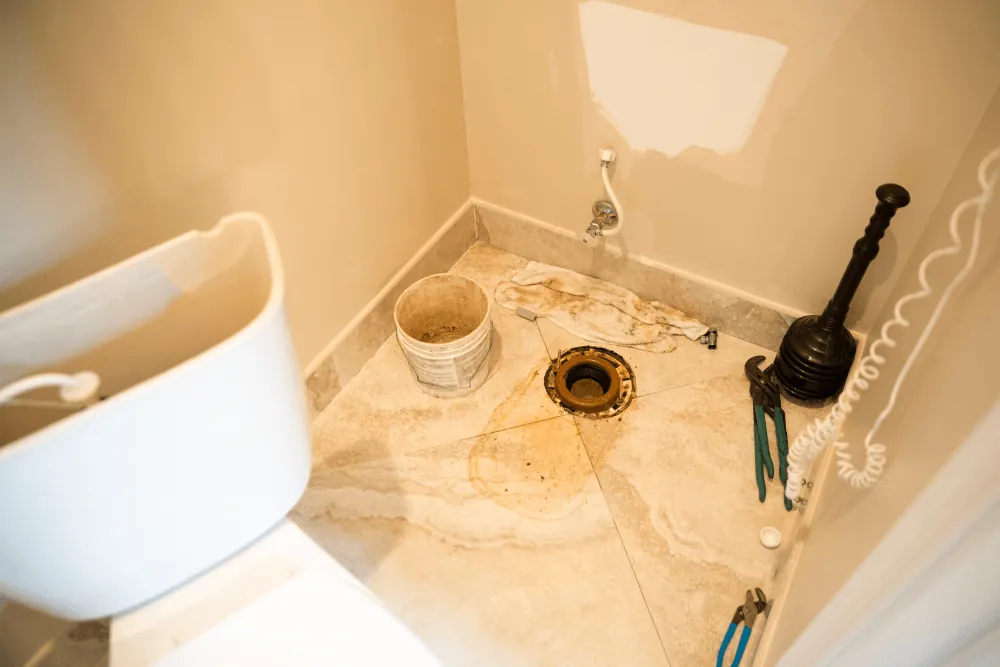
What happens on a toilet repair visit
A typical visit follows these steps, and we explain each one as we go.
- We ask about the fault. What you hear, when it started, how frequent it is, and whether the toilet is floor-mounted or concealed.
- We close the supply and inspect. We check the cistern, valves, connections and base, with a dry cloth and dye if needed.
- We tell you the cause and the price before we replace anything. The price is fixed before we start and changes only if you add work.
- We replace or repair the failed part with one that fits your model.
- We reset the water level, chain and flush volume.
- We test. A full flush, a refill timing, a dye test where relevant, and a check of every joint with a dry tissue.
- We clear up and tell you what we changed.
Toilets in offices, shops and restaurants
Commercial toilets run all day, so a fault is noticed fast and costs more. Some commercial buildings use a flushometer valve, a pressure-fed valve with no cistern. Sensor and push-button flush units are other types.
Common commercial faults are a valve that flushes by itself, a sensor that does not fire, a weak flush, and loose fixings from heavy use. Repeated flushes caused by pressure changes in a building should be investigated by a plumber. We schedule work around opening hours where we can. If you manage several toilets, a plumbing maintenance contract can schedule regular checks. We offer maintenance contracts priced per building. Ask for a quote on WhatsApp.
Who pays in a Dubai rental: tenant or landlord
If you rent, check your tenancy contract before you pay for the repair. By default the landlord maintains the property unless the parties agree otherwise, and the tenant must look after it with ordinary care. This is general information, not legal advice.
A contract can also say that the tenant pays for minor repairs below a set amount. Anything else is decided by the wording of your tenancy contract, so ask your landlord in writing which side a flapper, a fill valve or a cracked cistern falls on before you pay.
What protects you:
- Report the fault in writing. A WhatsApp message or email to your landlord or property manager is enough, and keeps a record.
- Do not leave a leak. A leak left for weeks can cause damage that costs far more than the repair, and who pays for that can become a dispute.
- Ask for a written report. If the cause is disputed, our diagnosis, photos and invoice give you the record.
- Keep invoices. If your contract lets you claim repair costs, you will need them.
- Ask your property manager first if your building requires an approved contractor.
If you and your landlord disagree, put the dispute in writing and keep our report. We are plumbers, not legal advisers, so check your own contract.
How much does toilet repair cost in Dubai?
We quote the price before we start. The cost depends on the fault and the access, not on a standard list.
- The part that failed. A flapper is cheaper than a fill valve, and both are cheaper than a flush valve assembly.
- Visible or concealed cistern. Work through a flush plate takes more care than work on an open cistern.
- Whether a toilet has to be lifted. Base seal work involves disconnecting, lifting, refitting and testing.
- Availability of parts. An older or less common model may need a part sourced.
- Number of faults. Replacing a flapper and a fill valve in the same visit costs less than two separate visits.
- The visit. The visit fee is AED 50 + VAT, credited if the work goes ahead.
Prices exclude 5% VAT and are fixed before we start. We answer calls and send a plumber 24 hours a day, 7 days a week, and we do not promise an arrival time.
- Basic leak repair, such as a washer, a minor leak or a flush mechanism, from AED 145 + VAT.
For other jobs we give a fixed price on WhatsApp before we start.
Ask for the price in writing on WhatsApp before we begin.
What we check on every toilet repair, even for one fault
A toilet fault rarely comes alone. Once the main fault is fixed, we spend a few minutes on the parts around it, because a second fault found now saves a second visit.
- The isolation valve. We close and reopen it to see that it moves freely and does not weep. A valve that has seized is a flood waiting to happen.
- The supply hose. We look at the braid and the ends for bulges, rust or cracking, and replace it if it is past its best.
- The seat and hinges. A loose seat pulls on the bowl fixings and hides a loose pan.
- The base. We press on the pan from both sides and look for rocking and for a line of old staining that tells us it has leaked before.
- The overflow. We check it is clear, so a fill valve failure runs into the bowl and not the floor.
- The flush volume. We check both buttons clear the bowl, and that the part flush is not set too low.
- The floor around the pan. Soft grout, lifted tile edges or a stain below point to an older leak that needs its own repair.
If we find something that is not part of the job you called us for, we show you and give you the price, and we leave it alone unless you ask us to fix it.
Keep your toilet from developing faults
A short routine catches most faults while they are small.
- Add the dye, wait 15 minutes, and look.
- Listen after a flush. A refill that goes on or restarts is a warning.
- Flush only toilet paper. Wipes, sanitary products and nappies cause blockages that look like flush faults.
- Know where the isolation valve is and check that it turns.
- Replace an old flapper early. If it is hard, curled or sticky to the touch, it is near the end of its life.
- Fix a loose pan the day you notice. Movement damages the seal.
Where we repair toilets in Dubai
We cover all of Dubai, including Dubai Marina, JBR, Downtown Dubai, Business Bay, Jumeirah Lakes Towers, Palm Jumeirah, Al Barsha, Jumeirah Village Circle, Dubai Hills, Mirdif, Deira and Al Quoz. See the full list of areas.
Toilet repair FAQs
Why does my toilet keep running?
The usual cause is a worn flapper or flush valve seal letting water leak into the bowl, or a fill valve that does not shut off. A dye test tells you which one: colour in the bowl points to the seal, and a clear bowl with water in the overflow pipe points to the fill valve.
How do I know if my toilet is leaking?
Put food colouring in the cistern and do not flush. If colour reaches the bowl within about 15 minutes, the flush valve leaks. For a leak at the base or the connections, dry the floor and watch where water reappears, with a dry tissue at each joint.
Can you repair a concealed cistern without breaking the wall?
Often, but the details belong to the cistern itself. They are set out on our concealed cistern and flush valve repair page: what can be reached through the flush plate opening, and when a wall has to be opened. Send us a photo of the flush plate and we confirm which case you have.
Should I repair or replace my toilet?
Repair it when the fault is a worn part, a seal or a fitting. Replace it when the porcelain is cracked, parts cannot be found, or faults keep returning across several components.
Will a running toilet raise my water bill?
Yes. A toilet that leaks into the bowl uses water with no one flushing, and the worked example above shows how a small leak adds up to thousands of litres a month. Whether you see it on your bill depends on the size of the leak and your normal use, so compare the bill with earlier months.
Who pays for toilet repairs in a rented flat?
Check your tenancy contract. By default the landlord maintains the property, but your contract may say otherwise, for example by making the tenant pay for minor repairs under a set amount. Report the fault in writing and keep the invoice. This is not legal advice.
Why is my toilet flush weak?
A low water level in the cistern, a flush volume set low, a chain that stops the flapper lifting fully, or scale in the rim holes are the common causes. A partial blockage can also cause it.
Can you fix a toilet that wobbles?
Yes. We tighten fixings if that is the cause, and lift the toilet to replace the seal and shim the pan if not. A toilet that has leaked at the base is checked for floor damage first.
How much does toilet repair cost in Dubai?
Basic leak repair, such as a flush mechanism, from AED 145 + VAT. For other jobs we give a fixed price on WhatsApp before we start. Prices exclude 5% VAT.
Do you offer a guarantee?
Yes. We give a 30-day workmanship warranty on our labour. Parts carry the manufacturer's warranty only.
Book a toilet repair in Dubai
Tell us what you see or hear, and send a photo of the cistern or flush plate. If water is on the floor, close the isolation valve first. We will find the failed part, give you a price in writing, fix it and test the flush.
WhatsApp: +971 55 407 7427 · Request a quote
Visit us: Office 871, Oasis Mall, Al Quoz 1, Dubai, UAE
Related services: Toilet unblocking · Toilet installation and replacement · Cistern and flush repair · Bidet and health faucet fitting · Leak detection · Emergency plumber