
Low water pressure in Dubai: start with where it is weak
Where the weakness appears is the most useful clue you have. Run a few fixtures, hot and cold, in different rooms, and match what you find to this table.
| What you notice | What it may point to | Where to look first |
|---|---|---|
| One tap or one shower is weak, the rest are fine | A blocked aerator, showerhead or fixture | Unscrew and clean the outlet |
| Weak on the hot side only | Scale or sediment in the water heater or the hot pipe | The water heater and the hot supply |
| Weak on the cold side only | The cold supply, a partly closed valve, or a blocked cold line | Isolation valves and the cold feed |
| Everything in the home is weak | The main valve, the pressure regulator, a pump or tank fault, or the supply | The main valve, pump and tank room |
| Weak only on the top floor | Gravity pressure that is too low for the height | The tank height and any pump |
| Weak at certain times of day, fine at others | Shared demand on the supply, or a pump that struggles under load | Building management, the pump |
| Weak since plumbing work or maintenance | A valve left partly closed, or debris stirred up in the pipes | The valves and the aerators |
| Weak, and the water bill has risen | A leak taking water before it reaches the tap | The meter test |
| Weak, with banging, hissing or a pump that keeps starting | A pump, pressure vessel or float fault | The pump room |
| Weak in every unit in the building | A building system or supply fault | Building management and the supplier |
Measure the pressure: the gauge test
A feeling of weak pressure is not a measurement. A pressure gauge is cheap, and it turns the problem into a number that tells you which direction to go.
- Buy a screw-on pressure gauge with a hose connector. Check that it reads in bar.
- Find a tap with a hose connection, such as an outdoor tap, a washing machine tap or a garden tap.
- Switch off every other water use in the home, so nothing is drawing water.
- Open the tap fully and read the gauge. That is the static pressure.
- Run a bath, a shower and a washing machine at the same time, and read it again. A large fall means the supply or the pump cannot keep up under load.
- Note the time of day of each reading. A pressure that is fine at night and weak in the evening is telling you something.
What the numbers mean
Most homes do best at about 2.8 to 4 bar, and anything over about 5.5 bar can damage pipes, fittings and appliances.
| Gauge reading | What it means |
|---|---|
| Under 2.8 bar | Low. Look for a restriction, a valve, a regulator or a supply problem |
| 2.8 to 4.1 bar | The target range for most homes |
| 4.1 to 5.5 bar | Acceptable, though higher readings are harder on fittings |
| Over 5.5 bar | Too high. Pressure is a risk to taps, hoses and appliances |
| A big drop when other fixtures run | The supply, pipe size or pump cannot meet demand |
| A needle that swings or jumps | A failing regulator, an air problem or a pump that is cycling |
Send us a photo of the gauge and the time you took it.
A bucket test for flow
Pressure and flow are different. A tap can have good pressure and still deliver little water if the pipe is narrowed. A simple test shows flow.
- Open a tap fully and fill a bucket or measuring jug.
- Time how long it takes to fill 10 litres.
- Divide 10 by the time in minutes. A tap that takes 60 seconds is delivering 10 litres a minute.
- Repeat on the same tap at a different time of day, and on another tap.
A tap that is slow every time points to the pipe or the fixture. A tap that is fine at some times and slow at others points to supply or pump behaviour. The numbers give us something concrete to work from.
How water reaches your tap, and why that sets the pressure
The route water takes to your tap decides what can go wrong. Check which of these describes your property.
Mains-fed
Water arrives from the supply through the meter and straight into the pipework. Pressure at the tap is the supply pressure, less what the pipes, valves and fittings take away. A mains-fed property can be affected by the supply, by anything in the pipes, and by how far the property is from the source.
Tank and pump
Water goes into a storage tank first, then a pump sends it to the taps. A pump that is worn, mis-set or failing leaves you with weak pressure across the home. See our booster pump page for pumps.
Tank on the roof, gravity-fed
Water is lifted to a tank on the roof and falls from there to the taps. In these systems the apartments on the top three or four floors, directly below the tank, can lack pressure because gravity is not strong enough, and a pump is usually installed to fix the upper floors.
Gravity head in numbers
Gravity pressure depends on height alone. Each metre of height is worth about 0.1 bar.
| Height of the tank surface above the tap | Pressure from gravity alone |
|---|---|
| 3 metres | About 0.3 bar |
| 5 metres | About 0.5 bar |
| 10 metres | About 1 bar |
| 20 metres | About 2 bar |
A bathroom just below a roof tank gets very little pressure from gravity, and a fixture designed for higher pressure will feel weak there. The fix is a pump or a taller feed, not a different tap.
What affects the route
- Long runs of narrow pipe lose pressure by friction.
- Elevation costs pressure at the rate above.
- Treatment equipment, such as filters and softeners, can take a little off the reading.
- Fixtures that need more pressure than the system gives, such as some shower heads, will always feel weak.
Causes of low water pressure, and what fixes each one
The causes below go from the cheapest and most common to the ones that need a larger job. We check them in about this order.
Blocked aerators, showerheads and fixture screens
Scale and grit collect in the small mesh at the end of a tap and in the holes of a showerhead. If one or two fixtures are weak and the rest are fine, start here. Unscrew the aerator and rinse it.
Appliances have a small filter screen where the hose connects. A washing machine that fills slowly while the taps are fine points to the inlet screen.
If cleaning does not restore the flow, the cartridge inside a mixer may be partly blocked. See leaking tap repair and shower repair.
A valve that is not fully open
A main valve, a meter valve or an isolation valve that is partly closed restricts flow to everything beyond it. We check each valve along the line, because a partly open valve looks much like an open one from a distance.
An old valve may also have failed internally, so that the handle is open and the gate is not. We replace those. See valve repair and replacement.
A failing pressure regulator
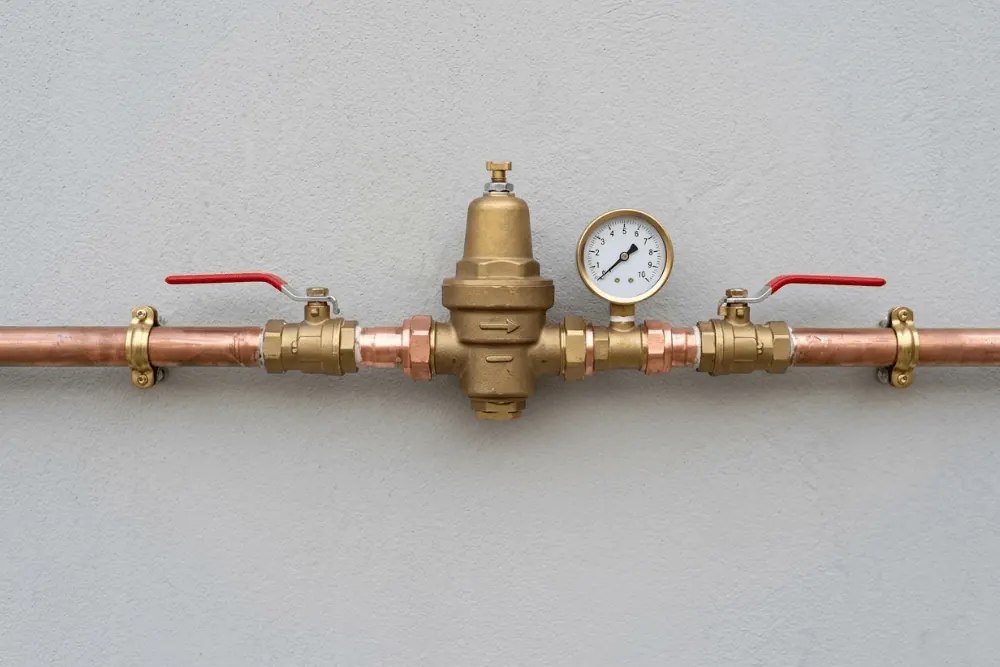
A property may have a pressure reducing valve (PRV) near the main entry. It cuts a high incoming pressure to a safe level. When it fails, the reading can be low, high or unsteady.
A regulator that has been set too low gives weak pressure across the home. We check the reading before and after it, because a large gap between the two shows what the regulator is doing. See pressure reducing valves.
Scale and corroded pipes
Mineral deposits can narrow pipes over time. The test is a good pressure reading at the meter with poor flow at the taps.
The fix is descaling where it is practical, or replacing the worst sections. If the pipework is badly narrowed, repiping is the lasting answer. See repiping and pipe replacement and descaling.
A hidden leak
Water that escapes from a pipe never reaches the tap. A large leak before the fixtures lowers the pressure and the flow in them.
The meter test is quick: switch everything off and see whether the meter still moves. See leak detection.
Filters and treatment equipment
A whole-house filter with a blocked cartridge, or a softener with a fault, reduces pressure for the whole property. If the pressure fell after a filter was installed or when the cartridge was last changed, the filter is the first suspect. Bypassing it for a minute and comparing the gauge reading is a quick test. See whole-house water filters.
Water heater sediment
If cold pressure is fine and hot is weak, sediment in the heater or scale on its outlet may be restricting the hot pipe. See water heater repair.
Float valve, tank and pump faults
In a tank-fed property, a float valve that is set low or stuck leaves the tank half-empty, so the pump has less to push. A pump with a worn impeller, a failing pressure switch or a pressure vessel that has lost its air charge gives weak or erratic pressure. A pump that starts and stops quickly is cycling, which is a sign of a pressure vessel or switch problem.
See water tank installation and repair and booster pump installation and repair.
Upper floors and gravity limits
On the top floors of a gravity-fed building, no cleaning or valve work will give more pressure than height allows. The options are a booster pump on the supply to those floors, or raising the feed. For a flat, this is a question for building management.
The supply
A supply fault or a shared line can drop pressure for several properties. If your neighbours have the same problem, the cause is outside your property.
Which fix is right for your reading?
Fixes are not interchangeable. A booster pump cannot cure a blocked aerator, and a new aerator cannot cure a tall building. The table matches the finding to the fix.
| What we find | The fix | Notes |
|---|---|---|
| One fixture weak, supply fine | Clean or replace the aerator, showerhead or cartridge | Smallest and cheapest job |
| A partly closed or failed valve | Open it fully, or repair or replace the valve | Check every valve along the line |
| Scale or corrosion narrows the pipe | Descale, or replace the worst sections, or repipe | Depends on how much of the pipework is affected |
| A hidden leak | Find and repair the leak | Do this before any pump |
| Blocked filter or treatment unit | Service or replace the cartridge | Compare pressure with it bypassed |
| Tank float or pump fault | Repair the float, pump, switch or pressure vessel | Common in tank-fed properties |
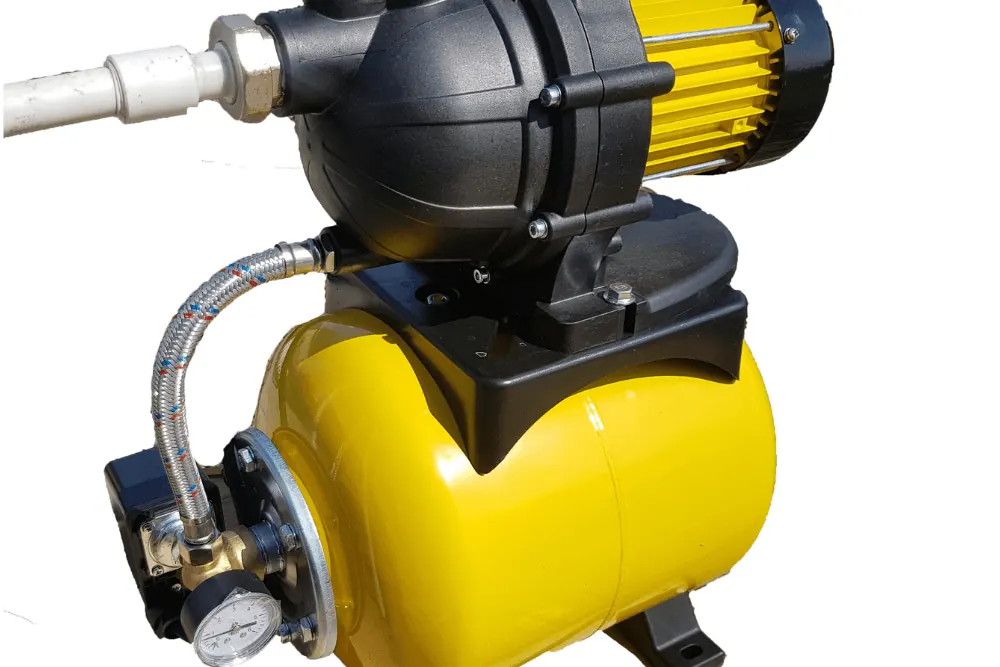
| Pressure is low all the time, and nothing is blocked | Fit or upgrade a booster pump | The right answer when the incoming pressure is the limit |
| Top-floor flat on a gravity feed | A booster set for the upper floors | Building management |
| Supply fault outside the property | Report it to the supplier or the building | Not fixable from inside |
A booster pump on the main line is the right fix when incoming pressure is low all the time. Adjusting or replacing a failing pressure regulator costs much less. A pump hides a leak, a blocked pipe or a bad regulator. It does not cure them. We rule those out first.
Sizing a booster: the arithmetic
If the gauge shows 2 bar and you want 3.5 bar, you need about 1.5 bar of boost. For upper floors, each metre of height to the top fixture adds about 0.1 bar to what the pump has to overcome.
That gives the figure to start from. Pump selection also depends on flow, which is why we run the bucket test. Our booster pump page covers the pump itself.
When the pressure is too high
Low pressure is the common complaint, but pressure can also be too high.
Signs of high pressure:
- A gauge reading above about 5.5 bar.
- Taps that drip soon after a new washer or cartridge.
- Hoses and appliance valves that fail early.
- Banging when a tap or appliance valve shuts.
The fix is a pressure reducing valve set to a safe level, or a repair if one is fitted but failing. See pressure reducing valves.
Water hammer and noisy pipes
A bang or shudder in the pipes when a tap closes or a washing machine valve shuts is called water hammer. Water moving at speed in a pipe stops suddenly and the pressure surge knocks the pipe against its fixings.
The usual causes and fixes:
- High pressure. Reduce it with a regulator.
- Loose pipe clips. Pipes that are not fixed rattle when a surge passes. They are re-clipped.
- Fast-closing valves, such as on a washing machine or a lever tap. A surge arrester fitted near the valve absorbs the shock.
- A pump that switches off suddenly. A pressure vessel or a controlled shut-down smooths it.
- Worn components. Replacing a worn valve or cartridge can stop the noise.
Noise is also a sign of a restriction. A whistle at a tap can mean a partly closed valve or a debris-blocked fixture. We find which.
Low pressure after a water cut or building work
Many calls about low pressure start the day after a water cut or building work. When the supply is shut off and turned on again, air gets into the pipes and fills the high points, and loose scale and sand are stirred up and block aerators and cartridge screens. Open the taps one by one, starting with the one nearest the main, and let each run until the water is steady and clear before you close it. Then clean the aerators, because the first thing the water carries is debris. If a valve was closed for the work, check it is fully open again. If the pressure is still low after a day, tell us and mention what was done, because a valve left partly closed or a screen in a meter or a pump inlet is likely. See valve repair and replacement.
Showers: low pressure or the wrong shower?
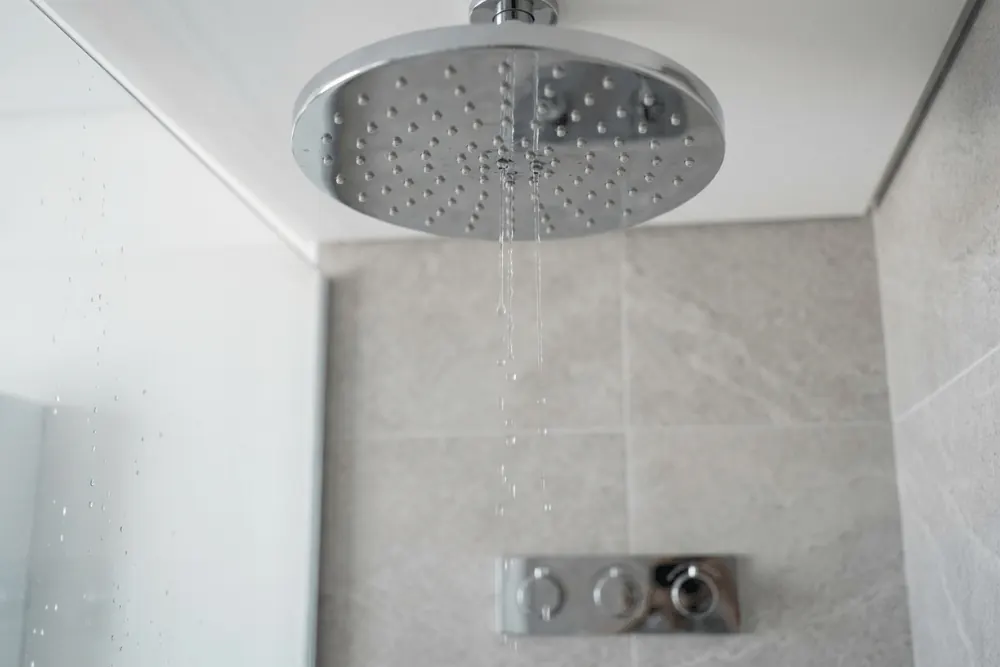
Many shower complaints are about the shower and not the supply. A rain shower head with a wide plate needs a good flow to feel strong, and on a gravity-fed supply it will always feel soft. A thermostatic mixer takes a little pressure to work and needs hot and cold at similar levels, and an unbalanced supply gives a weak or swinging shower. A handheld head with a flow restrictor can be cleaned or the restrictor removed where the maker allows. If other taps in the same bathroom run well and only the shower is weak, the shower is the first suspect. We measure at the shower and compare it with the basin tap. See shower repair and shower installation.
What happens on a low-pressure visit
We start with the numbers and work outward.
- We ask what you notice. Which fixtures, hot or cold, what time of day, and what changed.
- We measure. A gauge at a hose connection, static and with fixtures running, and a flow check at the fixtures.
- We narrow it down. One fixture, a branch, the whole property or beyond it. We check the valves, the regulator, the filter, the tank float and the pump if you have them.
- We run a leak check if the numbers suggest water is going somewhere. See leak detection.
- We tell you the cause and the options, with a price for each, before we change anything. The price is fixed before we start and changes only if you add work.
- We fix it, and measure again so you can see the difference.
- We leave you the readings. Before and after.
A blocked fixture or a closed valve is done on the first visit. A pump, a regulator or a pipe job takes longer.
Low pressure in a flat: building or unit?
In a flat, a pressure fault can sit in your unit or in the building's systems. The distinction decides who fixes it and who pays.
Is it your unit or the building?
- Your unit only: one bathroom is weak, or a single fixture. The cause is in your pipework or fixtures.
- Your unit and the neighbours': the cause is common. Talk to management before booking a plumber.
- Only at certain times of day: shared demand or a building pump struggling under load.
- Only on a top floor: gravity limits, discussed above.
- After building maintenance: a valve may have been left partly closed, or debris stirred up. Ask management what was done.
What to do
- Ask your neighbours whether they have the same problem.
- Report it to building management in writing, with the time, the symptoms and a photo of any gauge reading.
- Ask about the building's pump and tank maintenance. Management may keep records.
- WhatsApp us to check the unit side, so you can say whether your pipework is clear.
Who pays
A blocked aerator is routine. A faulty regulator, a failing pump or a narrowed pipe may fall to the landlord or the owners' association. Your contract decides.
Report the problem in writing and keep our diagnosis. We are plumbers, not legal advisers.
Low pressure in a villa
A villa is its own system, which gives you control and responsibility in one. The checks follow the route water takes.
- The supply. A gauge on the incoming line shows whether the supply is fine. If the tank fills slowly, the supply or the tank's float valve is the place to look.
- The valves. Main, meter and tank valves open fully.
- The tank. Level, float valve, outlet and cleanliness. Sediment that reaches the outlet restricts the pump. See water tank cleaning.
- The pump. Does it start, run smoothly and stop? A pump that runs constantly without raising pressure may be worn, or have air or a blockage on its suction side.
- The pressure vessel and switch. A pump that cycles rapidly or a gauge that swings points here.
- The pipework. Scale, corrosion and leaks, particularly in older homes and in runs to outdoor taps and irrigation.
- The outlets. Aerators, showerheads and filters.
Outdoor taps, irrigation lines and pool top-ups all draw from the same system, so a leak outside can lower the pressure inside. Check the garden when you run the meter test.
Low pressure in a shop, office or restaurant
A commercial property has more fixtures drawing at once, longer pipe runs and less tolerance for a weak flow. A restaurant kitchen with a weak pre-rinse spray, a salon with slow basins or an office toilet that refills slowly all lose money.
- Pressure that falls when several fixtures run points to pipe size, supply or pump capacity.
- Weak hot water at a bank of basins may be the heater or the circulation.
- Flushometer toilets need a minimum flow and pressure to work, so low pressure shows up as weak flushes.
- Treatment equipment, such as filters and RO units, adds restriction that needs maintenance.
We schedule work outside opening hours where we can. A plumbing maintenance contract can schedule regular pressure readings, so a slow decline is on record. We offer maintenance contracts priced per building. Ask for a quote on WhatsApp.
Checks you can do yourself, in order
These are safe for a householder. Do them before you call.
- Run several taps and note which are weak, hot or cold.
- Clean the aerator on a weak tap. Unscrew it, rinse the mesh, and refit it.
- Check the appliance inlet screens if only a washing machine or dishwasher fills slowly.
- Check the isolation valves under the weak fixture. On a quarter-turn valve, the handle runs along the pipe when it is open.
- Check the main valve, and the meter valve if you can reach it. Make sure it is fully open.
- Do the gauge test and write down the numbers.
- Do the meter test to check for a hidden leak: switch everything off and see whether the meter moves.
- Check any filter and its cartridge date.
- In a flat, ask a neighbour and building management.
If these do not find it, stop. Further work needs tools and experience.
What not to do
- Do not buy a booster pump first. Rule out leaks, valves, regulators and blockages.
- Do not adjust a regulator without a gauge. You can raise the pressure past what pipes and appliances tolerate.
- Do not open a valve with force. An old valve can snap and leave you without a way to isolate.
- Do not remove a filter permanently to get pressure back. It is there for a reason. Service it.
- Do not run a pump dry. If the tank is empty or the suction is blocked, the pump can overheat and fail.
- Do not ignore a pressure that is too high. It damages things slowly.
How much does a low-pressure fix cost in Dubai?
We quote the price before we start. The cost follows the cause, not the symptom.
- The cause itself. Cleaning a fixture is a small job. Replacing a regulator, repairing a pump or repiping a section is larger.
- Diagnosis time. A whole-property investigation with gauge tests and a leak check takes longer than a single-fixture visit.
- Access. Pump rooms, risers and ceilings take time to reach.
- Parts. A common regulator or valve is easier to find than a specialist pump part.
- Whether a pump is needed, and its size, which depends on the pressure and flow gap.
- The building. In a flat, work on shared systems needs management approval.
We do not publish a starting price for this job. Send a photo on WhatsApp and we give you a fixed price before we start. Prices exclude 5% VAT.
Keeping pressure steady
- Clean aerators and showerheads now and then.
- Service filters on schedule. A cartridge past its date restricts flow.
- Check the tank and float if you have a tank. Tank cleaning is on our water tank cleaning page.
- Have a pump checked. Listen for cycling and watch the gauge.
- Know your valves. Operate the main and isolation valves now and then so they do not seize.
- Record your gauge reading when the pressure is good, so you can compare when it is not.
- Fix drips and leaks early. They take pressure and water.
Where we fix low water pressure in Dubai
We cover all of Dubai, including Dubai Marina, JBR, Downtown Dubai, Business Bay, Jumeirah Lakes Towers, Palm Jumeirah, Al Barsha, Jumeirah Village Circle, Dubai Hills, Mirdif, Deira and Al Quoz. See the full list of areas.
Low water pressure FAQs
Why is my water pressure suddenly low?
Check the obvious first: a valve left partly closed after work, a blocked aerator, or a filter that needs changing. If it is the whole property, check the gauge, the regulator and the meter for a leak. If neighbours are affected, the cause is outside your unit.
What is a normal water pressure for a home?
Most homes do best between about 2.8 and 4.1 bar. Below 2.8 bar is low, and above about 5.5 bar risks damage to taps, hoses and appliances. A gauge reading tells you which side you are on.
How do I measure my water pressure?
Screw a pressure gauge onto a tap with a hose connection, switch off other water use, open the tap fully and read it. Then run several fixtures and read it again to see the drop.
Is it low pressure or low flow?
Pressure is how hard the water pushes, and flow is how much arrives. A tap can show good pressure on a gauge and still fill a bucket slowly if a pipe, a valve or a filter restricts it. We measure both, with the gauge test and the bucket test above, because they point to different causes. If the numbers show a real shortfall in pressure, a pump may be the fix, and our booster pump page covers sizing and fitting.
Why is the pressure weak only on the hot side?
Scale or sediment in the water heater or the hot pipe is the usual suspect. Cold pressure being fine rules out the supply.
Why is my top-floor flat's pressure low?
Gravity from a roof tank gives about 0.1 bar per metre of height. A booster set for those floors is the usual fix.
Can a leak cause low water pressure?
Yes. Water escaping from a pipe before it reaches the fixtures lowers the pressure and the flow. A meter that moves with everything off confirms a leak.
Is low pressure my landlord's problem?
It depends on the cause and on your contract. A blocked aerator is routine upkeep. A failing regulator, a faulty pump or a narrowed pipe may fall to the landlord or the owners' association. Report the fault in writing and keep our diagnosis. This is not legal advice.
How long does it take to fix low water pressure?
Cleaning a fixture or opening a valve takes minutes. Finding a hidden cause, replacing a regulator or repairing a pump takes longer, and we tell you what to expect once we have measured the pressure.
What is covered after a low-pressure fix?
Our labour on the fix carries a 30-day workmanship warranty. A part we fit carries the manufacturer's warranty only. A fix that treats the cause we found, such as a blocked aerator or a stuck valve, should hold. If the pressure was low because of the supply, a repair on our side cannot change that, which is why we measure before we quote.
Book a low water pressure fix in Dubai
Tell us which fixtures are weak, hot or cold, and what time of day it happens. A photo of any gauge reading helps. We will send a plumber to measure it and find the cause.
WhatsApp: +971 55 407 7427 · Request a quote
Visit us: Office 871, Oasis Mall, Al Quoz 1, Dubai, UAE
Related services: Booster pump installation and repair · Pressure reducing valves · Water tank installation and repair · Leak detection · Repiping and pipe replacement · Emergency plumber