
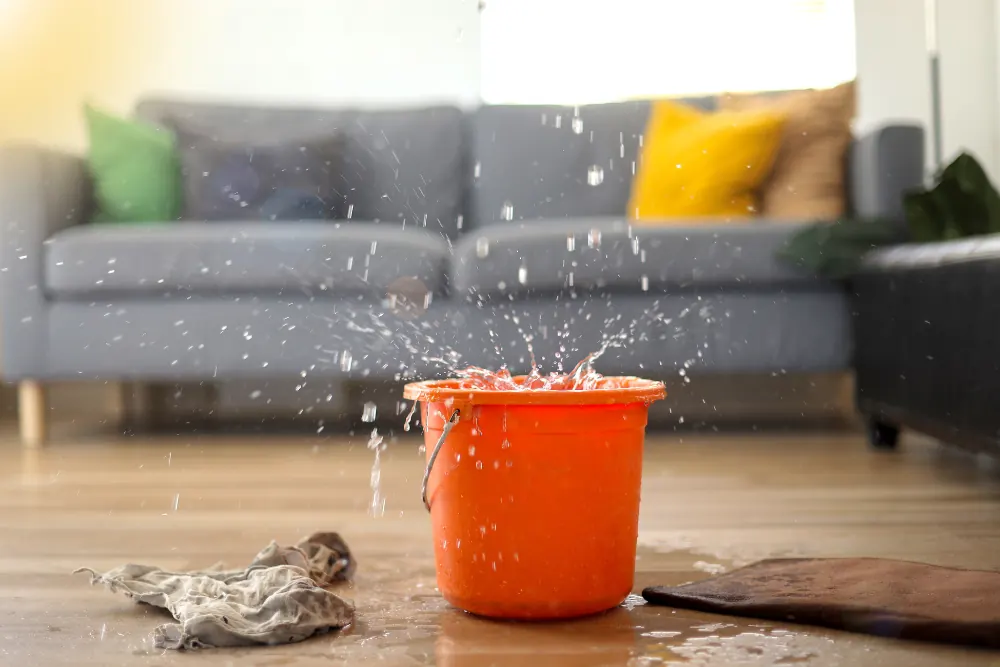
Emergency plumber in Dubai: what we do
- Making the water safe first: stopping a burst, a spray or an overflow, and isolating what cannot be repaired on the visit.
- Burst pipes, leaking joints and failed valves, repaired or isolated, with a temporary repair where a permanent one needs parts or access.
- Overflowing toilets, blocked drains and sewage backups, cleared or contained.
- Water heater leaks and overheating, isolated and made safe.
- Flooded plant spaces: pits, tanks and pump rooms, pumped and checked.
- Telling you what to document for your landlord, building management or insurer, and handing over a written note and photographs.
- Hours and arrival. We answer calls and send a plumber 24 hours a day, 7 days a week. We do not promise an arrival time before we know your area, your building's access rules and the time of day.
Neighbouring topics have their own pages. The detail of a burst pipe repair and who is responsible before and after the meter are on pipe leak repair. Finding a leak you cannot see, and the meter test, are on leak detection. Blocked toilets and drains are on toilet unblocking and drain unblocking, sewage and sewer gas on sewer line repair, and water heaters on water heater repair. A smell of gas is on gas safety. Isolating valves and the first minutes of a burst are on valve repair and replacement, and a flooded sump or pit on submersible, borehole and sump pump repair. We repeat none of that here, and this page is about the decision to call, the call, and what happens around the repair.
Is it an emergency? A decision guide
The leak-detection page has a shorter urgency table for leaks alone.
| Situation | Treat as | First action |
|---|---|---|
| Water pouring or spraying from a pipe, a ceiling or a wall | Now | Close the main or the nearest valve, then call |
| Water near electrics or a light fitting, or a bulging ceiling | Now | Keep away from wet electrics, isolate the power safely and call |
| A smell of gas | Now, and not a plumbing call first | Leave and call 997. FAM does not do gas work |
| Sewage coming up through a floor drain, shower or basin | Now | Stop using water, keep people away and call |
| An overflowing toilet with no other toilet | Now | Close the toilet's isolation valve and call |
| A water heater leaking or overheating | Now | Switch it off and isolate its water |
| No water at all | Today | Check whether the building or the utility has a supply fault first |
| A flooded basement, pit or plant room | Now | Keep out, isolate power and call building management |
| A dripping tap or a running toilet | Soon | Use the isolating valve and book a repair |
| A damp patch with a meter that moves at night | Today or tomorrow | Close the main at night and book a leak survey |
A smell of gas is the one item in this table where the first call is not to a plumber. FAM does not do gas work.
The first ten minutes
The full order of steps for a burst, including drawing down the pressure, is on the valve repair and replacement page. In short:
- Stop the water. Close the main valve, or the nearest isolating valve to the leak.
- Make it safe. Keep away from anything electrical that is wet, and cut the power as the next section describes.
- Contain the water. Use buckets, towels and a squeegee, and lift rugs and valuables off the floor.
- Photograph before you clean. Take clear, dated photographs and videos of all affected areas, including damaged belongings, before cleaning up.
- Call us, and tell your landlord or building management.
The electricity
Close the main water valve first, then deal with the power. If electrical items or wiring are getting wet, do not touch them. Switch off power to the affected rooms at the distribution board, and do not go near the board if it sits in a flooded area. Call an electrician instead.
The rule is to cut the power only where you can do it without standing in water or touching anything wet. If the board is in the wet area, nobody reaches it, and the person who isolates the supply is a qualified one. We do not tell anyone to wade to a board.
A bulging ceiling
If a ceiling is bulging with water, a bucket under the bulge and a small hole to let the water out can stop the ceiling collapsing. We do not advise this where a light fitting, a fan or wiring sits in the ceiling, because water running through a pierced ceiling falls where the wiring is. Keep out from under the bulge, isolate the water and the power as above, and call. The repair of the ceiling afterwards is on ceiling and wall leak.
Where the valves are
Know where the water can be shut off before you need it. A villa may have a valve at the meter, a valve on the tank outlet and a valve at the pump, and an apartment may have a valve inside the unit, with the building's riser valve controlled by management. A leak that needs the building's riser off takes planning, because management holds the key and other flats lose water.
Find the valves on a calm day, turn each one to check it moves, and label them. A valve that has not been turned for years can seize, and finding that out during a burst is the worst time. The kinds of valve and how they fail are on valve repair and replacement.
Who to call in Dubai
| Number | What it is for |
|---|---|
| 999 | Police |
| 998 | Ambulance |
| 997 | Fire, rescue and gas |
| 901 | Police non-emergency, for complaints and inquiries |
Who you call first depends on where the water is:
- Water inside your unit, after your meter. The pipe is yours or your landlord's. The question of who is responsible before and after the meter is on pipe leak repair. Call a plumber and tell building management and the landlord.
- Water coming from a neighbour, a riser or a common area. Building management or facility management. The valve that stops it is in their control.
- A supply failure on the street, no water in the building. the water utility, on the customer number printed on your bill.
- A smell of gas. Leave and call 997.
- A community. Your community manager. Confirm the number with them.
Floods and heavy rain
After heavy rain, water can come into a building from outside, from the roof, a car park or a drain that is not yours, and a plumber is not the first call when the water is a community problem.
What this means for a plumbing call in a flood:
- Report to the community manager or building management first where water is coming in from outside, from the roof, a car park or a drain that is not yours.
- Plumbing faults inside the unit are ours: a failed non-return valve, a backed-up floor drain, an overflowing toilet or a flooded pump room.
- Document the damage. Photographs and a dated note help with the insurer and with the landlord.
A flooded basement, pit or plant room is dangerous. Keep out, isolate the power and call building management.
Insurance, the landlord and who pays
What insurance responds to
Photograph first, stop the water, contain the damage, tell the insurer and the landlord before permanent work if the policy requires it, and keep every receipt. A plumber's written note of the date, the cause and the repair is the evidence an insurer or a landlord will ask for, and we provide one. Whether a claim is accepted is not ours to say. A tenant usually insures contents and the landlord the building, though your policy decides.
In an emergency:
| Step | Starting point |
|---|---|
| Closing a valve, isolating a pipe or switching off a heater | Not a change to the property. Do it, and tell the landlord and building management at once |
| A temporary repair to stop a leak | Not a permanent change. Tell the landlord and keep the part. A temporary fix is not a substitute for a proper repair, and an insurer may ask for the permanent one |
| A permanent repair or replacement | Tell the landlord first, and agree who pays. Written consent if the work alters the property |
We cannot say who pays in your case, and the contract or the landlord decides. A written message sent at the time of the emergency is cheaper than a dispute afterwards.

How an emergency visit runs
- The call. We ask what is happening, where the water is, whether it can be stopped, whether electrics are involved, and whether anyone is in danger. A photograph or a short video on WhatsApp saves a visit.
- Safe first. The first job on site is to stop or contain the water and make the area safe, before a repair is proposed.
- Find the cause. A burst is obvious, and a leak behind a wall is not. For the second, the tests are on leak detection.
- Temporary or permanent. A burst on a straight, exposed pipe can be clamped to stop the water, and the repair class and clamp limits are on pipe leak repair. A permanent repair may need parts, access, building management or a second visit.
- A price in writing before the repair, with the options. The reasons for this are in the section on checking a plumber below.
- The repair, the test and the handover. A written note, photographs and what to tell the insurer and the landlord.
Arrival times
We give no arrival time on this page. Be wary of any firm that promises a number of minutes before it knows your area, your building's access rules and the time of day.
Checking a plumber, and what to do about overcharging
Emergencies are when people agree to what they would otherwise question. Watch for these:
- Pressure tactics. Be cautious of anyone who insists the work is urgent and refuses a written price. Where the water can be held, take a few minutes for a second opinion.
- Exaggerated work. Replacing a whole pipe run when a cheaper repair would do, or adding electrical work that no one has explained.
- No quote. A trader who will not put a price in writing before the work.
- A refusal to show the part or the cause. A good plumber can show you what failed.
Get the price in writing and keep the invoice. In an emergency, the written price and the invoice are the two documents that do the most. We give a written price before the repair starts wherever the water can be held while you read it, and an invoice after.
Warranty and the handover
What you should have when the job is finished:
- A written note: the date and time of the call and the visit, what failed, where, what was done to stop the water and what was done to repair it.
- The status. Whether the repair is temporary or permanent, and what the temporary one needs to become permanent.
- Before and after photographs of the failed part, the area and the repair, for your landlord, building management or insurer.
- The removed part, shown to you or kept for you if you ask.
- The valve map. Which valve closed the water, so you can do it next time.
- A test: the line pressurised, the repair watched, the surrounding wall or floor checked, and a revisit date where damp could still be drying or the cause is not proved.
- An itemised invoice you can show an insurer or a landlord.
- A clear warranty. Ask what the warranty covers and for how long, in writing.
- FAM's workmanship warranty, in writing. The warranty runs for 30 days and covers our labour only. Parts carry the manufacturer's warranty only.
How we work
- You call or WhatsApp and tell us what is happening, where the water is, whether electrics are involved and whether you own, rent or manage the property. A photograph or a short video helps.
- We tell you what to do while we come: close the main, switch off the heater, keep out of the wet area.
- We make the water safe first, then find the cause and tell you what failed.
- We give options and a price in writing: a temporary repair, a permanent repair, a replacement, with what each leaves untouched.
- Check permission. In a rented or managed property, ask the landlord or building management whether they need to approve this work before the visit.
- We make the repair, protect the surfaces and keep the area dry.
- We test and hand over the note, the photographs, the invoice and a revisit date.
Where we work in Dubai
We cover all of Dubai, including Dubai Marina, JBR, Downtown Dubai, Business Bay, Jumeirah Lakes Towers, Palm Jumeirah, Al Barsha, Jumeirah Village Circle, Dubai Hills, Mirdif, Deira and Al Quoz. See the full list of areas.
The common emergencies, and the first move for each
| Emergency | First move | What not to do |
|---|---|---|
| A burst pipe on the wall | Close the nearest valve or the main stopcock. Open the lowest tap to drain the pipe | Do not wrap it in tape and walk away. It fails again |
| A flooding toilet | Close the valve behind the toilet or lift the float in the cistern | Do not keep flushing |
| Sewage coming up in a floor drain | Stop using water in the property. Keep people away from the area | Do not use chemicals or pour boiling water down |
| A water heater leaking | Switch off its power at the breaker. Close the cold supply to the heater | Do not touch it with wet hands while it is on |
| A tank overflowing | Close the inlet valve or switch off the pump | Do not climb onto an unsafe roof in the dark |
| No water, and the neighbours have water | Check your own valves, the tank level and the pump | Do not run the pump dry |
| A smell of gas | Leave. Do not use switches. Call 997 | Do not look for the leak |
Emergencies that are really not plumbing
Not everything wet is a plumbing problem, and the right call saves time.
- Rain through a roof or a window frame is a building or waterproofing matter, not a pipe. A plumber can tell you quickly whether it is the plumbing, but the repair is by another trade.
- Condensation dripping from an air conditioner is an AC drain problem. A blocked condensate line is often the cause, and a drain jet or flush may clear it.
- A wet patch on a wall with no pipe behind it may be a neighbour's leak or an external fault.
- A tripped breaker after water has entered a socket needs an electrician before anyone touches it. We have our own electricians, and we tell you if the job needs one.
What to have ready when you call
Having this on hand shortens the call and the visit:
- your address, the building name and the flat or villa number, with a landmark
- whether the water is stopped, and where the valves are
- what is leaking, where, and how fast
- photos on WhatsApp of the leak, the valve and the damage
- whether you own or rent, and whether the landlord or building management knows
- a way to get access, such as a key, a guard or a contact in the building
After the repair: what to do next
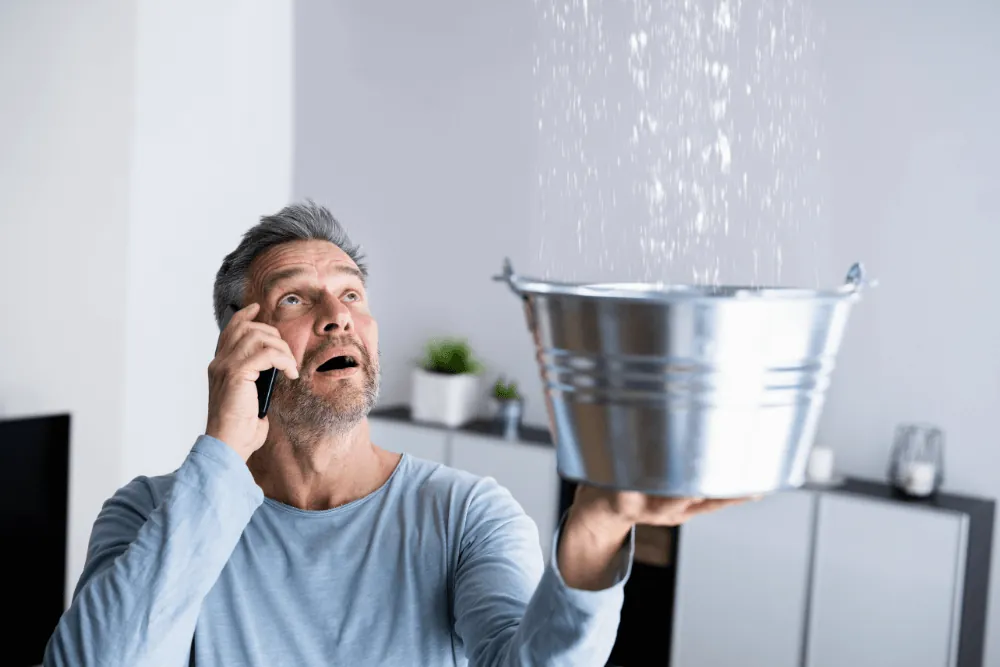
When the water is off and the repair is done, there are still a few tasks. Dry the area. Open windows and use fans, because damp left in a wall leads to mould and swelling in a few days. Keep the photos and the invoice. Send the landlord the report if you rent. Ask the plumber whether anything nearby is at risk of the same fault, such as another old joint on the same line, and plan to fix it in daylight.
Keeping an emergency kit
A small kit kept in one place saves time when something goes wrong. Keep the following together in a cupboard everyone knows:
- A torch with spare batteries
- A pair of waterproof gloves
- Old towels and a bucket
- A roll of plumbing tape and a few jubilee clips for a temporary bind on a small leak
- A basin wrench and an adjustable spanner
- The valve key, if your building uses one
- A list of numbers on paper: management, the landlord, us, and the emergency services
- A marker and tags to label the valves
A temporary bind can slow a small leak until a plumber arrives, but it is not a repair, and you should still call.
A burst pipe in a wall: what we do on site
We close the nearest valve or the main, open the lowest tap to drain the pipe, and find where the water is coming from. If the pipe is exposed, we clamp it or cut out the damaged section and join a new length. If it runs inside a wall, we find the section with the meter test and a moisture check and open the smallest area that gives access, because a wall opened in the wrong place costs you twice. We test the repair under pressure before anything is closed, watch it for a few minutes, and leave a note of what was done and what is temporary. The drying and the finish are covered on ceiling and wall leak.
A sewage backup: what we do on site
We ask everyone to stop using water, check which fixtures are affected and open the nearest accessible point, a gully, a chamber or the trap, to see where the line is blocked. A full line is cleared with a cable or a jetter, and the camera shows whether a collapse or a root is the cause. The affected floor is cleaned and disinfected, and the person using the room is told to keep children and pets away until it is dry. Sewage carries bacteria, so we wear protective gear and ask you to wash after any contact. See drain unblocking and sewer line repair.
A flooded pump room, pit or basement
A flooded plant space is a power and a gas risk before it is a plumbing one. We do not enter standing water with the power on. Building management isolates the supply to the room, and a sump pump or a tanker removes the water. When the room is accessible, we look for what let the water in: a failed valve, a pump that stopped, a float switch that stuck or an inlet that overflowed. The pump and its protection are on submersible, borehole and sump pump repair, and the cleaning of a tank that has been flooded on water tank cleaning.
Getting the water off in a building with a shared riser
In a tower the main valve for your unit may be inside the flat, but the riser valve is in a shaft or a service room that management controls. A leak that needs the riser off affects the flats on that riser, so building management has to arrange the shutdown and warn the others. If the leak is in your unit and the unit valve closes it, close it and call us. If the unit valve is not holding, or the leak is upstream of it, call building management right away and tell them which floor and which riser. We cannot close a building riser without management's say-so, and we tell you what to ask them for.
Keep our number and your valve map
Save +971 55 407 7427 in your phone and tell everyone in the household, including staff and older children. Next to it, keep a photo of the main valve, the heater isolator and the breaker board with labels. In an emergency, people forget where things are, and a photo on the phone is faster than a search in the dark. If you rent, add the number of building management and the landlord.
Not every fault is an emergency. For a job that can wait a day, how to choose a plumber in Dubai sets out what to ask, how call-out fees work and what to have ready when you message.
How much does an emergency plumber cost in Dubai?
The price depends on the fault, the parts and the access, and we do not publish a starting price for this job. The visit fee is AED 50 + VAT, credited if the work goes ahead. Send a photograph or a short video on WhatsApp and we give you a fixed price before we start. Prices exclude 5% VAT.
What sets the price on an emergency job
- The fault. A tap supply hose, a burst pipe in a wall and a sewage backup are very different jobs.
- Access and the building. A leak that needs the riser off or building management's key takes longer.
- Parts. Whether a temporary repair holds until a part arrives.
- A temporary repair first, a permanent one later. Two visits cost more than one, and sometimes the permanent repair can be done at once.
- Making good. Opening a wall or ceiling to reach the leak, and closing it.
Emergency plumber FAQs
What counts as a plumbing emergency?
The decision guide above treats water pouring from a pipe, ceiling or wall, water near electrics, sewage rising, an overflowing toilet with no other, and a leaking or overheating heater as now. A smell of gas is a call to 997 first.
What do I do first when a pipe bursts?
Contain the water, photograph before you clean up, and call. The full sequence is on the valve repair and replacement page.
Should I switch off the electricity?
Cut the power only where you can do it safely. Do not touch wet electrical items, and do not go near the board if it is in a flooded area or you would have to stand in water. Switch off the affected rooms at the distribution board if you can reach it dry. If you cannot do it safely, keep away and call an electrician and us.
Who do I call first: the utility, building management or a plumber?
For water inside your unit after the meter, a plumber, with building management and the landlord told. For a supply failure on the street, the water utility, on the number printed on your bill. For a riser, a neighbour's leak or a common area, building management. For gas, 997.
How quickly can an emergency plumber attend?
We answer calls and send a plumber 24 hours a day, 7 days a week, and we do not promise an arrival time. Be wary of a firm that promises a number of minutes before it knows your location.
Does home insurance cover a burst pipe?
Your policy decides. A tenant usually insures contents while the landlord insures the building, so check which one yours covers, and ask whether a burst pipe from wear is covered. We provide a written note and photographs for the claim.
Who pays for an emergency repair in a rented property?
It depends on your tenancy contract and on what caused the fault. Maintenance usually falls on the landlord unless the contract says otherwise, and damage a tenant causes may be treated differently. Tell the landlord in writing at the time.
How do I avoid being overcharged in an emergency?
Get the price in writing before the repair starts, and keep the invoice. Where the water can be held while you read it, get a second quote. Be cautious of pressure to agree on the spot or a refusal to show you the failed part.
What can I do if I think I was overcharged?
Ask for a written breakdown of labour, parts and call-out fee, and compare it with the quote you agreed. Keep photos of the work and a copy of the invoice. We give a fixed price on WhatsApp before the visit, so the figure you approve is the figure you pay, and our work carries a 30-day workmanship warranty.
How much does an emergency plumber cost in Dubai?
It depends on the fault, the parts and the access. We give a fixed price on WhatsApp once we see the fault, with the options. The visit fee is AED 50 + VAT, credited if you go ahead, and prices exclude 5% VAT.
Book an emergency plumber in Dubai
Call or send a message with where the water is, whether it can be stopped, whether electrics are involved, and whether you own or rent. A photograph or a short video helps. While you wait, close the main water valve, keep away from wet electrics, contain the water and photograph the damage. If you smell gas, leave and call 997 first. We will make the water safe, find the cause, give you the options and a price in writing, and hand over a note with photographs for your landlord and insurer.
WhatsApp: +971 55 407 7427 · Request a quote
Visit us: Office 871, Oasis Mall, Al Quoz 1, Dubai, UAE
Related services: Pipe leak repair · Leak detection · Valve repair and replacement · Toilet unblocking · Drain unblocking · Sewer line repair · Water heater repair · Gas safety · Ceiling and wall leak