
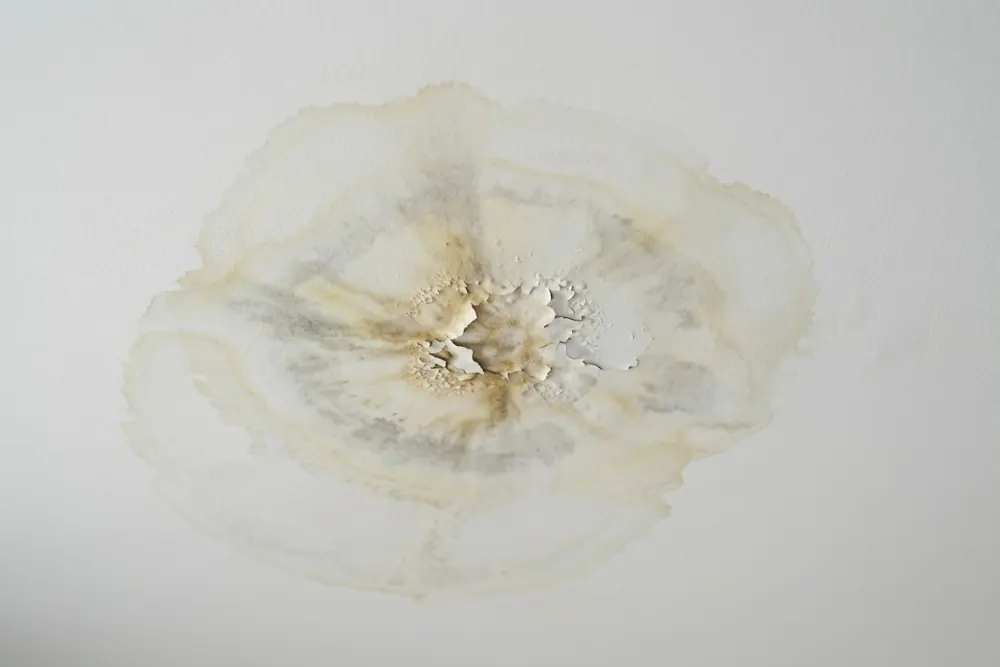
Ceiling and wall leak repair in Dubai: what we do
- Source tracing. Working out whether the water comes from a supply pipe, a drain, the air conditioning, a wet area above, a balcony or the outside of the building.
- Plumbing repair. Stopping and repairing the pipe or fitting that is leaking into the ceiling or wall.
- Wet-area checks. Showers, baths and floor drains in the unit above or behind the wall.
- Drying advice and assessment. What is wet, what can dry in place and what must come out.
- Opening and closing. The smallest opening that lets us repair, with an access panel where the pipe will need to be reached again.
- A written report with photos, readings and the diagnosis, for your landlord, building management or insurer.
- Coordination of finishing. Gypsum, plaster and paint, by us or a partner trade.
Neighbouring topics have their own pages. Finding a leak you cannot see is on our leak detection page, and repairing the pipe once it is found, including the bill, drying and the full responsibility table, on our pipe leak repair page. Replacing a whole run is on our repiping page. Pipes that sweat in humid air are on our pipe insulation page, and tank overflows on our water tank installation page.
If water is coming through now
The order matters. The first three steps protect people. The rest protect the building.
- Keep people and pets out of the room if the ceiling bulges, sags or drips near lights, sockets or fans.
- Switch off the power to that room. In a Dubai flat, that is the circuit breaker for the room on your distribution board. Do not touch wet switches or fittings.
- Stop the water. Close the isolation valve on the suspected fitting, or the main. Our valve repair and replacement page lists what to do in the first minutes, and our emergency plumber page covers out-of-hours calls.
- Catch and contain. Put buckets and towels under drips and move furniture and valuables.
- Relieve a bulge only if it is safe. A small hole lets trapped water drain in a controlled way. Do this only if you can do it without standing beneath the bulge or near wet electrics. If in doubt, leave it, keep people away and WhatsApp us.
- Photograph everything with the date, before anything is moved.
Where ceiling and wall leaks come from
| Source | How it shows |
|---|---|
| Supply pipe, hot or cold | The stain keeps growing with every fixture off, and the water meter moves |
| Drain or waste pipe | The stain grows when a fixture above is used, and there may be a smell |
| Shower, bath, tray or floor drain above | The stain appears after the wet area above is used. Failed waterproofing or a leaking tray |
| Balcony or terrace above | A stain at the edge of the ceiling after washing the balcony or after rain. Failed waterproofing lets water through the slab |
| Air conditioning | A blocked condensate pipe or a full drain pan. The stain grows when the AC runs |
| Water heater | A stain that appears below the heater. See water heater repair |
| Roof tank or its overflow | Overflow marks or a damp patch on a top ceiling. See water tank installation |
| Condensation on cold pipes | Droplets in humid weather. See pipe insulation |
| External wall or roof | The stain follows the weather and not water use |
The same stain can have more than one cause. A ceiling stained by a slow pipe leak can also be damp from condensation, and fixing one leaves the other. That is why we test, not guess. Where the stain is does not tell you where the leak is, because water follows a pipe, a slab or the top of a board, and a stain in the living room can come from a shower waste in the bathroom next to it. We treat the stain as the place to start looking, and we trace outward from it.
How we find the source without opening everything
The methods of locating a hidden leak, including moisture meters, thermal imaging and acoustic listening, are on our leak detection page.
| Test | What it separates | What a result means |
|---|---|---|
| Meter test with all water off | A pressurised supply leak from everything else | A moving meter points to a supply pipe after the meter. See the steps on leak detection |
| Close the isolation valves one branch at a time | Which supply branch feeds the leak | The stain stops growing when the right branch is closed |
| Run the fixtures above one at a time | Which drain or fixture is leaking | The stain grows only when one fixture runs |
| Flood test a shower tray, bath or balcony | A waterproofing or tray leak from a pipe leak | Fill the tray or block the outlet, leave it for a set time, and watch the area below |
| Switch off the air conditioning for a period | An AC condensate source | The stain stops growing, or the drain pan can be seen to be full |
| Check after rain | An external source | The stain follows weather and not water use |
| Isolate and pressure-test a suspect pipe | A specific pipe, even one behind a wall | A falling gauge on an isolated section means that pipe leaks |
| Camera or opening | The last resort | A small inspection opening where the other tests narrow it to one place |
Every test changes one thing at a time and waits long enough to see the result. A single quick look may not settle a leak that drips slowly.
A bathroom above and an AC drain can both be wet, and the repair is two repairs.
When the leak is in a wall
Wall leaks follow the same logic with a few differences. Pipes behind tiles, in service shafts and in partition walls leak into the wall cavity, and the water can show low on the wall or on the other side of it. A wet patch on one side of a wall can come from a bathroom backing onto it. Paint that blisters or tiles that sound hollow suggest water behind the surface, these are signs, not proof. Rain through an external wall behaves differently from a pipe: it follows the weather. We test the wall the same way and open it only where the evidence points.
The repair sequence
The order is fixed, and the paint comes last.
| Step | What happens | Who |
|---|---|---|
| 1. Stop and repair the source | Pipe, fitting, drain, tray, waterproofing or AC drain repaired | FAM for plumbing. AC drain and waterproofing may need another trade |
| 2. Prove it is stopped | Leave the repaired section under pressure for a set time, and watch the meter and the stain | FAM |
| 3. Dry | Remove standing water, ventilate, run fans and dehumidifiers, remove what cannot dry | See below |
| 4. Confirm it is dry | Take moisture readings of the board, wall and framing | FAM |
| 5. Repair the surface | Patch or replace board, then fill, prime and paint | Gypsum and paint trades |
| 6. Check again | Look at the repair after a week and after the next rain or heavy use | You and FAM |
Two steps are easy to skip: step 2 and step 4. A leak that is stopped for a day is not a leak that is fixed, and a board that feels dry on the surface can hold water behind it.
Drying, mould and what the water was
How dirty the water was decides what can be saved. Water from a supply pipe starts clean, so board and insulation that are dried quickly can often stay. Water from a drain, a toilet overflow or a washing machine overflow is not clean, and board and insulation that have soaked it are cut out and replaced, not dried in place. Where a large area is soaked with dirty water, use a specialist cleanup contractor promptly. A leak from a drain or an overflow above is treated differently from a supply pipe leak, so we say which we think it is after the first inspection. The drying guideline is on our pipe leak repair page, so here is what is specific to ceilings.
| Condition | Our approach |
|---|---|
| Intact board, clean water, dried soon after the leak stopped | Dry in place and confirm with a meter before painting |
| Swollen, soft or broken-seamed board | Cut out and replace |
| Water from a drain or unknown source | Treat as dirty water. Cut out and clean |
Humid air slows drying, so a ceiling that took two days to dry in a dry month may take longer in a humid one, and we check with a meter and not the calendar.
Why the finish needs time
Framing must be fully dry before it is lined, because damp trapped behind new board comes back as popped screws and stains. The principle applies to any repair: closing a ceiling over damp framing stores the next problem. We would rather leave an access hatch and a meter reading than a smooth ceiling over a wet void.
Mould
Mould grows in damp, warm, still air, which describes many Dubai flats in summer with the AC off, and the cure is to remove the moisture. A chemical may kill surface mould, but the paper facing can be damaged and spores may survive in the core, so cleaning treats the surface and does not address a leak. Small patches can be cleaned with a suitable cleaner and a dry cloth, with a mask and gloves, once the cause is fixed. If the mould covers a large area, comes back, or someone in the home has a breathing condition, get specialist advice. Do not mix cleaning chemicals. We are plumbers, and we tell you when a job is beyond us.
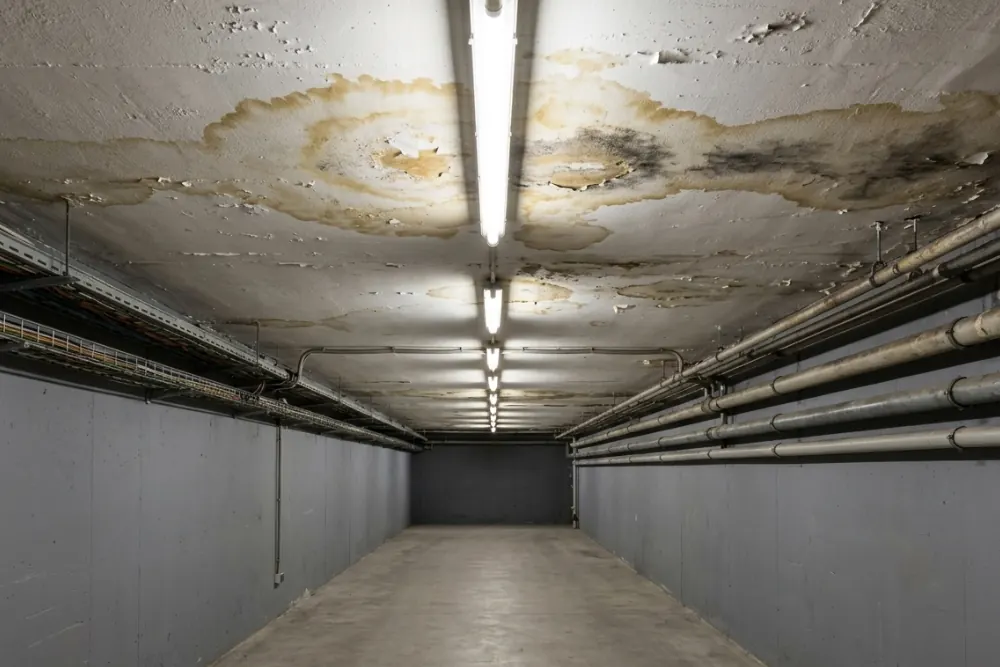
False ceilings and gypsum boards
If your ceiling is a gypsum board suspended below a void, water has somewhere to travel and pool. It can run along the back of the board, collect at a joint and drip at a point some distance from the leak.
What we do with a false ceiling:
- Open an inspection hatch near the stain, or use an existing access panel, to see the void.
- Look along the pipe route, not only at the stain.
- Check the board and framing from above for water marks.
- Leave an access panel where the pipe or valve will need to be reached again.
Repairing the board itself: a small hole is filled with joint compound, and for a large area we cut back to the nearest joists, fit a replacement sheet of the same thickness, then prime and paint. Those are the steps a gypsum trade follows. The finish is a separate trade's skill, and we do not claim it as ours.
When a ceiling is unsafe
Do not wait for a collapse. These are the signs a ceiling may be unsafe:
- A bulge or a sag in the board.
- Water near light fittings, switches or extractor fans.
- A board that is soft when pressed from a safe position with a long pole.
- Cracks along the joints with staining.
- A smell of sewage or brown water.
Keep people and pets out of the room, turn off the power to it, and WhatsApp us. We would rather do it with the ceiling assessed and the power isolated.
Leaks from the flat above, and from the building
This is the part of a ceiling leak that is particular to a flat.
Who is responsible
In a rented flat, maintenance of the plumbing is normally the landlord's responsibility unless the contract says otherwise, and a tenant who causes damage can be responsible for it. Where the leak starts in a neighbour's flat, the owner of that flat is normally responsible for fixing the source, and damage to your flat is settled between the owners or, for tenants, through their landlords and building management. This is general information and not legal advice. Tell us what your building asks for and we work to it. Check your contract and, for a dispute, ask a lawyer.
If the water is coming from upstairs
Practical steps:
- Tell building management the same day, in writing, with photos.
- Ask for access to the unit above. We cannot enter a neighbour's flat without their agreement or management's.
- Record readings. A moisture reading and a photo with a date show the stain's size and when it changed.
- Keep the evidence in one place, as listed below.
- Do not fix the neighbour's pipe for them unless the occupant, owner and management agree.
If the leak starts in your flat
You are expected to stop it. We stop the leak, give you a report with the cause, and you pass it to the affected neighbour and your landlord. Check-in and check-out reports are evidence in damage claims. If the damage reaches the unit below, tell management at once. This is one more reason to repair promptly: every day the leak runs adds damage and a claim.
Repeat stains
A stain that returns has a reason. In practice:
| Pattern | Possible reason | What we do |
|---|---|---|
| Returns in the same spot after repainting | The source was not the one repaired, or the board was not dry | Repeat the elimination tests, and check board moisture |
| Returns only after rain | An external source | Check the façade, balcony and roof, and say so |
| Returns after a shower or bath above | Waterproofing or tray | Flood-test the wet area above |
| Returns in humid weather, with droplets | Condensation | Insulate. See pipe insulation |
| Appears in a new spot nearby | Water travelling along a void, or a second leak | Trace outward along the pipe route |
What to photograph for your landlord, building management or insurer
If a ceiling or wall leak may be someone else's responsibility, evidence collected on the first day is worth more than evidence collected a week later.
- Photograph the stain from three distances: the whole ceiling, the stain with a tape measure or a coin for scale, and a close view of any bubbling, peeling or mould.
- Take a photograph of the date. A phone screenshot showing the day and time is enough.
- Record the water meter or the stopcock if you shut the water off, so the sequence of events is clear.
- Keep a short log: when you noticed it, when you told the building, who replied and what they said.
- Keep the damaged materials if the repair involves removing board, until the building or insurer has seen them.
- Keep our report and invoice, with the cause stated, and your messages to the landlord, agent, neighbour and management, with your tenancy contract and its maintenance clause marked.
- Check your insurance policy. We are not insurance advisers, and cover differs by policy.
Send the photographs to us on WhatsApp as well, so the job record starts from the same evidence.
How we repair a ceiling or wall leak
- Stop the water and make the area safe, including electrics.
- Interview and inspect. When it started, what has changed, what is above and behind.
- Locate the source with the tests above, changing one thing at a time.
- Open the smallest area that gives access, through an inspection hatch where there is one.
- Repair the source and prove it with a test. Pipe repair detail is on our pipe leak repair page.
- Dry and confirm with a meter, before anything is closed.
- Close with access where the pipe will need to be reached again.
- Coordinate the finish, or hand over to your painter or gypsum trade.
- Report: what was wrong, what we did, what to watch, and what to tell the landlord, neighbour or management.
Where we work in Dubai
We cover all of Dubai, including Dubai Marina, JBR, Downtown Dubai, Business Bay, Jumeirah Lakes Towers, Palm Jumeirah, Al Barsha, Jumeirah Village Circle, Dubai Hills, Mirdif, Deira and Al Quoz. See the full list of areas.
Reading the stain: what its shape and colour say
A stain is evidence. Looking at it carefully before opening anything often points to the cause.
| What you see | What it may mean |
|---|---|
| A round brown ring that grows slowly | A slow drip from above, drying and re-wetting. The rings mark each wet period |
| A dark patch with a sharp edge that keeps spreading | A steady leak. The water is still arriving |
| A bubbling or bulging in paint | Water behind the paint, held in by a sealed finish |
| A stain that appears only after showers upstairs | A shower tray, a waste or a waterproofing failure |
| A stain only after rain | A roof, a balcony, a window or a facade, not a pipe |
| A damp patch that follows a wall line | A pipe in the wall, at the same height as the stain |
| A wet patch that appears after the AC runs | A blocked condensate drain, or condensation on a cold pipe |
| A stain with a powdery white deposit | Salts left as water dries, a sign of long, slow wetting |
| Black spotting | Mould, which grows where damp has stayed for days |

Wall leaks in flats: shafts, risers and wet walls
In a Dubai tower the pipes run in vertical service shafts and in the walls of bathrooms and kitchens that stack above one another. A damp patch low on a corridor wall, or paint lifting outside a bathroom, often means a pipe in the wall or the shaft behind it. A riser valve or a branch from the riser can weep for weeks before anything shows, and the shaft door is where we look first, because the shaft lets us see the pipe without breaking a wall. In a flat where the bathroom backs onto a bedroom, tiles that sound hollow when tapped or a damp patch on the bedroom side point to the bathroom wall. We trace the line, test the suspect pipe under pressure and open only the wall section the evidence points to.
Air conditioning leaks that look like plumbing leaks
An AC condensate drain that is blocked or has lost its fall overflows its pan and drips through the ceiling, and the stain looks exactly like a pipe leak. The tell is timing: it grows when the AC runs and stops when the AC has been off for a while. A chilled water pipe that is not insulated sweats in humid air and drips along its length. We switch the AC off and watch, and where the source is the AC unit or its drain, we say so. The condensate drain repair is an air-conditioning job, and we do not claim it as ours.
Balcony and terrace leaks
Water that comes through a ceiling below a balcony after the balcony has been washed, or after rain, is usually a waterproofing failure or a blocked balcony drain. The slab is not a pipe, so the stain follows the weather and the washing and not the taps. We flood-test the balcony drain by running water for a set time and watching the ceiling below, and we check that the drain outlet is clear. A balcony waterproofing repair is a specialist trade, and where it is the source we tell you and write it in the report. Who pays is a matter for the owner of the balcony and the building.
Leaks into the flat below: what we do on the day
When water from your flat is reaching a neighbour, the first aim is to stop it. We isolate the suspect line, find the fault, repair it and test it before we leave. We tell you what to say to the neighbour and to building management, and give you a written report with the cause and photographs, which is the document they will ask for. If the neighbour needs to see the source, we show them the repaired section and the test. We cannot enter the flat below without the occupant's agreement or management's, and we do not carry out repairs there that are not ours to do.
What opening a wall looks like
When the tests point to one place, we mark the opening on the wall, cut a neat window in the tile or board, and keep the cut pieces so the closing can be tidy. A pipe in a wall is repaired where it has failed, and where the pipe will need to be reached again we leave an access panel. If the wall is tiled, the tile that comes out is a loss, since matching it is often hard, so we tell you before we cut and plan the opening on a grout line. The wall is closed only after the pressure test has held and the surface has dried.
Planning the repair of a stained or damaged ceiling
After the leak is fixed and the area is dry, the repair of the finish is a separate job with its own steps.
- Remove what is damaged. Soft, swollen or stained plasterboard or plaster is cut back to sound material, with a margin.
- Check what is behind it. Look at the timber or metal frame, the insulation and any wiring. Replace wet insulation.
- Treat any mould with a suitable cleaner and let the area dry fully.
- Fit new board or plaster, jointed and sanded smooth.
- Prime with a stain blocker where there was staining.
- Paint the whole panel, not just the patch, so the colour matches.
A rushed finish over a damp board fails within months. Ask your painter or ceiling contractor to confirm the area is dry before they start. A moisture meter gives a number, and a hand on the surface gives a good guess. We tell you when we think it is ready, and we can repair or replace the plumbing side of anything that was opened. Prices exclude 5% VAT, and the price is fixed on WhatsApp before work starts.
How much does ceiling and wall leak repair cost in Dubai?
- Call-out and tracing. Time on elimination tests. A leak that shows itself in one test costs less than one that needs several.
- The repair. Pipe, fitting, drain or tray, as on our pipe leak repair page.
- Access. A hatch in a false ceiling is cheaper than opening tiled wall.
- Drying. Equipment and time, if included.
- Board repair. Patch or replace, and the area.
- Finishing. Primer, paint, texture and tile.
- Other trades. Waterproofing or air-conditioning work if that is the source.
We do not publish a starting price for this job. Send a photo on WhatsApp and we give you a fixed price before we start. Prices exclude 5% VAT.
Ceiling and wall leak FAQs
Why is my ceiling leaking when no one is using water upstairs?
A supply pipe leaks all day because it is under pressure, whatever anyone is using. An air-conditioning drain or condensation can also drip with no tap running. We separate them with the meter test, valve isolation and an AC-off period.
Is it safe to pierce a bulging ceiling?
Only if you can do it without standing beneath the bulge or near wet electrics. A small hole lets the water drain in a controlled way. If in doubt, keep people away and WhatsApp us.
Do I need to break the ceiling to find the leak?
Not at first. We use tests to narrow the source and open one small inspection point. We open more only where the evidence points. See our leak detection page for the methods.
Can I paint over the stain?
Not until the leak is fixed and the ceiling is dry. After the repair, a stain-blocking primer is the usual step.
How long before the ceiling must be dried?
As soon as the source is stopped. Board that has stayed wet for a long time is assessed for replacement, and humid air slows drying, so we check with a meter and not the calendar.
Who pays if the leak came from the flat above?
The owner of the flat where the leak starts is normally responsible for repairing the source, and damage to the flat below is settled between the owners or, for tenants, through their landlords and the building management. A written report with photos from us shows where the water came from. It is not legal advice.
What if my landlord will not act?
Maintenance of the plumbing is generally the landlord's unless the contract says otherwise. A written report from us helps. It is not legal advice.
Is the water from my ceiling dirty?
Water from a supply pipe starts clean. Water from a drain or an overflow is not clean. We tell you which we think it is after the first inspection.
Can an air-conditioning leak cause a ceiling stain?
Yes. If the AC is the source, the repair is an air-conditioning job and we say so.
Why does the stain keep coming back?
The source was not the one repaired, the board was not dry, or there is a second source. We repeat the tests from the beginning and check the board with a meter.
Book a ceiling or wall leak repair in Dubai
Tell us where the stain is, how long it has been there, whether it grows and whether you have a neighbour above. Photos of the stain and the room above help. If water is coming through now, turn off the power to the room, keep clear of the bulge and WhatsApp us. We will send a plumber to find the source, repair it, dry the area and give you a report you can pass to your landlord or building management.
WhatsApp: +971 55 407 7427 · Request a quote
Visit us: Office 871, Oasis Mall, Al Quoz 1, Dubai, UAE
Related services: Leak detection · Pipe leak repair · Repiping · Pipe insulation · Water tank installation · Emergency plumber