
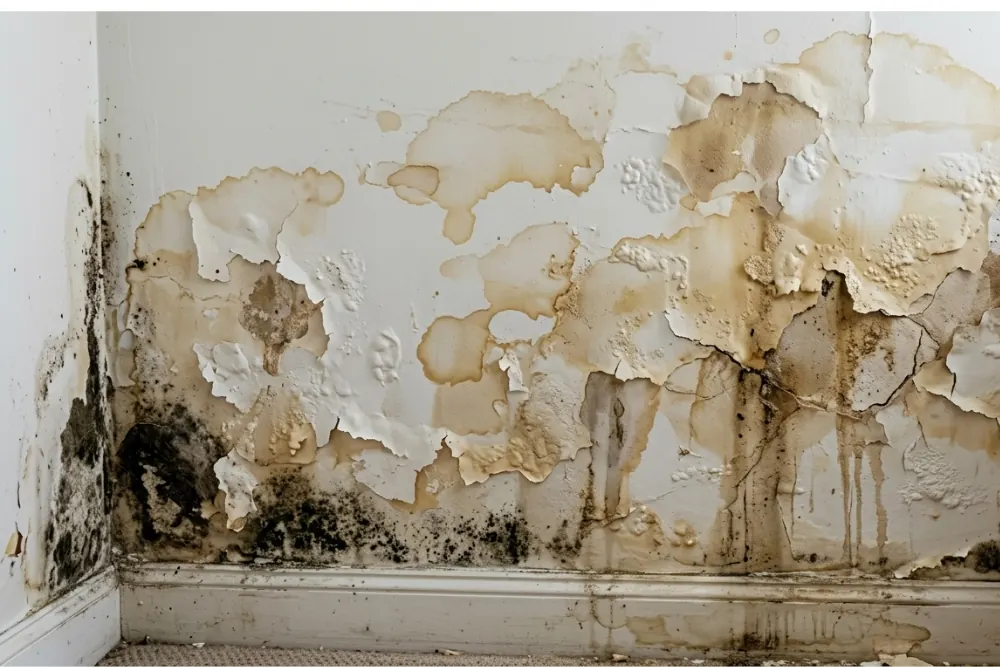
Water leaks in Dubai: what we do
- Finding the leak. The meter test, instruments and pressure tests that locate a leak before a wall is opened. See leak detection.
- Repairing leaking pipes and joints. Clamps, section replacement, fittings and re-piping where a pipe has failed. See pipe leak repair.
- Ceiling and wall leaks. Tracing a stain back to its source, including the flat above. See ceiling and wall leak repair.
- Taps, toilets, showers and valves that drip. See tap repair, toilet repair, shower repair and valve repair.
- Water tanks, heaters, pools and gardens that leak. See water tank installation and repair, water heater repair, pool plumbing and irrigation.
- The supply side of appliance leaks. Taps, hoses and inlet valves for dishwashers, fridges and washing machines.
Where to look first, by what you see
The table names the first place to look and does not replace a test.
| What you see | Where to look first |
|---|---|
| The water meter moves with every tap off | The pipework after the meter, or a fixture that leaks silently |
| A stain, bubble or drip on a ceiling | A pipe or drain above, or the flat above |
| A damp, cold or peeling wall, or a lifted tile | A pipe inside the wall or floor |
| A wet cupboard under a sink | The trap, tap tails, the angle stop or a flexible hose |
| A dripping tap or mixer | The cartridge, washer or seat |
| Water at the base of a toilet, or a cistern that keeps running | The seal, the supply connection or the flush valve |
| Water under the heater, or from its relief pipe | The tank, a fitting or the relief valve |
| Water on the floor beside a dishwasher or fridge | The appliance's own supply and drain |
| Water around a washing machine | The hoses, the tap or the drain connection |
| A roof tank that overflows or stains the ceiling below | The float valve, the overflow or the tank wall |
| A wet patch in the garden or beside pool equipment | An irrigation line, a valve or pool pipework |
| A drip at the handle or body of a valve | The packing or the stem seal |
The first ten minutes of any leak
Do these before anything else. They stop the damage growing and make the repair quicker.
- Close the isolating valve nearest the leak. A sink, a toilet and an appliance each have a small valve on the supply. If the leak is a pipe with no valve, close the main valve for your unit. Our valve repair page explains why a main valve that has not moved for years may not close, and what to do.
- Switch off anything electrical near the water at the breaker, and do not stand in water to reach a switch.
- Take photographs of the wet area, the stain and the pipe or appliance, and note the time. They help with an insurer, a landlord or the building.
- Read the meter with every tap and appliance off, and note the reading and the time. If it moves, the leak is in the pipes after the meter.
- Contain the water, with towels, a bucket and a mop, and lift anything that can be moved off a wet floor.
- Tell building management if the water could reach a neighbour or a common area.
Our leak detection page shows how to turn two meter readings into litres an hour, and what a high-usage alert does. This page does not repeat that arithmetic. It starts where that one stops: what a given drip is worth.
A dripping line: what a drip costs in litres
A drip rate is easiest to know by measuring it, because drop sizes and drip speeds vary a lot. Once you have a figure in millilitres a minute, the table turns it into litres.
| Leak | Per day | Litres a year | Cubic metres a year |
|---|---|---|---|
| A slow drip, 10 millilitres a minute | 14.4 litres | 5,256 | 5.3 |
| A steady drip, 50 millilitres a minute | 72 litres | 26,280 | 26.3 |
| A thin stream, 200 millilitres a minute | 288 litres | 105,120 | 105.1 |
| One litre a minute (the figure on our leak detection page) | 1,440 litres | 525,600 | 525.6 |
Three things follow.
First, a slow drip is small in water. Ten millilitres a minute is less than the water a person drinks in a day. It is still worth repairing, because a drip does not stay small.
Second, a thread is not small. Fifty millilitres a minute adds up to more than 26 cubic metres a year, and a thin stream over 100. Your water bill shows what a cubic metre costs you, and which rate you reach depends on the whole month's use.
Third, the water charge is the small part of the cost of a hidden leak. A ceiling that has taken a year of drips, a skirting board that has swollen and a tile that has lifted cost more than the water. The sum above is the reason to measure a leak, and the damage is the reason to repair it.
Measuring your own drip
Hold a jug or a measuring cup under the drip for exactly one minute and read the millilitres. Multiply by 1.44 to get litres a day. The result is only as good as the minute: a drip that changes with the time of day or with how many taps are open will give different readings. 50 millilitres in the minute is 72 litres a day, which is the second row of the table. A leak under pressure, such as a pinhole in a supply pipe, throws a jet. Do not hold a cup to it. Close the valve and call.
"Dripping line" can mean two things
A dripping line in a house is a supply pipe, a flexible hose or a pipe joint that weeps. A dripping line in a garden is a drip irrigation line, where water is meant to come out at the emitters and a wet patch elsewhere is the fault. The irrigation page covers plugged emitters, flush ends and how to tell an irrigation leak from over-watering. For a garden leak, close the garden valve and watch the meter, as the leak detection page describes. If the meter stops, the leak is in the garden line.
How urgent is it?
This is our sorting, from what each situation can damage. It is not a standard.
| What is happening | Treat it as | What to do |
|---|---|---|
| Water is near sockets, a consumer unit or an appliance plug | Call now | Switch off at the breaker if you can reach it dry, close the water, and call. See emergency plumber |
| A ceiling is bulging, or dripping steadily | Call now | Close the water, put a bucket under the drip and keep people away from the bulge. See ceiling and wall leaks |
| A pipe or joint is spraying or running, and no valve will close it | Call now | Close the main for the unit, and if it will not close, tell building management |
| The meter moves within minutes with every tap off | Call today | Our leak detection page says a leak that moves the meter within a few minutes is a larger loss that needs faster action |
| A slow drip under a sink, or a damp patch that is not growing | Book a visit this week | Close the angle stop, dry the area and photograph it. Check it again in a day |
| A dripping tap or a running cistern | Book a visit | The drip sums above show the water cost is small. Repair it before it damages what is below |
| Water that smells or looks dirty | Call | The ceiling and wall page sets out the grey and black water categories and why they change the clean-up |
Appliance leaks: dishwasher, fridge and washing machine
An appliance leak is two problems with one puddle. Water that comes from the supply side (a hose, an inlet valve, a connection, the small valve on the wall) is plumbing. Water that comes from the machine's own parts (a door seal, a drain pan, an ice maker) is the appliance's. The first can be repaired by a plumber, and the second needs the maker's part.
Dishwasher: where the water shows tells you the cause
A leak that appears only while the machine fills points to the supply side, and one that appears only during the wash or the drain points to the tub, the seal, the pump or the drain hose. Run the machine and watch which phase the puddle grows in.
| Where the water shows | Likely cause | What to check |
|---|---|---|
| Bottom of the unit, while filling | The inlet valve or hose | Look at the hose for cracks and the valve for drips |
| Bottom of the unit, while filling | The water supply connection | A connection that was not tightened properly at installation can weep |
| Over the tub edge | A machine that is not level | Put a level on the top front and check front to back, with the power off, and adjust the feet |
| Door or front | The door seal | Clean it. A torn or missing piece means the seal needs replacing |
| Door or front | The door latch | A loose latch can be tightened. A bent or broken one needs a part for the model |
| Door or front, with suds | Hand-washing liquid in the machine | Use dishwasher detergent only. Ordinary washing-up liquid makes too much foam |
| Sides | The door seal again | A faulty seal is a common cause of leaks at the sides |
| Near the vent, with steam | A blocked drain line | The blockage has to be found and cleared |
| Where the drain hose meets the pump or the sink | A loose clamp or a worn thread seal | Tighten the hose clamp screws, and replace old or worn thread tape |
Where there is no disposal, the hose connects to the sink waste, and our kitchen sink page covers that connection. The supply side is a small angle stop and a braided hose. The valve repair page covers a stop that drips or will not close, and the hoses page covers the braided hose. The seal, the latch and the pump are the machine's.
Fridge and water dispenser: the line behind the door
A fridge with a water dispenser or an ice maker has a supply line from the wall. Three causes sit on the water supply side: the supply line, air trapped in the line and the inlet valve. Others are the fridge's own: the drain tray, the door seal, the ice maker and the chute.
The supply line and the inlet valve are the water side of a fridge, and a plumber can reach the isolating valve and the pipe that feeds it. The drain tray, the seal and the ice maker belong to the appliance. After a filter change, air in the line can cause spurting and drips until it is purged.
The fridge supply line is a pressurised line that runs behind a machine nobody moves, so a weep there can go on for weeks before a stain shows. A water sensor on the floor behind the fridge is the cheap answer, and the sensors section below says what to buy and what it cannot do.
Washing machine
The washing machine plumbing page covers its hoses, taps and drain connection, including burst-stop hoses, shut-off taps and sensors. It is the one appliance with its own page here.
Tank leaks, and what a coating needs before it holds
Our water tank installation and repair page covers how to tell whether a tank is leaking, where tanks leak, the repair methods and the repair-or-replace decision. This section covers one question that page leaves open: what a tank coating or sealant asks of the tank before it will work. Coatings and sealants for tank leaks are sold under a long list of brand names, and the data sheet is the document to read before buying any of them.
A typical coating for a concrete water tank asks for these conditions:
- Sound, cured concrete, cleaned back to a surface the coating can grip.
- Cracks opened, cleaned, primed and filled with the sealant the data sheet names, before the coating goes on. Construction joints get the same treatment.
- A dry surface, with the moisture content below the limit before the primer goes on.
- The stated number of coats and the stated thickness, with the time between coats kept to the data sheet.
- A temperature range for applying and curing the coating. Check it against the temperature of the tank on the day.
- A full cure time before the tank is filled. If the data sheet does not give it, the filling time is a question for the maker.
- Approval for drinking water for a tank that holds drinking water.
A coating that needs a dry surface cannot go onto a tank that is leaking and full, so a coating is a job for an emptied, cleaned and dried tank, and our water tank cleaning page covers the emptying and cleaning. Patching a wet leak with a tube of general-purpose sealant is not what a coating data sheet describes.
Ask the seller of any tank coating, sealant or putty for the document that says it is suitable for drinking water, and for the temperature range it can be applied in.
Leak sensors and automatic shut-off valves
Three different devices are sold as leak detectors. They answer three different questions.
- A leak sensor is a small puck that sits on the floor and sounds an alarm or sends a phone alert when water touches it. It tells you water is present at one spot.
- A flow monitor sits on the supply and watches for water that keeps running. It tells you water is running somewhere, and some can close a valve.
- An automatic shut-off valve closes the supply when a sensor or a monitor says so. It stops the leak and does not say where it is.
Before you buy a sensor, check the siren, the alerts and what else you need to buy, such as a hub or an app subscription.
In summary:
- A sensor says water is present at one spot. A flow monitor says water is running somewhere. Neither says which pipe is leaking. Finding the pipe is the work on our leak detection page.
- Put sensors where water collects first. Add the dishwasher, the washing machine and the fridge from the appliance section above. A sensor in a dry cupboard with no pipe in it protects nothing.
- A shut-off valve belongs on your own unit's supply. In a flat, the building's riser and shared valves are management's. Ask building management before anything is fitted to the pipework, even if it is on your side of the wall. A valve that has not moved for years may not close, and the valve repair page says what to do about that before you rely on one.
Thermal cameras and moisture meters: should you buy one?
Our leak detection page sets out every method an engineer uses, thermal imaging included. A thermal camera shows temperature differences, and a patch of hidden moisture often shows as a cooler or warmer surface. The picture depends on the weather and the humidity indoors, so it is always confirmed with a moisture meter. A camera needs good resolution and sensitivity for small differences to show, and a buyer also needs a moisture meter and the skill to read both. A camera makes sense for a person who manages a block of units and will use it often, and it is a poor purchase for one leak. For one stain in one flat, it is cheaper to have it traced.
Leaks in a flat: whose water is it?
A leak that reaches a neighbour is the quickest way for a small repair to become a dispute. The first rule is to stop the water before anything else, whoever's pipe it is. The second is to find out where it starts, because the answer decides who deals with it: a pipe inside your unit, a shared riser, the unit above or an air-conditioning drain. Write down what you see with the time, take photographs from both sides if the neighbour allows it, and tell building management in writing. A diagnosis from a plumber that names the source is worth more than an argument. Where the leak is in your own pipe, repair it quickly, because the damage downstairs grows with every day. See ceiling and wall leaks.
Dubai conditions that cause leaks
Several things in a Dubai home push pipes and fittings to fail sooner than you would expect. Summer heat makes exposed plastic pipe and flexible hoses brittle. Roof tanks bake in the sun, and floats and overflow fittings crack. Air-conditioning runs most of the year, so condensate drains overflow and drip into ceilings that look like plumbing leaks. Hard water leaves scale that seizes valves and cuts washers. Buildings settle and vibrate, which loosens joints in older pipes. None of this means a leak is likely in a new building, but it explains why the same faults show up so often, and why a yearly check of hoses, valves and the tank pays for itself.
Leaks that come back
A leak that returns after repair usually has one of three explanations. The repair fixed the symptom and not the cause, for example a joint was remade but the pipe is corroded along its length. There is a second leak close to the first that was hidden by it. Or the cause is outside the pipe, such as vibration, movement in the structure or pressure that is too high. We look for the reason a pipe failed before we repair it. If we find high pressure, a failing pressure-reducing valve or repeated surges, we say so, because a new joint on the same pressure will fail again. See pressure valves and water hammer arrestors.
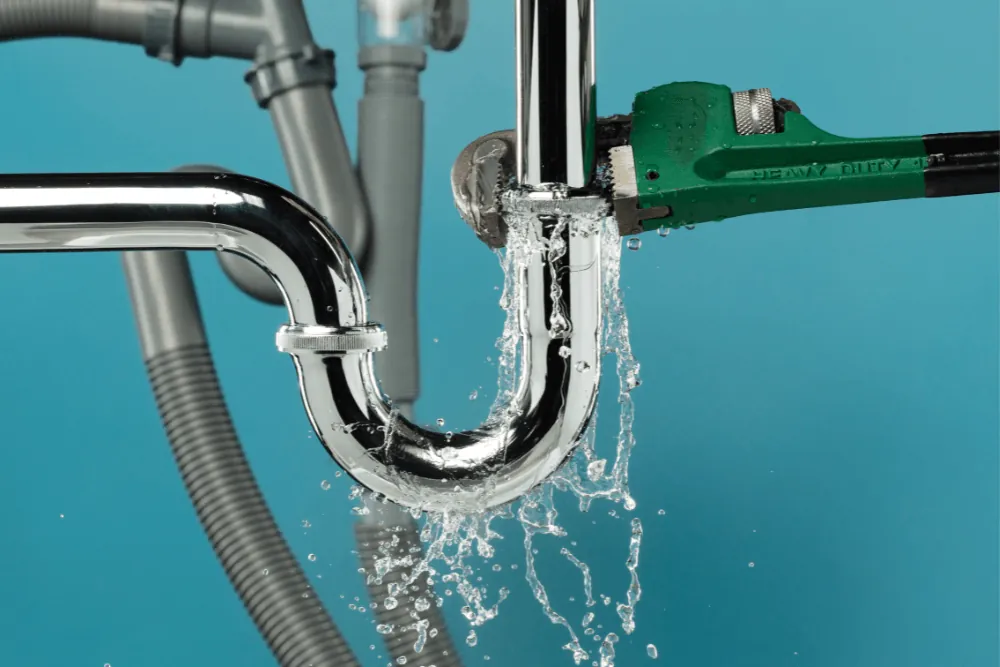
Permission in Dubai: who decides on a leak repair
Three situations need a message before work starts: opening a wall or a ceiling in a flat, fitting something new to the pipework, and a leak that has reached a neighbour. This is general information and not legal advice.
- The utility's boundary. The utility's responsibility ends at the meter, so a leak after the meter is not the utility's to repair.
In practice: in a rented flat, tell the landlord in writing what you found and who is going to repair it, before you pay a plumber for anything beyond an emergency stop-gap. Tell building management before a ceiling is opened or a valve is fitted. The pipe leak repair page has the table of who pays for each kind of leak. Tell us what your building asks for and we work to it.
What you should have when a leak job is finished
A leak repair that leaves you with nothing in writing is hard to use later, with a landlord, an insurer, the water utility or the next buyer.
- A written report saying where the leak was, what caused it, and the pipe, joint or part involved.
- Photographs of the leak before the repair, the repaired part, and the surface before it was closed.
- Meter readings and times, before the repair and after, so the repair is proved by the same test that found the fault.
- Any test result, with the pressure and the time held if a pressure test was done.
- A list of what is still wet or damaged, and whether drying, plaster, paint or tiling remains. Making good is a separate trade unless we quote it.
- FAM's workmanship warranty, in writing. The warranty runs for 30 days and covers our labour only. Parts carry the manufacturer's warranty only.
How we work
- You tell us what is happening on WhatsApp: where the water shows, whether the meter moves, whether you own or rent. Photographs of the wet area and of the meter save a visit.
- We say how urgent it is and what to do until we arrive, using the sorting above.
- We visit and find the source, by the meter test and, where it is needed, the instruments on our leak detection page. We say what is at fault before proposing any work.
- We give options and a price in writing, a repair and a replacement side by side where both are possible.
- Check permission. In a rented or managed property, ask the landlord or building management whether they need to approve this work before the visit.
- We repair and prove it, with a second meter reading or a pressure test.
- We hand over the report and photographs, and show you the isolating valves for the area.
Where we work in Dubai
We cover all of Dubai, including Dubai Marina, JBR, Downtown Dubai, Business Bay, Jumeirah Lakes Towers, Palm Jumeirah, Al Barsha, Jumeirah Village Circle, Dubai Hills, Mirdif, Deira and Al Quoz. See the full list of areas.
Leak records for the property file
Keep a note of each leak with the date, the cause, the repair and the invoice, and attach the photos. A property with a clear record is easier to sell, to rent and to insure, and a repeat leak is quicker to diagnose when the first one is written down. If you manage several properties, keep one sheet for each so patterns show up, such as the same riser failing in two flats.
How much does leak work cost in Dubai?
Four costs sit behind a leak. Not all of them have a figure we can give.
- The water. The table earlier on this page turns a measured drip into litres. Your water bill shows what a cubic metre costs you.
- The detection. Finding a hidden leak depends on the size of the property, where the leak is and the methods needed. See leak detection.
- The repair. A washer or a flexible hose is a small job. A pipe in a wall or a slab is larger.
- The damage. Drying, plaster, paint and tiling are separate trades unless we quote them.
What moves the price: the pipe material and size, how deep or hidden the leak is, whether the wall, ceiling or floor has to be opened and made good, and whether there is more than one leak.
Prices exclude 5% VAT and are fixed before we start.
- Basic leak repair, such as a washer, a minor leak or a flush mechanism, from AED 145 + VAT.
For other jobs we give a fixed price on WhatsApp before we start. Ask for the price in writing on WhatsApp before we begin.
Water leak FAQs
How much water does a dripping tap waste?
It depends on the drip. Measure it: a jug under the drip for one minute gives millilitres, and 50 millilitres a minute is 72 litres a day, or 26.3 cubic metres a year. The drip is cheap. The wet cupboard under it is not.
How do I know if I have a hidden leak?
Read the meter with every tap and appliance off, wait, and read it again. Our leak detection page shows how to turn the two readings into litres an hour.
Who pays for water lost to a leak?
A leak after the meter is the customer's to pay for, because the utility's responsibility ends at the meter. In a rented home, who pays for the repair depends on the tenancy contract and on what failed. See pipe leak repair.
What makes a dishwasher leak?
The causes depend on where the water shows: a cracked inlet hose or a leaking inlet valve, a loose supply connection, a machine that is not level, a torn door seal, a loose latch, hand-washing liquid used in the machine, a blocked drain line, and a loose drain hose clamp. The table in the appliance section sets each against its check. The hose, the valve and the connections are plumbing, and the seal and latch are the machine's.
Why is my fridge leaking water?
Water on the floor with no dispenser use points to the drain tray, the pan or the supply line, and water only at the dispenser points to air in the line, the inlet valve or the chute. The supply line and valve are plumbing, and the tray, seal and ice maker are the fridge's.
Can I fix a leaking water tank with sealant?
Only with a material suitable for drinking water, and only on a surface the product allows. A coating data sheet asks for a clean, dry surface, filled cracks and a full cure, and a tank that is leaking and full does not meet that. Our water tank installation and repair page covers the repair methods.
Are leak sensors worth buying?
A sensor tells you water has reached it. It does not find a leak inside a wall. Sensors earn their price under sinks and behind appliances, and when nobody is at home. The sensors section above sets out the flow monitor and the shut-off valve.
Can a thermal camera find a leak?
Sometimes. A thermal camera shows temperature differences, so it can reveal a hot pipe leaking inside a wall or a cold, damp patch around a cold pipe. It cannot see water itself, and on a warm summer wall the picture can be unclear. We combine it with a moisture meter, a pressure test and, where needed, acoustic listening before opening anything.
How do I measure how fast something is dripping?
Hold a jug under the drip for exactly one minute, read the millilitres, and multiply by 1.44 to get litres a day. Fifty millilitres in the minute is 72 litres a day, or 26.3 cubic metres a year. Do not hold a container under a jet from a pressurised pipe. Close the valve and call.
What should I do first when a pipe leaks?
Close the nearest isolating valve, or the main for your unit, switch off electrics near the water at the breaker if you can reach it dry, photograph the damage, and contain the water. Then read the meter and tell building management if the water could reach a neighbour. The first-ten-minutes list earlier on this page has the six steps in order.
Book a leak repair in Dubai
Tell us where the water shows, whether the meter moves with everything off, and whether you own or rent. Photographs of the wet area, the pipe or appliance and the meter help. If the water is near electrics or you cannot close a valve, call. We will find the cause, give you the options and a price in writing, do the work and hand over a report.
WhatsApp: +971 55 407 7427 · Request a quote
Visit us: Office 871, Oasis Mall, Al Quoz 1, Dubai, UAE
Related services: Leak detection · Pipe leak repair · Ceiling and wall leaks · Water tank installation and repair · Water heater repair · Valve repair · Pool plumbing · Irrigation · Washing machine plumbing · Emergency plumber