
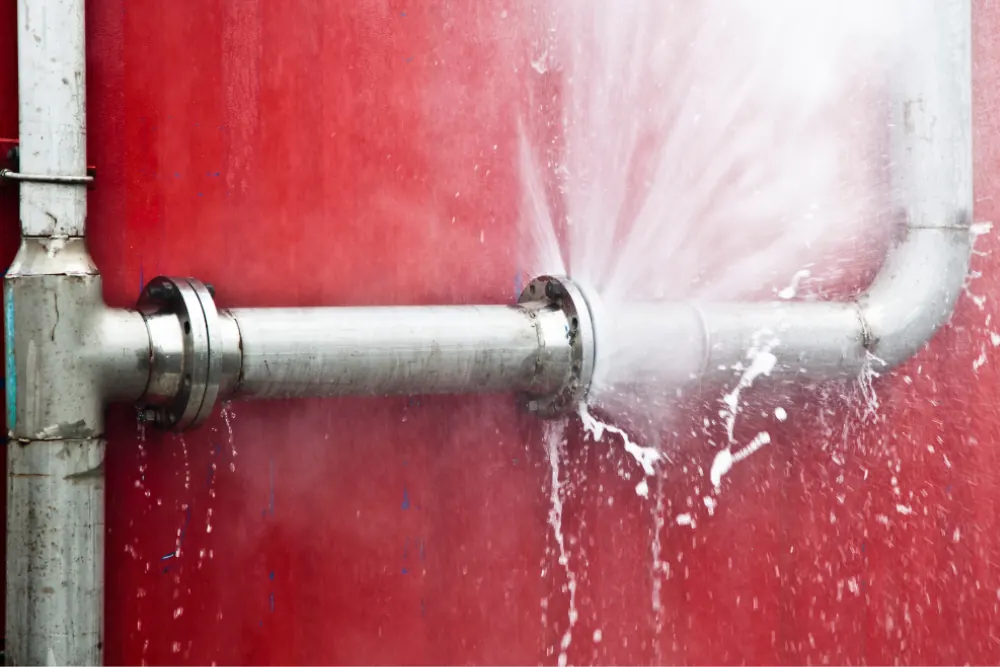
Pipe leak repair in Dubai: what we do
- Burst pipe repair. A split or blown-out section cut out and replaced, with the water restored on the same visit where the pipe allows.
- Pinhole and weeping leaks. Repair of the pipe or the joint, not just a patch over the symptom.
- Failed joints. Fusion, solvent, soldered, compression and threaded joints re-made correctly.
- Concealed pipe. Leaks in walls, ceilings, shafts and slabs, once the leak has been located.
- Exposed and roof pipework. Pipe split by sun, impact or movement.
- Temporary repairs. A clamp or sleeve to stop the water until the permanent work, labelled as temporary and dated.
- Pressure test after every repair, and a check for the cause.
- Advice on the second problem. Whether the pipe has more failures coming, and when repiping is cheaper than a third repair.
Neighbouring topics have their own pages. Finding a leak you cannot see is on our leak detection page, and repairing the ceiling or wall afterwards on our ceiling and wall leak page. Replacing a whole run is on our repiping page. Joints and connectors are on our pipe fittings page, flexible hoses on our hoses page, and isolation valves on our valve repair and replacement page.
Stop the water first
Close the nearest valve upstream of the leak, or the main if you do not know which that is. Switch off the water heater and any pump so neither keeps pushing water into the break. The full order of steps, including drawing down the pressure and photographing the damage, is on our valve repair and replacement page under "The first minutes of a burst or spray". If you cannot stop it, WhatsApp us or see our emergency plumber page.
A pipe that is spraying under pressure is one case where a temporary clamp does not come first. The water has to be stopped upstream before anything is wrapped around the pipe.
What kind of leak is it?
The repair follows the type of failure, so we start by naming it.
| Type | What you see | What it points to | Repair class |
|---|---|---|---|
| Weep at a joint | A damp ring or slow drip at a fitting | A badly made joint, a loose connection, or movement. See pipe fittings | Re-make the joint, or replace the fitting |
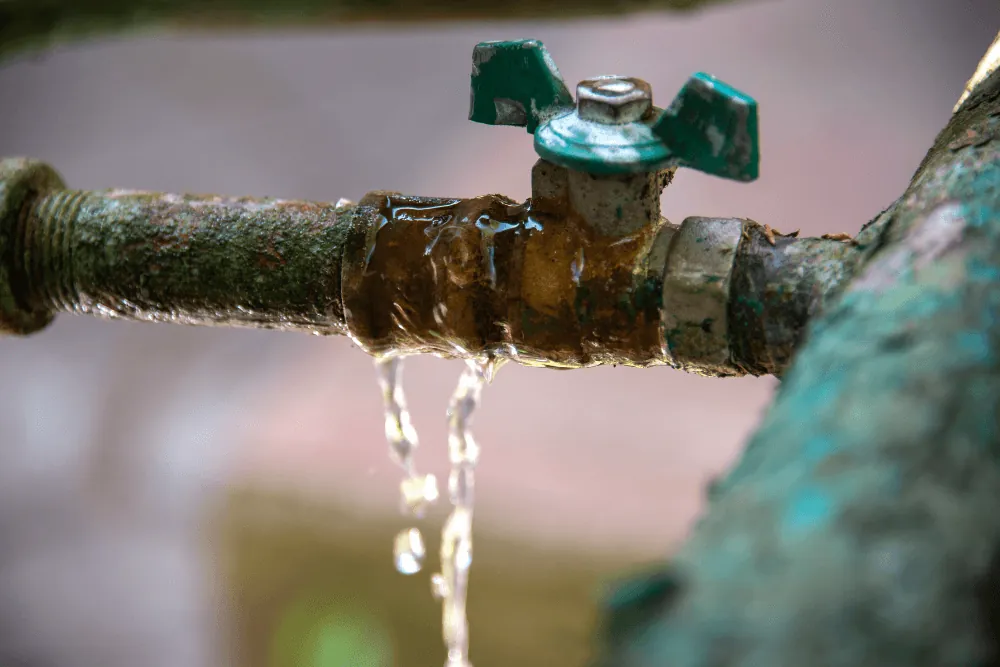
| Pinhole | A fine jet or a wet spot on the pipe wall | Corrosion from the inside, in a metal pipe | Cut out the section. Repeated pinholes mean the run is failing |
| Split or crack | A visible line along the pipe, with steady leaking | Over-pressure, impact, heat or sun damage, or a defect | Cut out and replace the section |
| Burst or blow-out | Water in volume, a ruptured wall of pipe or a joint pulled apart | Pressure beyond what the pipe or joint could hold | Replace the section, then find out why |
| Fitting failure | A crack in a brass or plastic fitting | Dezincification, over-tightening or stress | Replace the fitting |
| Pipe knocked or drilled | A leak that starts after building or fit-out work | Mechanical damage | Replace the section |
| Underground line | Wet ground, a drop in pressure or a high bill | A cracked or loosened buried line | Locate first. See leak detection |
We call a leak a burst when the pipe wall or joint has failed outright and the flow is large. The names overlap in everyday use, and the repair is the same: a failed section comes out and a sound one goes in.
Why pipes fail
| Cause | What to know | What it means for a Dubai property |
|---|---|---|
| High pressure | A supply above what the pipe, valves and fittings are rated for stresses every weak point | The next weakest joint fails after a repair. We measure the pressure with a gauge |
| Water hammer | A quick-closing valve or a pump stopping sends a pressure surge along the pipe | Banging, loosened joints and cracked fittings. See water hammer arrestors |
| Sun and heat | PPR and CPVC degrade in sunlight, and uPVC softens in heat | Rooftop and balcony runs split first |
| Corrosion | Copper pinholes in aggressive water, and galvanised steel rusts from the inside | Repeated leaks on the same run. See repiping |
| Brass fittings | Brass can lose its zinc and fail from the inside. See pipe fittings | Fittings fail while the pipe is sound |
| Expansion and movement | A hot pipe grows, and a pipe fixed rigidly at both ends loads its joints | Leaks at joints on hot lines |
| Bad joints | An under-heated fusion joint, a joint not cured when pressurised or a loose compression nut | A weep soon after the work |
| Impact | Nails, screws and drilling during fit-outs | Leaks that start after building work |
| Age | Every material has a life | A second and third failure on the same run |
We ask the same questions on every visit: how high is the pressure, what is the pipe made of, how old is it, and has it failed before. The answers decide between a repair and a repipe. A repair that ignores the pressure leaves the next weakest point to fail.
Is it really a pipe leak?
Not every wet patch is a failed pipe, and the repair for each is different. Before opening anything we rule out the common look-alikes.
| What you see | Might be | Where to go |
|---|---|---|
| A cold pipe that is wet along its whole length | Condensation, not a leak. It gets worse in humid weather | Pipe insulation has the sweat-or-leak test |
| A drip at a tap spout or handle | A worn washer or cartridge | Tap repair |
| Water at the base of a toilet or from the cistern | A seal, a fill valve or a flexible connector | Toilet repair |
| Wet floor beside a machine | A hose or its connection | Hoses |
| Water around the heater | A tank, a relief valve or a fitting | Water heater repair |
| A tank overflowing | A float valve that does not shut off | Water tank installation |
| A meter that moves with everything off | A leak somewhere after the meter | Do the meter test on leak detection |
We check these first because they are cheaper to fix than a pipe, and because cutting a wall for a leak that turns out to be a hose is the costly kind of mistake.
Repair by pipe material
Different materials fail in different places and mend in different ways. This table sets out the repair route by material.
| Pipe | Common failure point | Permanent repair | Notes |
|---|---|---|---|
| PPR | Joints, and sun-damaged exposed runs | Cut out the section and fuse in new pipe and couplings | A fused joint cannot be re-made in place |
| CPVC | Joints not cured, brittle cracks, sun damage | Cut out and replace with solvent-cemented pipe and couplings | Cure time before pressure. Brittle pipe can crack further if clamped tight |
| uPVC | Cracks at fittings, impact | Cut out and replace the section | Cold water only, never on a hot line |
| PEX | Fittings and kinks | Replace the fitting, or cut and join with the right fitting for the PEX type | Indoor only, because UV damages it |
| Copper | Pinholes, joints | Cut out and replace the section by solder, compression or press | Repeated pinholes mean the run is failing |
| Galvanised steel | Corroded threads and walls | Cut out and replace the section, usually with a transition to new pipe | Rust inside means the whole run is near the end |
| Flexible hose | The braid or the nut | Replace the hose. See hoses | Not a pipe repair |
The method matters less than the preparation. A section is cut square, the ends are cleaned and deburred, the new section is the same material and size, and nothing is closed until the repair is tested.
Clamps, putty and tape: what they do and what they do not
A clamp or a wrap stops water. It does not repair the pipe.
The limits are as important as the methods. A standard repair clamp is made for straight pipe and cannot seal elbows, tees, couplings, valves or threaded joints. High static water pressure makes small repairs more likely to fail, and a clamp needs access around the whole pipe, so a leak inside a wall or slab is a plumber's job.
When a temporary repair is acceptable
- The pipe is exposed and straight, so a clamp can seat properly and be inspected.
- A permanent repair is booked, and the clamp is dated.
- The pressure is known and not excessive.
- The leak is not inside a wall, ceiling or slab. A temporary repair you cannot see is a leak you will find on the ceiling.
- The pipe is not a cracked plastic one. A tight clamp can crack brittle CPVC further.
A clamp that stays on is a decision to leave the pipe as it is.
Repair again, or repipe?
One leak on sound pipe is a repair. A pattern is a different question. The full decision table is on our repiping page. The short version we apply on a leak visit:
- One failure, at a joint or fitting, on otherwise sound pipe. Repair.
- A second failure on the same run, in the same material, soon after the first. Price the run against a third repair.
- Pinholes in copper, or rust-coloured water from steel. The pipe is the fault, so the run is replaced.
- A leak where the wall must be opened anyway. Replace the exposed length while it is open, since the access is already paid for.
- A burst with no obvious cause. Find the cause before closing anything. High pressure, a fast-closing valve or a pump that over-pressurises will burst the replacement too.
If you want to know whether a run is near the end of its life, we open an accessible length, look at the pipe wall and read the water test.
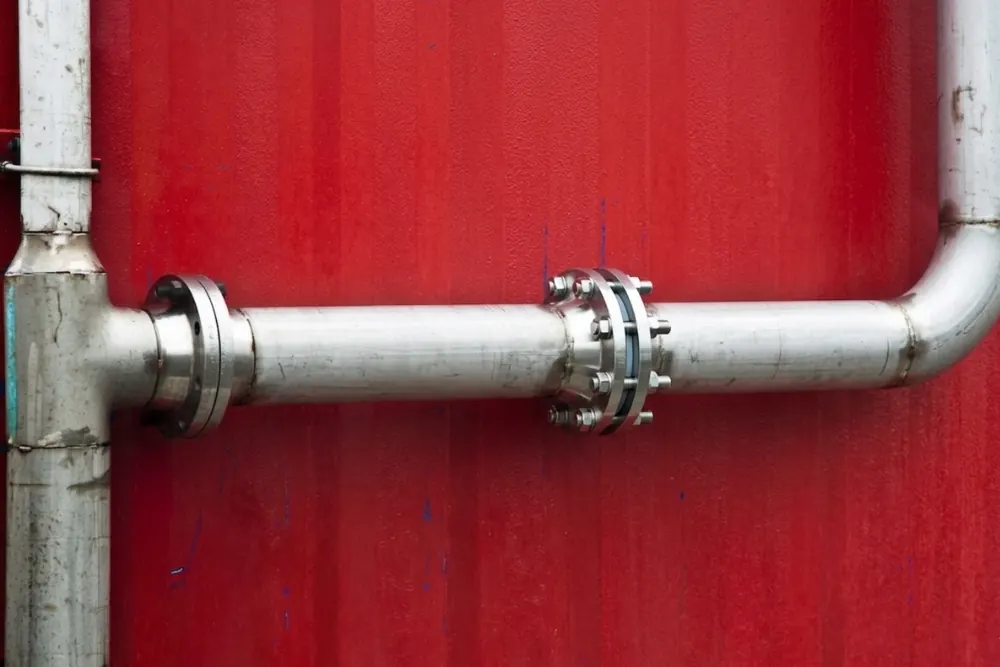
Testing the repair
A repair is not finished when the water stops. It is finished when it holds.
- Fill slowly and bleed the air from the highest tap, so trapped air does not give a false reading or a surge.
- Hold the line at working pressure and watch the gauge and the joint. Our repiping page explains pressure testing and what a steady, falling or rising gauge tells you.
- Inspect the joint by eye and by touch. A slow weep can be too small to move a gauge.
- Check again later. Watch the joint over the following days, and tell us if a damp ring appears.
- Check the cause. If the pressure at the property is high, we say so and the repair is not the end of the job.
- Restore the finish only after the test is passed. Closing a wall over an untested joint is how the second visit happens.
The week after a repair
A new repair is the weakest part of the line until it has seen a few cycles of pressure and temperature. For the next week:
- Look at the joint each day. A damp ring, a dark stain on the lagging or a drip tray that is not dry is a weep.
- Run the meter test once, with everything off. If the meter moves, a leak remains. See leak detection.
- Listen. Banging when a tap closes means pressure or loose pipe, and the cause may be the one that split the pipe in the first place.
- Watch the bill. Compare the next bill with the same period last year.
Access, opening and making good
A concealed repair means opening the wall, ceiling or floor. We open the smallest area that lets us cut, join and test, once the leak has been located. Locating it first is the point of the leak detection page, which also covers why we confirm before we cut.
What we leave behind depends on the agreement:
- An access panel where the pipe will need to be reached again, such as at a joint or a valve.
- A patched opening, filled and ready for paint or tile.
- A full finish, where we or a partner trade restore the wall, ceiling or tile.
Repairs to ceilings and walls, including staining and paint, are covered on our ceiling and wall leak page. In a rented property or a building with management, opening a wall or ceiling needs the right permissions, covered below.
Drying and damage control
Stopping the leak is the first step. Getting the building dry is the second, and the sooner the better, because mould starts where materials stay wet. Wet ceiling tiles, insulation and swollen wallboard are usually replaced. Intact wallboard, block and wood can often be dried in place with fans and dehumidifiers. Wet materials dry more slowly in humid air, which is a reason to start at once.
What we do and do not do: we stop the leak, repair the pipe and tell you what is wet. Drying equipment and mould assessment are specialist work, and we say so when the damage is beyond a patch. If the water came from a drain or sewer and not a supply pipe, tell us before you touch anything.
The water bill after a leak
Water that has passed the meter is billed, so a small leak left running adds up. A steady loss of two litres a minute is nearly 3,000 litres a day. That is why the first hour matters.
- Repair quickly, because every hour of flow is on the bill.
- Keep the invoice and our report with the date of the leak and the date of the repair. We provide both.
- Check your usage against the same month last year once the repair is done.
Closing the main before a long trip is the cheapest protection a property has, and a neighbour or the building's staff can do it for you if you are away and a leak starts.
Who is responsible
| Situation | What to know |
|---|---|
| Pipe or valve after the water meter | The owner or customer |
| Common pipes in a building | The building. Management arranges the work |
| A rented flat | Tell the landlord in writing, with photos |
| A leak from the flat above | Involve building management, who can reach the owner |
| A leak into the flat below | Close the valve, tell the neighbour and management, and offer access |
Tell us what your building asks for and we work to it. We give a written note of what we found and did, with photos, which both sides can rely on. We are plumbers, not insurance advisers or lawyers.
What to keep
- Photos with dates of the leak, the damage and the repair.
- The plumber's report and invoice, with the cause stated.
- Your meter readings before and after, from the meter test.
- Messages to the landlord or management, in writing.
- Your insurance policy, and a claim reference if you make one.
Where pipes leak most in Dubai homes
Some places fail again and again, so we look there first. The flexible hose under a basin or sink, which is covered on our hoses page. The joints on a roof or balcony run that the sun has been working on for years. The point where a pipe passes through a wall or slab and has been moved by the building. The pipe behind a tiled shower, where one weeping joint can run for months before a stain shows. And any run that was touched during a fit-out, because a screw or drill can nick a pipe that only fails weeks later. If your leak is in one of these places, say so when you message us.
While you wait for the plumber
Once the water is stopped, keep people and things away from the wet area. If water is near sockets, a light fitting or a consumer unit, switch off the electricity for that area at the board and do not touch wet fittings. Lift rugs, electronics and paper off the floor, and put towels or a bucket under a ceiling drip. Photograph the damage before you move anything, and leave a bucket in place so we can see how fast it fills. Leave the pipe as it is: do not wrap it, tape it or tighten a joint, because that can hide the failure and crack a brittle pipe.
Flexible hoses and when a pipe leak is not the pipe
Many calls that start as a burst pipe end as a hose. A braided hose that has split, a nut that has loosened or a connector that has aged can pour out as much water as a cracked pipe. We replace the hose and check the isolation valve beside it, and we tell you if the valve itself is worn. See valve repair and replacement.
Permission in Dubai: opening walls and isolating water
Repairing a pipe inside your own unit is maintenance, and a message to the landlord is enough. Opening a wall or ceiling in a rented or managed property, isolating a riser that serves other units, or working in a shared shaft needs building management. Tell us what your building asks for and we work to it.
How we repair a leaking or burst pipe
- Stop the water and isolate the section. In a flat, that may need management.
- Diagnose. Name the type of failure, the material, the pressure and any history. Find the cause, not just the hole.
- Locate a hidden leak before opening anything.
- Open only what is needed, and protect the floor and furniture.
- Cut out the failed section square, with enough length to join sound pipe at both ends.
- Join with the right method for the material and size. Joint detail is on our pipe fittings page.
- Fill, bleed and test at working pressure, and check by eye and touch.
- Look for the cause. Pressure, hammer, a fast valve, corrosion or movement.
- Make good or hand over, with an access panel where the repair may need to be reached again.
- Report. What failed, why, what we did, what to watch, and whether a repipe is likely.
Where we work in Dubai
We cover all of Dubai, including Dubai Marina, JBR, Downtown Dubai, Business Bay, Jumeirah Lakes Towers, Palm Jumeirah, Al Barsha, Jumeirah Village Circle, Dubai Hills, Mirdif, Deira and Al Quoz. See the full list of areas.
Questions we ask when you report a leak
A good description saves time and helps us bring the right parts.
- Where is the water, and where does it come from? A drip from a ceiling, a wet wall, a pool on the floor.
- When did you first see it? A new leak and a long-standing stain are different cases.
- Does it happen all the time or only when something is used? A leak that appears with the shower is not the same as one that runs constantly.
- Does it change with the water heater, the pump or the tank? A leak on the hot side only suggests a heater line.
- Is the water clear or dirty? Brown water suggests a corroded line. Soapy or grey water suggests a waste.
- Is the meter moving with all taps closed? If it is, the leak is on the supply side.
- Has anyone worked on the property recently? Building work nearby or a recent repair is relevant.
Locating a hidden leak
When the pipe is not visible, we find the leak before we open anything: a meter test, closing valves section by section, listening on the pipe, a thermal camera, a pressure test and a moisture meter. The full method is on our leak detection page. The aim is to open the smallest possible area and repair the right place.
After the repair: what to expect
A leak repair is not complete until the area is dry and the water has been tested. Expect to see the following:
- The pipe repaired and supported
- The pressure test or the meter check confirming the system is tight
- The wall or floor closed up or patched, or a clear plan for making good
- A note of what was found, what was done and how the repair is protected by the warranty
- Advice about drying, mould and any further checks
If the leak has damaged finishes, we tell you plainly what is included and what is not. The 30-day workmanship warranty covers our labour on the repair. Parts carry the manufacturer's warranty only.
A final check before you pay
Before you pay for a leak repair, look at the work. Check the area is dry, the repair is supported, the water pressure is normal and nothing drips. Ask for the note of what was done. Prices exclude 5% VAT, and the price is fixed on WhatsApp before the work starts.
How much does pipe leak repair cost in Dubai?
The price follows the pipe, the access and the hour.
- Call-out and diagnosis. Finding the leak and its cause. The visit fee is AED 50 + VAT, credited if the work goes ahead.
- The pipe and fittings. Material, size and how much is replaced.
- Access. A pipe in an open shaft costs less to reach than one behind tile or in a slab.
- Isolation. A leak that can be isolated locally is quick. One that needs the building's riser off takes planning.
- Making good. Patching, painting and tiling after the opening.
- Pressure fault. A regulator or a valve if the cause was pressure.
We do not publish a starting price for this job. Send a photo on WhatsApp and we give you a fixed price before we start. Prices exclude 5% VAT.
Pipe leak and burst pipe repair FAQs
Can I fix a leaking pipe myself?
For a short time, if the pipe is exposed and straight, a clamp can stop the water. Most household clamps are meant for emergency use and should be dated to remind you to schedule the permanent repair. A leak inside a wall, a joint or an elbow is not a clamp job. WhatsApp us.
How long does a pipe clamp last?
There is no safe figure. A clamp is temporary, it can fail without warning, and we replace the section for the permanent repair.
Is a burst pipe an emergency?
Yes. The volume of water and the time before damage are the reasons. Close the nearest valve, switch off the heater and pump, and WhatsApp us. Our emergency plumber page covers out-of-hours calls.
Why does my pipe keep leaking in different places?
Leaks scattered across unrelated runs point to something shared: high pressure, the water chemistry or an old material. Repairing each leak without checking the cause means paying for the next one. We measure the pressure and look at the pipe before we say how much is left.
Will you have to break my wall?
Only if the pipe is inside it. We locate the leak first so the opening is as small as it can be, then leave an access panel or a patched opening.
Who pays for a burst pipe in a rented flat?
Tell the landlord in writing, with photos. We are not lawyers, so this is general information.
Will the water bill be reduced after a leak?
We cannot say. Water after the meter is the customer's responsibility. Ask your water supplier directly and keep our repair report and invoice.
What if the leak is from the flat above?
Involve building management, who can reach the owner, and keep photos and dates. We can say where the water is coming from and what failed.
How soon should the wall be dried?
As soon as the leak is stopped, because mould starts where materials stay wet. Wet insulation, ceiling tiles and swollen wallboard are replaced. Intact wallboard may dry in place. Drying equipment is specialist work.
Should I repair or repipe?
One failure on sound pipe is a repair. A second failure on the same run, pinholes in copper or rust from steel point to the pipe itself, and the run is replaced. See our repiping page. We tell you which we think it is before the work.
Book a pipe leak or burst pipe repair in Dubai
Tell us what the pipe is, where it leaks and how fast: a drip, a spray or a flood. Photos of the leak and the pipe on either side help. If water is running, close the nearest valve and WhatsApp us. We will send a plumber to stop the leak, repair the pipe, test it and tell you what caused it.
WhatsApp: +971 55 407 7427 · Request a quote
Visit us: Office 871, Oasis Mall, Al Quoz 1, Dubai, UAE
Related services: Leak detection · Ceiling and wall leak · Repiping · Pipe fittings · Valve repair and replacement · Emergency plumber