
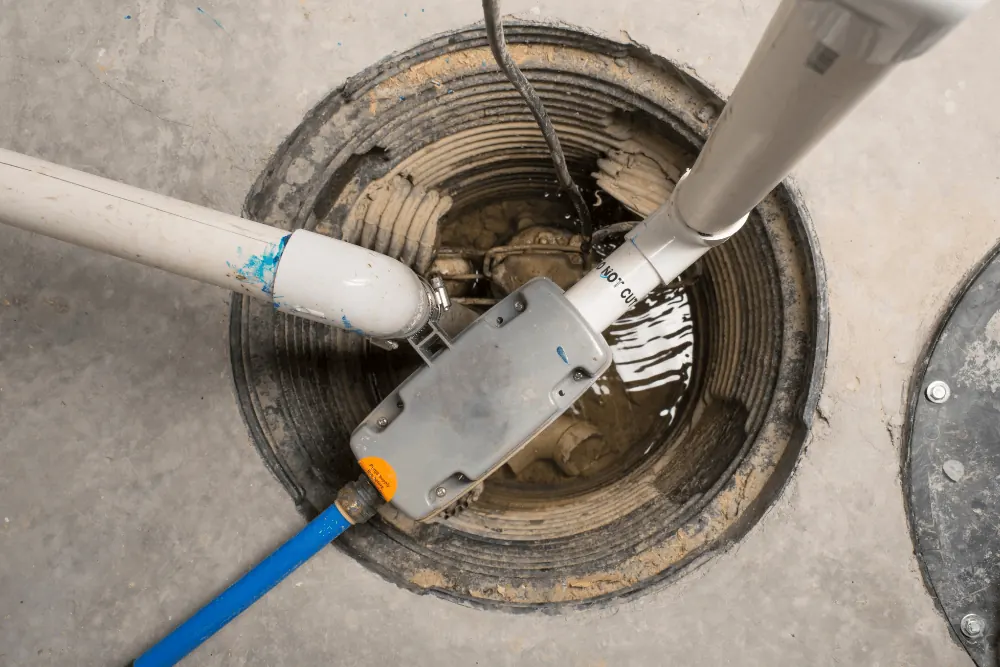
Sewage plant in Dubai: what we do
- Working out which plant you have or need. Municipal sewer, community plant, private package plant or a tank.
- The pipework around a plant. The inlet from the building, the outlet, the vents, the access covers and any grease trap ahead of the plant. See grease traps and the sewer line.
- Tankers and pump-outs. See the septic tank and STP and septic tank cleaning pages.
- Blocked drains and back-ups. Inside the property, drain unblocking, and drain jetting for the line outside it.
- Basic checks on small plants. Covers, vents, levels and the plumbing connections. The machines, the biological process and larger plants are for the plant's maker or a trained operator, and we say so when a fault sits on that side.
- Emergency visits. Sewage coming up in the home. We answer calls and send a plumber 24 hours a day, 7 days a week, and we do not promise an arrival time.
- Areas. Across Dubai. The list is near the end of this page, and the full list of areas is on its own page.
Which sewage plant you mean: one name, four things
The same words cover plants of very different size. What differs is who owns the plant and what you have to do about it.
| What people mean | Who owns and runs it | What to know | Where to read more |
|---|---|---|---|
| A large public sewage treatment works | The sewer operator | Takes the flow of the public sewer network for a whole city. A property reaches it by connecting to the public sewer | Sewage treatment |
| A community plant | A district developer or an operating company | Serves a district. The treated water often goes to irrigation and cooling | This page |
| A domestic or package plant for a villa, a compound or a building | The property owner, or the developer until handover | Sized in people. Makers publish ranges | This page, and septic tank and STP |
| A recycling plant | Anyone who treats water for reuse | The product is treated sewage effluent for irrigation and cooling | Sewage treatment |
The first question for any call about a plant is whose it is. A smell near a large public works is the operator's. A smell from a plant in your compound is the owner's, and the owner is the person who has to find the operator. A plant that is blocked at the inlet is a pipe problem and the pipe is the owner's. See the sewer line for who owns what between the building and the public connection.
The big plants: public and community
The big plants matter to a property owner through the network that feeds them: a building either connects to the public sewer, which leads to those plants, or treats or stores its own sewage. The detail of the stages is on the sewage treatment page.
A community plant serves a district under a long-term arrangement, usually owned by the district's developer, with an operating company running it day to day. Its treated water commonly goes to irrigation and cooling. Where a community plant serves your plot, the operator is usually responsible for the plant and the network, and the owner for the private line inside the plot. Check your title or service agreement, because the boundary decides who you call.
Sizing a building plant
A plant for a building or a compound is sized by the people who use it and by the water they send to it each day. Makers publish a range of people for each model, and the same plant serves fewer people if each person uses more water, which is why two makers can quote different plants for the same building. Ask the maker for the design basis in writing: how many people, how many litres per person per day, and what peak the plant is built to take.
Count the people the building will hold, not the people who live there on day one. Never choose a plant below the calculated size. If no model matches the figure exactly, choose the next size up. Offices, schools and restaurants load a plant differently from homes, and a laundry, a food kitchen or a large dishwashing line sends a stronger flow that a simple head count cannot size. Those need a measured flow and a strength figure from a design engineer.
A building that fills gradually sends the plant less than its design flow at first. The start-up section below says the biology wants the load stepped up, so a half-occupied building supplies a step. A plant sized for the finished building and run at a fraction of its flow is a design question to raise with the maker before handover.
Where a plant goes: siting, odour and noise
A plant has a blower that makes noise, tanks that can smell when something goes wrong, and a vent.
| Topic | What to plan for |
|---|---|
| Location | Site the plant away from houses, or enclose it, to reduce the impact. An open plant should be fenced to keep out trespassers and children |
| Odour | Run ventilation pipes up to roof level so the smell is released above people. Where that is not enough, carbon filters or similar treatment may be needed |
| Noise | Use silencers, sound barriers, anti-vibration mounts and low-speed blowers. Air intakes and exhausts should be designed to avoid whistling and should not face nearby buildings |
A quieter blower runs at a lower speed, and a belt reduction or a slower motor is quieter than a fast motor driving the blower directly. Ask the maker for the blower speed and the noise level at one metre, in writing, before the position of the plant is fixed.
How far a plant must sit from the nearest home is not a figure we can give you. Ask building management or the plot's developer what applies, get the answer in writing and give it to the maker before the order.
For a compound, four practical points:
- The vent. A vent pipe that ends at a window or a balcony delivers the smell to the people the plant is meant to protect. Hold the designer to roof level.
- The blower housing. A blower on a bare slab beside a bedroom wall is the noise case. An enclosure, a vibration mount and a position away from facades fix it.
- The access. A tanker or a service vehicle has to reach the covers.
- The fence. A plant with open tanks in a compound with children needs the fence, the cover or both.
Start-up: the weeks before a plant treats
A new biological plant does not treat sewage on the day it is switched on. The bacteria that do the work have to be put in and fed, and they take weeks to build up to full strength. Typical figures are several weeks, but the maker sets the plan for your plant.
A seller who quotes a figure for the treated water should also give the sample method and the day it was taken, because a figure without those cannot be checked.
In practice:
- A plant handed over after the clean-water tests has not been proven. The tests show that the tanks hold water and the machines run. They show nothing about the biology.
- The weeks are part of the programme. If the plant has to serve an occupied building, the commissioning has to start before the occupants arrive, or the first residents are the load that tests it.
- The seed is the maker's decision. Ask which seed was used and where the sludge came from.
- Step the load up. A plant fed at full load from day one can fail to establish.
Reading a seller's claims
Sellers of packaged and membrane plants publish claims that sound precise. Treat each one as a question to ask the seller in writing, not as an established fact.
| The claim | What to ask |
|---|---|
| A capacity range for a unit | Which figure governs, and is it for a single unit or modules together |
| A design basis and a promised quality for the treated water | The sample method, the temperature and the peak the plant is built for |
| Removes nearly all virus and bacteria | A test report, the laboratory and the date |
| Effluent suitable for irrigation, no smell | A number, and the requirement it meets |
| Fast delivery and start-up | A written lead time and installation time |
| Minimum work on site | What the work is, and who does the civil and electrical parts |
| Imported quality equipment | Which parts, from which maker |
A claim of no microorganisms at all is a stronger statement than any usual quality target, and only a test result can back it. Ask for the counts, the method and the date.
Approvals
A connection to the public sewer needs approval first, and the connection points are set by the sewer operator. A private plant has to meet the requirements that apply to the plot, including where the treated water goes. We do not state a standard for the treated water of a private plant, because the one that applies depends on the plot and on the use of the water. The right order is to ask building management or the plot's developer which requirements apply, get the answer in writing, and give that document to the maker before the quote, so that the quote is to a requirement and not to a brochure. The pipework side of connections is covered on the septic tank and STP page.

Eight checks before you buy a plant
Send us a quotation or a brochure on WhatsApp and we will go through it with you.
- The design basis, in writing: people served and litres per person per day, and the peak the plant is built to take. The sizing section above shows why two makers can quote different plants for the same building.
- The guaranteed effluent, in numbers, with the test method and the sample point. A statement that the water is suitable for irrigation is not a figure.
- The approval route: which approval governs the plot, who applies, and what happens if the answer changes after the order.
- What the price includes: the tank or container, the blower, the pumps, the panel, delivery, the base, the civil work, the electrical connection, the seeding and the commissioning.
- The noise and the vent: the blower speed, the noise at 1 metre, the enclosure, and where the vent ends.
- The commissioning plan: the seed source, the weeks of build-up, the performance test at design load and the person who signs it off.
- The access and the footprint: where the covers are, how a tanker reaches them and how much space the plant needs around it.
- The service contract: who looks after the plant after handover, at what interval, what is tested, what is desludged and what the warranty covers. Typical service tasks are on the septic tank and STP page.
Who looks after which part of a plant
A plant is a set of jobs in one body, and the people who look after it differ by part.
| Part | Who deals with it | Where to read |
|---|---|---|
| The inlet pipe and any grease trap ahead of the plant | A plumber | Grease trap, drain jetting |
| The private sewer line to the plant or to the public connection | The owner, with a plumber for the work | Sewer line |
| Blower, diffusers, pumps, panel and alarm | The maker or a trained operator, to the maker's manual | Septic tank and STP |
| The biology: sludge level, colour, smell, effluent clarity | The operator, with laboratory tests where they are required | Sewage treatment |
| Desludging | A tanker | Septic tank cleaning |
| Where the treated water goes | Whoever holds the approval for the discharge. That is a question for the owner and the operator and not for the plumber | Sewage treatment |
A plumber is useful at the edges of a plant, where the pipework meets the building, and an operator is needed at the centre, where the machines and the bacteria are. A contract that names one company for the whole job has one number to call when the alarm sounds.
Permission in Dubai: who decides on a plant
A plant touches the plot, the drain, the electrics and the neighbours, and in a rented or managed property it touches the landlord and the building.
- The sewer operator or plot developer. They decide connections and where treated water may go.
- Building management. A plant that serves a building belongs to the owners of the building, and its operation is a decision for the management or owners' association, not for a single tenant.
In a rented property, even a like-for-like replacement of a blower or a diffuser is a message to the landlord, since the plant belongs to the property. A new plant, a larger plant or a change to where the treated water goes is a matter for the owner, and it needs the owner's written consent in a rented property. Tell us what your building asks for and we work to it.
What we can do for a plant that is already running
We do not supply or commission plants, but a lot of what goes wrong around one is plumbing. We clear and jet the inlet line when it blocks, check that the grease trap ahead of the plant is doing its job, and repair broken or leaking pipes, covers and vents. We empty and clean tanks and chambers, and we trace where a smell or a wet patch is coming from. When the fault is inside the plant, in the blower, the diffusers or the biology, we say so plainly and tell you who to call, with the photographs and readings we took. Telling you quickly what is not ours to fix saves days of waiting for the wrong person.
The pipework that feeds a plant
A plant is only as good as what reaches it. A long, flat inlet line collects solids and grease, and sends them in surges. A kitchen with no trap sends grease that coats the first chamber and chokes the biology. A roof drain or a garden drain connected to the plant by mistake floods it in rain. A pipe with the wrong fall holds waste and lets it go in a rush. Before blaming the plant, we check the line: the falls, the chambers, the connections and what flows in. Many plant complaints end at a pipe, and a pipe is a job we do. See drain jetting and grease trap.
Questions for a landlord or building manager about a plant
If you are a tenant or an owner in a building with a plant, ask who owns and services it, when it was last serviced and when it was last desludged. Ask whether there is a written service contract and who pays for it. Ask for the plant's manual and the drawings of where its covers and valves are. Ask who to call out of hours. A building manager who can answer all of these is looking after the plant. One who cannot is probably waiting for it to fail. Put the questions in writing, and keep the answers.
Building a new compound: what the plumber needs from the plant designer
If a compound or building is being built with its own plant, the plumbing has to meet it in the right place. The plumber needs to know where the plant sits, the level of its inlet and the direction the incoming line must fall. The designer should give the position and depth of the inlet, the size and position of the outlet, and the position of the vent. The grease trap for any kitchen goes ahead of the plant, in a place a tanker can reach. Chambers go at changes of direction. Plan a clean-out where the main line leaves each building. Settling these on paper saves digging up a finished road to correct a level. We are glad to look at the drawings and say what the pipework side needs.
A plant in a Dubai summer
Heat speeds up the biology, which helps, and also speeds up smell when something goes wrong. A plant in direct sun can run warm, so shade and ventilation matter for the blower and the panel as much as for people. A blower that overheats trips, and a tripped blower is the start of a problem. Check that the blower housing has air, that dust is cleaned from the air filter, and that nothing is stored against the enclosure. In the hottest months, ask the operator to look at the plant more often, because small faults grow faster. If you are away over summer, ask someone to check the panel for alarms.
When the job is finished
Ask for these. They cost nothing to produce.
- The design basis, in people, litres per person per day and peak flow.
- The commissioning log, with the seed source, the dates of each step up in load and the readings at design flow.
- The effluent results, with the sample date, the sample point, the method and the laboratory.
- The as-built drawings and the maker's manuals, including the position of every cover and valve.
- The blower speed and the measured noise at 1 metre, and where the vent ends.
- The service schedule: who comes, at what interval, what they test and what the log shows.
- Copies of the approvals that allowed the plant.
- FAM's workmanship warranty, in writing. The warranty runs for 30 days and covers our labour only. Parts carry the manufacturer's warranty only.
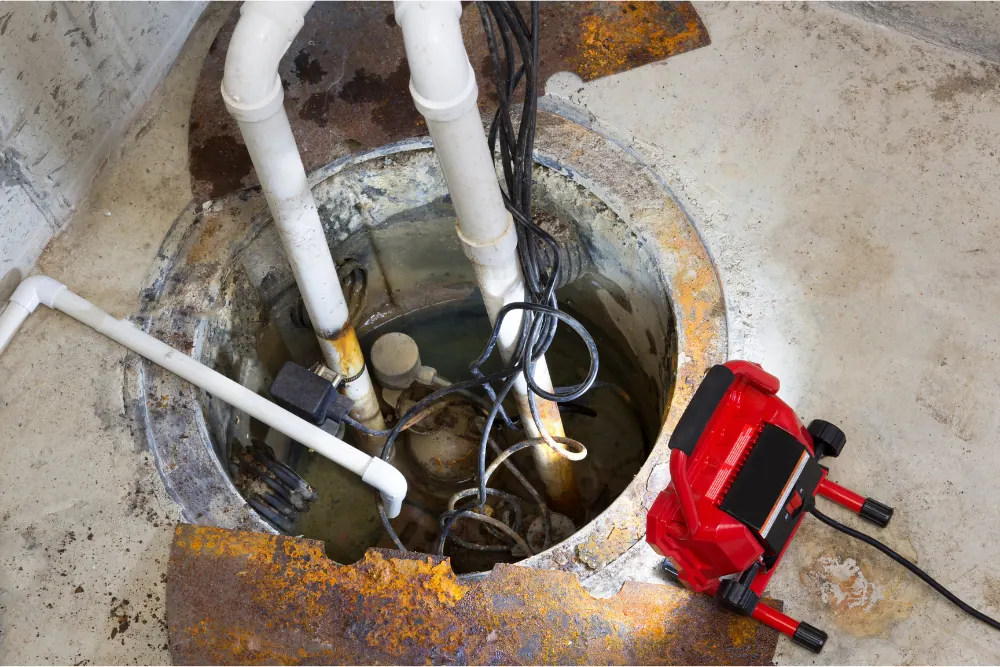
How we work
- You message us with the type of property, the number of people, what the plant does now or what you plan, and photographs of the plant, its panel and its covers.
- We say what we think is happening, whether the fault is in the pipework, the machines, the biology or the load, and who has to deal with each part.
- We visit. The visit fee is AED 50 + VAT, credited if the work goes ahead.
- We give a price in writing, with the plant, the pipework and the labour shown separately.
- Check permission. In a rented or managed property, ask the landlord or building management whether they need to approve this work before the visit.
- We measure first: the inlet and the outlet levels, the flow through the pipework and the access to the covers.
- We repair or fit, test the pipework and check the connections for leaks.
- We hand over the drawings, the test results, the service advice and the warranty.
Where we work in Dubai
We cover all of Dubai, including Dubai Marina, JBR, Downtown Dubai, Business Bay, Jumeirah Lakes Towers, Palm Jumeirah, Al Barsha, Jumeirah Village Circle, Dubai Hills, Mirdif, Deira and Al Quoz. See the full list of areas.
A short guide for owners who inherit a plant
When you buy or rent a property with a plant, you inherit its history. These questions help:
- When was the plant installed, and by whom?
- What size is it, and what was it designed for?
- Where is the manual, and where are the drawings?
- Who services it, and when was the last service?
- When was sludge last removed, and by whom?
- Where does the treated water go?
- Are there any alarms, repairs or complaints in the record?
- Who pays for servicing under the lease or the community's terms?
If no one can answer, a survey is the next step.
What a survey looks at
A survey of a small plant looks at the tank covers and their condition, the inlet and the first chamber, the blower and its air filter, the diffusers and the way the air bubbles rise, the settling chamber and the outlet, the pumps and floats, the electrical panel and its alarm, the treated water outlet, and the ground around the plant for wet patches or smells. We note what we see, and tell you what is within our work. Anything inside the plant that is a manufacturer's part, we refer to the supplier or a plant specialist.
Noise, smell and neighbours
A plant sits close to a house, a boundary or a neighbour. Noise comes from the blower, and smell from the covers and the vent. A good installation keeps the blower in an enclosure, on an anti-vibration mount, away from bedrooms. A good plant has a vent that rises above roof level. If a neighbour complains, check the blower, the covers and the vent first. A plant that is running properly has little smell and a low hum.
Power cuts and plant failure
A power cut stops the blower, and the plant begins to go septic in a day or two. A short cut is not a problem. A cut that lasts a long time, or a blower that fails, is. If the plant has an alarm, test it. If you are away, ask someone to check the plant after a cut. Restore the air and the biology recovers in days. A long failure may need sludge removal and a fresh start.
The part we play
We work on the pipes, tanks and drains around a plant, and we do not supply new plants. For that work, we give a fixed price on WhatsApp after a visit. Prices exclude 5% VAT.
How much does sewage plant work cost in Dubai?
- The plant. The price follows the size in people, the process, and whether it is a tank, a container or a membrane unit.
- The work. Surveying, pipework, connecting, testing and handing over.
- What moves the price. Whether the plot needs a new tank or a container, the electrical supply, the distance of the plant from the building, access for a tanker, the discharge route, and the commissioning period.
We do not publish a starting price for this job. Send a photo on WhatsApp and we give you a fixed price before we start. Prices exclude 5% VAT.
Sewage plant FAQs
What is a sewage plant and what does it do?
It treats what leaves the drains so that the water can be reused or discharged. The stages are on the sewage treatment page.
What is the difference between a sewage plant and a septic tank?
A septic tank lets solids settle and passes the liquid on to the ground. A cesspit only holds the waste until a tanker empties it. A sewage plant adds air and treats the liquid so that it is clean enough to discharge or reuse. The types of each are on the septic tank and STP page.
How big a sewage plant does my building need?
Size it by the people who use it, and check the litres per person per day the maker has used. Ask the maker for the design basis in writing, including the peak the plant is built to take. For anything beyond a small building, a design engineer should confirm the sizing.
How long does a new sewage plant take to start working?
A biological plant needs several weeks for its bacteria to build up. Ask the maker for the commissioning plan and the date of the performance test.
Do I need approval to put a sewage plant on my plot?
Yes, in practice. Ask building management or the plot's developer which requirements apply, in writing. In a rented property, get the owner's written consent as well.
What happens to the water a sewage recycling plant produces?
It is commonly used for irrigation and cooling. For a private plant, the discharge route needs approval.
Who services a sewage plant in Dubai?
The maker or a trained operator, to the maker's manual. A plumber looks after the pipework at the edges, and a tanker takes the sludge.
How much does a sewage plant cost?
It depends on the size, the process and the site, and sellers rarely publish prices. A written quotation to a stated design basis is the way to a number. For the pipework and connection work we do, we give a fixed price on WhatsApp. Prices exclude 5% VAT.
Book a sewage plant visit in Dubai
Tell us the type of property, the number of people, whether the plant is yours or a community's, what it is doing and whether you own or rent. Photographs of the plant, the panel and the covers help. If sewage is coming up inside the building, stop using water and call. We will find out what is happening, say who has to deal with each part, give you the options and a price in writing, do the work and hand over the test results.
WhatsApp: +971 55 407 7427 · Request a quote
Visit us: Office 871, Oasis Mall, Al Quoz 1, Dubai, UAE
Related services: Sewage treatment · Septic tank and STP · Septic tank cleaning · Sewer line · Drain jetting · Drain unblocking · Grease trap · Manholes and gullies · Drains overview · Emergency plumber