
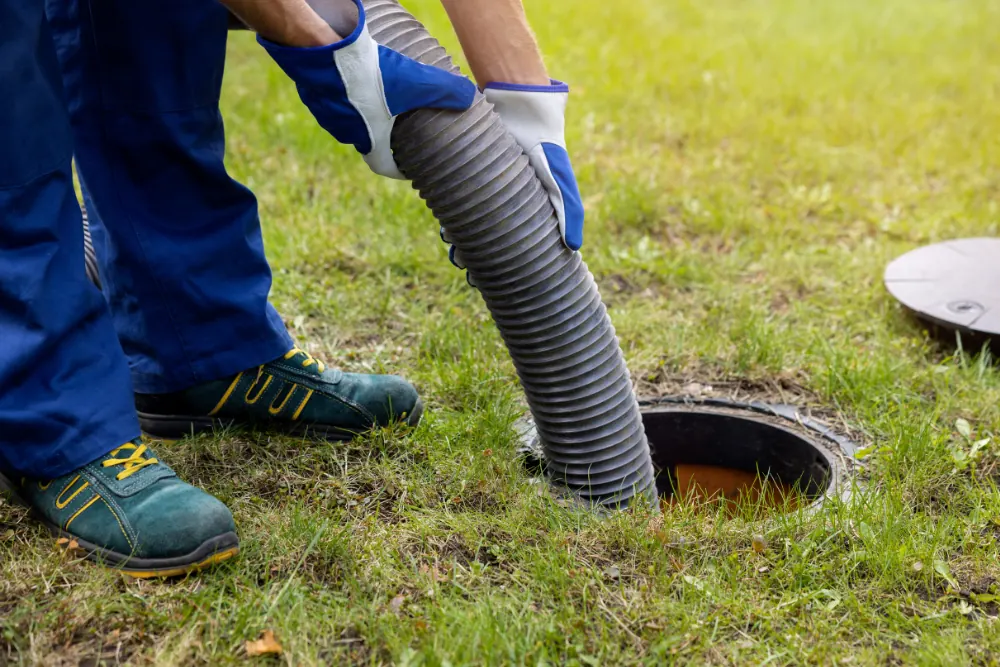
Septic tank and STP services in Dubai: what we do
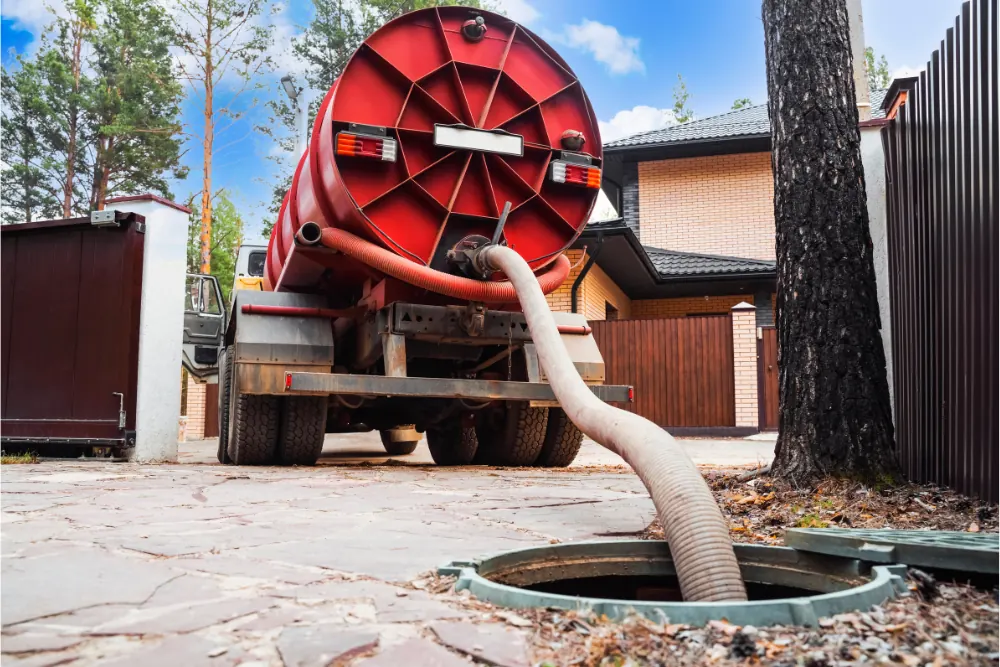
- Emptying septic tanks and cesspits by vacuum tanker, with the waste taken to an authorised discharge point.
- Inspection and a written report: the type and volume of the tank, the scum and sludge levels, the lids and risers, the inlet and outlet fittings and the condition of the tank.
- Cleaning and repair of tanks: lids, risers, inspection caps, baffles or tees, inlet and outlet pipes, and distribution boxes where there is one.
- Servicing small treatment plants: blower, diffusers, air lines, sludge return, alarms and the electrical panel. Our own electricians handle the electrical side.
- Tracing the cause of an overflow, a smell or a rising level to the tank, the line, the plant or the water use.
- A written note of what was found, removed and done, with the disposal record.
- Emergency visits. We answer calls and send a plumber 24 hours a day, 7 days a week, and we do not promise an arrival time.
Neighbouring topics have their own pages. The line from the building to the tank or the sewer, its survey and repair, and the confined-space gas rules are on sewer line repair and cleaning. High-pressure cleaning is on drain jetting and blocked fixtures on drain unblocking and drain general. Kitchen interceptors, which should keep grease out of a tank, are on grease trap, and chambers and gullies on manhole and gully. A drinking-water storage tank is a different job and is on water tank cleaning. A leak that a tank does not explain is on leak detection.
Septic tank, cesspit, STP and holding tank: the types and names
The names overlap, and people in Dubai use them loosely. The table separates them by what the system does.
| System | What it is | What to know |
|---|---|---|
| Septic tank | A buried tank where solids settle and the liquid leaves by an outlet, to a soakaway or drainfield | Needs pumping when solids build up. The liquid side needs soil that can take it, which many Dubai plots do not have |
| Cesspit or cess-pit tank | A sealed tank that holds everything and does not discharge. It is emptied by tanker | Common in Dubai. The word is often used for any tank emptied by tanker |
| Holding tank | A sealed tank, usually for a building with no other option | Fills at the rate the building uses water, so the interval can be short |
| Small sewage treatment plant (STP) | A packaged plant that adds air and treats the liquid before it is discharged or reused | Has a blower, diffusers, alarms and a panel. Needs scheduled servicing as well as desludging |
| Soakaway or drainfield | The part of a septic system that lets the treated liquid into the ground | Keep vehicles off it, and keep roof drains and sump pumps from discharging toward it |
How these systems work
In a septic tank, solids settle to the bottom as sludge, fats and light material float as scum, and the liquid between them leaves by the outlet. Baffles or tees at the inlet and outlet keep the scum and sludge in the tank. When the layers build up until they reach the outlet, solids pass through and block the soakaway or the line. That is why a tank is emptied on measurements and not only on a calendar.
A cesspit has no outlet. It simply fills, and the level rises with every litre the building uses.
A treatment plant adds air. A blower feeds diffusers that keep the bacteria supplied with oxygen, a skimmer takes floating material off, an effluent weir has to sit level so it skims evenly, and a sludge return sends settled sludge back through the process. Plants are serviced by checking the electrical and mechanical parts, the panel, the biological process and the alarms. Plants of different makes have different parts, so the maker's manual for your unit governs.
Signs that a tank or plant needs attention
A tank or plant gives warnings before it fails. These are the ones to watch.
| Sign | What it may mean | What to do |
|---|---|---|
| Slow drains throughout the house | A full tank, or a blocked outlet | Book a pump-out and inspection |
| A smell around the tank or the garden | A full tank, a leak, a poor cover or a blocked vent | Check the cover and arrange an inspection |
| A wet or soft patch over the tank or pipes | A leaking tank or outlet | Avoid the area, and call for an inspection |
| Gurgling when water drains | A blockage or poor ventilation | Stop using water heavily and call |
| A blower or pump alarm | A plant fault | Check the panel and call |
| Sewage in a manhole or the lowest drain | The tank or the line is full or blocked | Stop using water and call at once |
| Unusually green grass above the tank | A leak feeding the soil | Have the tank checked |
Mistakes that shorten the life of a tank or plant
- Pouring grease into the kitchen drain. It forms a crust on top of the tank.
- Using large amounts of bleach or strong cleaners. They kill the bacteria.
- Flushing wipes and sanitary products. They block the inlet and the pumps.
- Letting rainwater run into the tank. It floods the system and washes out the bacteria.
- Driving or parking over the tank. The lid or the tank can crack.
- Planting trees nearby. The roots find the tank and the pipes.
- Ignoring a small smell. A faint smell is the first sign of trouble.
Records and the documents to keep
Keep every receipt and every note for the property file. They show the date of each pump-out, the volume and the company. A buyer or a landlord may ask for them. A tank with a record of regular care is easier to sell than one with none.
Tankers and where the waste goes
The owner is responsible for the tank, the lines and anything that leaks or overflows from them. The waste must go to a proper discharge point, so ask any tanker operator where each load goes, and ask for a record of it. A tanker that dumps what it took from your tank leaves you as the customer of an operator you would not want. We take waste only to proper discharge points and keep the record.
The practical lesson for an owner is to empty on measurements and to book before the tank is full, because when tanks are left until they overflow, the queue for a tanker is longest and the mess is worst. Keep toxic and hazardous things out of the tank, since they harm the bacteria and the treatment that follows.
What must stay out of the system, and what to know about additives
Only human waste and toilet paper belong in a tank. Keep out cooking grease and oil, wipes (even ones labelled flushable), feminine hygiene products, dental floss, nappies, cat litter, paper towels, medicines, and household chemicals such as paint, solvents and pesticides. Chemicals can kill the bacteria that make a septic tank work, so avoid chemical drain openers and go easy on bleach and strong cleaners. A kitchen waste disposal adds a lot of solids, so limit its use on a septic tank. The grease rules are on grease trap.
On additives, our view is plain. A septic tank already contains the bacteria it needs, and an additive is not a substitute for pumping. Some products can be ineffective, and some, such as strong line cleaners, degreasers and solvents, can harm the bacteria or the soil and groundwater. An odour that an additive hides is the same odour that a measurement of the scum and sludge, a look at the fittings and a check of the water use would explain, so we investigate first. If someone offers an additive programme in place of pumping, be cautious and ask what it will do for your tank in writing.
Cleaning and pump-outs
Emptying and cleaning a tank has its own page. Clean septic tank explains what cleaning means in a quote, how many tanker loads a tank is, how to measure the scum and sludge, how a pump-out is done and how to check the job. This page is about the systems themselves: which one you have, how it works, what goes wrong and how a treatment plant is serviced.
Choosing between a septic tank, a treatment plant and a sewer connection
Where there is no public sewer at the plot, three routes remain, and the right one depends on the site, the load and who looks after it.
| Route | Suits | What it asks of the owner |
|---|---|---|
| A septic tank or cesspit | A villa, a small farm or a camp where a tanker can reach and the load is modest | Regular emptying, a sound tank and clear access |
| A small treatment plant (STP) | A larger household, a block, a labour camp or a commercial site | A blower and pumps that run, regular servicing and power |
| A connection to the sewer | A plot within reach of a network line | An approved connection and a line laid to the right fall |
A holding tank is the simplest and the most dependent on tankers. A plant treats the water, but it is a machine, and a machine that nobody services becomes a smell. A connection removes the tanker, but it needs approval and a gravity line that works. Ask who will own the problem in ten years before you choose, and see sewage treatment and sewage plant for the plants themselves.
Tank construction, covers and leak checks
A tank is a sealed box that has to stay sealed. The common builds are concrete, masonry with a lining, and moulded plastic or fibreglass. Each fails differently. Concrete cracks at joints and at the pipe entries. Masonry loses its lining. Plastic can float when the ground is wet and the tank is empty, and can deform under a load.
Look at the covers first. A cover should be intact, heavy enough to stay put and secured against children. A cracked cover is a fall risk and lets rain in. Then look at the ground: a wet patch, greener grass over the tank or a smell at one spot suggests a leak at a joint or a crack. A level that falls without use is a sign of a leak, and a level that rises after rain is a sign of water getting in. A written level record, with the date, tells the two apart.
We check the visible pipework, the inlet and outlet connections, the covers and the vents. A camera or a hydrostatic test of the tank is a job for the specialist who will take responsibility for the result, and we say so when it is needed.
Where the liquid goes
A septic tank settles solids and passes the liquid on. In some plots the liquid goes to a soakaway or a drain field. In others it goes to a second chamber, a plant or a pipe. If the outlet is blocked, the tank backs up into the house. If the soakaway is saturated, the liquid surfaces in the garden. In sandy soil, a soakaway works for a time, and then the pores clog with fine solids.
Ask where yours goes, and whether the outlet and any distribution box can be reached. A tank with no access to its outlet is a tank that cannot be inspected. Plan a cover or a chamber at the outlet if there is none.
Sizing a tank by occupancy
A tank is sized from the number of people and the water used per person, with room for settling and storage. A household of five uses a modest volume, and a camp of eighty uses a very different one. An undersized tank is emptied often and smells. An oversized tank wastes money and may not work well with low flows.
Check the occupancy the tank was built for against the occupancy today. Extra bedrooms, a maid's room or a majlis that is used for gatherings add load. A tank that was fine for a family can fail the first Ramadan with a house full of guests. Before a change, ask what the load will be, and whether the tank or the plant can take it.
Odour, vents and gas
A septic tank makes gas. It should leave through a vent that rises above the roof line and away from windows and air intakes. A blocked or missing vent pushes gas back through the house drains. A smell at a floor drain may be a dry trap or a tank problem. A smell in the garden is usually a cover, a vent or a crack.
Never put your head into a tank opening, or lean over it, or enter a tank. The gas can kill quickly, and so can a fall. Keep the cover on, keep people away, and leave opening to trained crews with the right equipment.
Labour accommodation, farms and commercial sites
These sites put the heaviest load on a tank: many people, constant use, kitchens and laundry. A tank that serves a camp needs a bigger volume, tighter emptying dates and a grease trap on the kitchen line. A farm may have animal waste that does not belong in a household tank. A restaurant needs a grease trap before the tank. Tell us what the site does, and we tell you what the plumbing side needs, and what must go to a specialist.
Faults: what goes wrong with a tank or a plant
| Fault | What to know | Plumbing practice |
|---|---|---|
| Slow drains or toilets in the building | A full tank or a blocked outlet backs the waste up | Measure the levels, then check the line. See drain unblocking |
| Smell near the tank or in the building | A full tank, a missing or cracked lid, a dry trap, a damaged fitting, or a plant fault | Check the lid, the traps and the levels. Our note records the likely source |
| Wet or spongy ground, or lush grass over the tank or soakaway | A full tank, a failed soakaway or a leaking tank | Measure, pump, and inspect the tank and the outlet line |
| Sewage at a manhole or gully | A blocked outlet or line, or a tank at its limit | Stop using water and call. See sewer line repair and manhole and gully |
| Tank fills faster than expected | Heavy water use, a leaking toilet or tap, or groundwater leaking in through a cracked tank | Check fixtures, then inspect the tank for cracks |
| Tank level keeps dropping | A cracked tank or a failed joint that leaks out. The owner answers for a leaking tank | Inspect and repair. See leak detection |
| Plant alarm sounding | A blower, power or float fault, or a high level | Check the panel, the blower and the level, then repair |
| Plant smell, foam or dark water | An upset in the biological process, too little air, or a clogged diffuser | Check the blower, diffusers and sludge return, and desludge if needed |
| Blower noise or heat | A worn belt, a dirty filter or a failing motor | Service or replace the blower. Our electricians handle the supply |
| Water in the plant never clears | Overloading, a dead blower, or sludge that has built up | Desludge and service |
Servicing a small treatment plant
The maker's manual for your plant sets the exact tasks. These are the usual rhythms:
| Interval | Typical checks |
|---|---|
| Every two weeks | Check the skimmer and the effluent weir are level, the drive belt is not slipping, and the timer is set correctly |
| Monthly | Check the blower oil level and filter, clean dust from the motor vents, and check pulley alignment and belt wear |
| Twice a year | Check all air and sludge valves for leaks |
| Yearly | Inspect the diffusers, check the electrical leads and clean the effluent weir |
A full service covers the electrics, the panel, the biological process, the alarms and the access covers. Effluent sampling and desludging are separate items, and we quote them separately.
Safety at a tank, a lid and a plant
The gas figures, the effect of the smell on judgement and the confined-space rules are on the safety section of sewer line repair and cleaning and are not repeated here. They apply to a tank with more force than to a pipe, since a tank is a closed space that holds waste.
- Lids and caps. Replace damaged or missing inspection caps and a cracked distribution box lid. A missing or cracked lid over a tank is a fall hazard for a child or a pet, and a gas path.
- Electrics. A plant's blower and panel are live equipment in a wet setting.
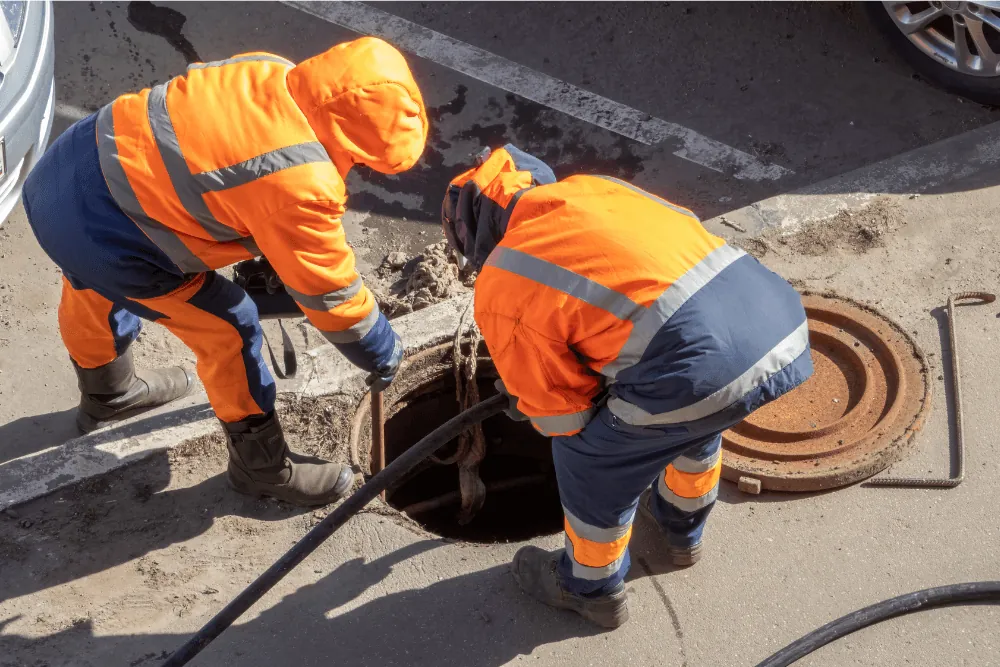
- Entry. Nobody climbs into a tank to retrieve an object or to clean it. Entry is a job for trained people with a gas monitor and rescue arrangements, and we pump and wash from the surface.
Permission in Dubai: who decides on a tank, a plant or a connection
Emptying a tank is maintenance. Replacing a tank, fitting a plant or connecting to the public sewer involves the building and other parties.
| Job | Starting point |
|---|---|
| Emptying a tank on your own plot | Maintenance. In a rented home, tell the landlord and agree who pays |
| Emptying a shared tank or plant | A common part. The building manager or owners' association decides access and timing |
| Replacing a tank, moving it, or fitting a plant | A change, which needs the landlord's written consent and the building's approval |
| Connecting to the public sewer | Approval first. Ask building management or the sewer operator what the application needs |
| Collecting and removing the waste | A tanker taking waste to a proper discharge point. Ask for the disposal record |
We cannot say whether your building needs a certificate for a particular job. Building management can, and a request in writing is cheaper than a stopped job. Tell us what your building asks for and we work to it.
What a tank inspection report should say
A good report is short and specific. It gives the type and volume of the tank, the date, and the level of scum and sludge before pumping. It says what was found inside after pumping: the condition of the walls, the baffles or tees, the inlet and outlet pipes, and any cracks or roots. It names the lids and risers and whether they are sound. It says where the liquid goes and whether that outlet is clear. It lists anything that needs repair, ranked as urgent, soon or watch, and it gives a next date with the reading behind it. Photographs of the inside and of each lid are part of it. If the report only says the tank was emptied, it tells you nothing you could not guess.
Living with a tank: a short guide for a household
Spread laundry through the week instead of doing every load in one day, because a surge of water carries solids toward the outlet. Fix dripping taps and running toilets, since extra water is the quickest way to fill a tank. Scrape plates into the bin before washing up. Use toilet paper made to break down and keep wipes out of the toilet. Keep the lids clear of furniture, planters and parked vehicles, and keep the access easy for the tanker. Write the date of each pump-out on a card kept with the property papers. If you rent, send a photo of the card to the landlord each time. Small habits like these stretch the time between pump-outs and avoid the night-time emergency.
When a plant stops: what to do first
If an alarm sounds, silence it if the panel allows, and note which light or message is showing. Check that the power is on and that the blower is running, by sound or by feeling for air. Cut down water use, since a plant that is not getting air cannot keep up with a full load. Do not add chemicals to the plant. Photograph the panel and send it to us with the time the alarm began. A plant that loses air for a short time recovers, and one that loses it for days turns septic, which is a much bigger job. Fast notice keeps the plant alive and the bill small.
Warranty and the handover
What you should have when the job is finished:
- A written note: the tank or plant, its location and volume, the scum and sludge readings before pumping, the quantity removed and what was found inside.
- Photographs of the tank with the lid off, showing the outlet and the fittings, and of any damage.
- The disposal record: the tanker used and the discharge point it went to.
- For a plant: the readings and checks done, the parts changed, and the alarm state.
- Any damage found or caused, with its position and a photograph.
- A next date, with the reading it is based on.
- FAM's workmanship warranty, in writing. The warranty runs for 30 days and covers our labour only. Parts carry the manufacturer's warranty only.
How we work
- You tell us what is happening on WhatsApp: the property, what you see or smell, when the tank was last emptied and by whom, how many people use it, and whether you own, rent or manage the building.
- We visit. The visit fee is AED 50 + VAT, credited if the work goes ahead. We check the type and volume of the tank, the lids, the levels and the fittings, and what flows in.
- We give options and a price in writing: empty only, empty and repair, inspect with a camera, service the plant, or a longer-term option such as a larger tank or a connection.
- Check permission. In a rented or managed property, ask the landlord or building management whether they need to approve this work before the visit.
- We empty the tank, inspect it inside and out, and repair the fittings and lids.
- We take the waste to an authorised point and keep the record.
- We hand over the note, the photographs and the disposal record, with the next date.
Where we work in Dubai
We cover all of Dubai, including Dubai Marina, JBR, Downtown Dubai, Business Bay, Jumeirah Lakes Towers, Palm Jumeirah, Al Barsha, Jumeirah Village Circle, Dubai Hills, Mirdif, Deira and Al Quoz. See the full list of areas.
How much does septic tank and STP work cost in Dubai?
The price follows these items:
- Tank size and how full it is. More waste means more loads.
- Distance to the discharge point. The cost rises the farther the tank is from the plant.
- Waiting time at the plant, which can be long at busy times.
- Access. Buried or locked lids, long hose runs and gated plots.
- Inspection and repairs. The camera, lids, risers and fittings.
- A treatment plant. Servicing, parts and the contract.
- Building rules. Permission and access hours.
We do not publish a starting price for this job. Send a photo on WhatsApp and we give you a fixed price before we start. Prices exclude 5% VAT.
Septic tank and STP FAQs
What is the difference between a septic tank, a cesspit and an STP?
A septic tank lets solids sink and the liquid leave by an outlet to the ground. A cesspit is sealed and only holds waste until it is emptied. A small sewage treatment plant adds air and treats the liquid until it is clean enough to discharge or reuse. In Dubai the words "cess-pit" and "septic tank" are often used for the same kind of tank.
How do I know if my property needs a tanker?
If your plot has no direct sewer line, waste has to be collected. Your building management or your landlord can confirm whether you are connected, and we can see from the site.
How do I choose between a septic tank, a treatment plant and a sewer connection?
It depends on the plot, the load and who will look after it. A tank suits a modest load with tanker access. A plant suits a bigger load but needs power and servicing. A sewer connection removes the tanker but needs permission and a line with the right fall. See the comparison above.
How often should a septic tank be emptied?
The interval is set by measuring the scum and sludge, not by a calendar. The method is on the clean septic tank page.
What are the signs that a tank is full?
Slow drains, a smell, wet ground or an overflow. A measured sign is scum or sludge building up close to the outlet, which we check with a probe. The method is on the clean septic tank page.
Can a tanker dump a tank's waste anywhere?
No. Waste has to go to a proper discharge point, and dumping it elsewhere is a risk for you as well as the operator. Ask any operator where each load goes and for a record.
Do septic tank additives work?
They are not a substitute for pumping, and some can harm the bacteria in the tank. We investigate the cause of an odour first, and we do not sell additives to avoid a pump-out.
Why does my tank smell?
A full tank, a missing lid, a damaged fitting, a plant fault, or an overload of water. The source should be found and fixed, not masked.
How do I connect to the public sewer?
A connection needs approval first. Ask building management or the sewer operator what the application needs. We can help with the plumbing side once you have the approval.
Do I need my landlord's permission?
For emptying, tell the landlord and agree who pays. For replacing a tank, fitting a plant or connecting to the sewer, you need the landlord's written consent and the building's approval.
How much does it cost?
See the cost section, then get a written price after the visit.
Book septic tank or STP service in Dubai
Tell us the property, whether it is a tank, a cesspit or a treatment plant, what you see or smell, when it was last emptied, how many people use it, and whether you own or rent. Photos of the lids and the surrounding ground help. If sewage is on the surface or coming up inside, stop using water and call. We will check the tank, empty it, inspect the fittings, and give you a written note with the disposal record.
WhatsApp: +971 55 407 7427 · Request a quote
Visit us: Office 871, Oasis Mall, Al Quoz 1, Dubai, UAE
Related services: Sewer line repair · Drain jetting · Drain unblocking · Grease trap · Manhole and gully · Drain general · Water tank cleaning · Leak detection