
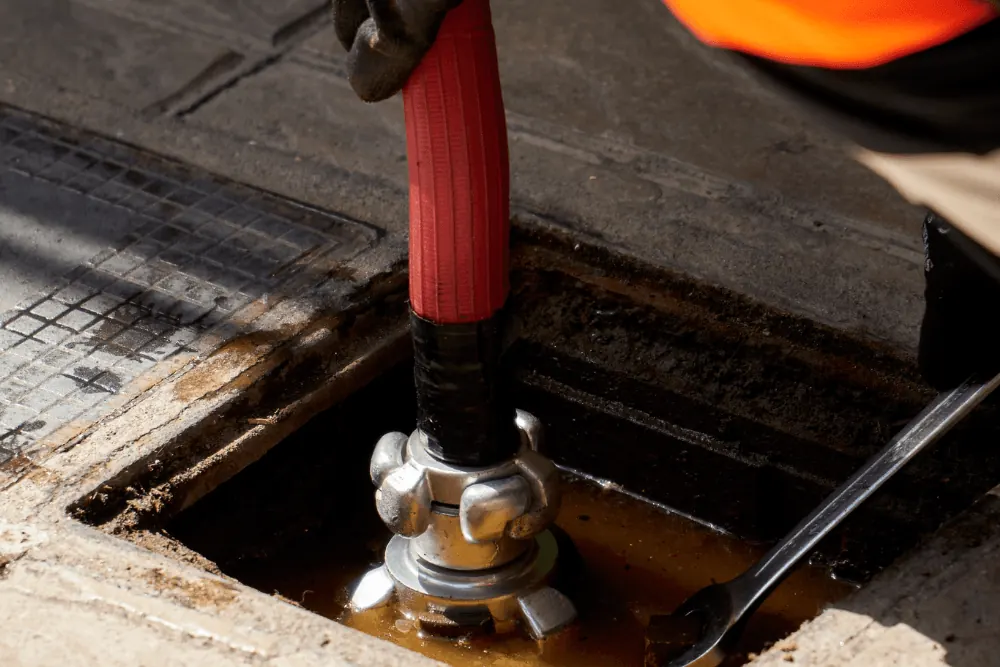
Drain repair services in Dubai: what we do
- Diagnosing drains that smell, gurgle, run slow or empty a trap: finding whether the fault is the trap, the branch pipe, the vent, the stack or the line.
- Repairing traps, waste pipes and fittings: replacing a cracked trap, a failed joint or a section of waste pipe, and fixing brackets and falls.
- Floor drains, shower drains and balcony drains: clearing and repairing the outlet, the trap and the pipe below.
- Air-conditioning condensate drains, where they connect to the building's drainage.
- Vents and air admittance valves: checking, clearing and replacing them.
- A camera look into the pipe where a fault is not visible.
- A written note of what was found, what was done and what remains.
Neighbouring topics have their own pages. One blocked fixture and the methods for clearing it are on drain unblocking, and toilets on toilet unblocking and toilet repair. The building's line, its survey, repair and the gas rules are on sewer line repair and cleaning, and pressure cleaning on drain jetting. Kitchen interceptors are on grease trap, outside chambers and gullies on manhole and gully, and tanks and plants on septic and STP. Water that appears on a ceiling or wall is on ceiling and wall leak and leak detection, and the tray and waste of a shower on shower repair. We repeat none of that here.
Which page is your problem? A decision guide
Find the row that matches what you see, and it sends you to the page that covers the fault in full.
| What you see | Where to look first |
|---|---|
| One sink, basin, shower or bath drains slowly | The trap or the branch from that fixture |
| A smell, and water drains normally | A dry or siphoned trap, a vent, a cracked pipe or slime in the outlet |
| Gurgling, or a trap that empties when another fixture runs | The vent and the shared branch |
| Several fixtures slow, or the lowest drain backs up | The building's line |
| A kitchen drain that blocks with grease | The interceptor or the line from the kitchen |
| A yard gully or chamber smells or overflows | The outside structure |
| Your plot has no sewer line, or a tank overflows | The tank or plant |
| A toilet that will not clear | The pan and the trap |
| Water dripping from an air-conditioning unit or its pipe | The condensate drain |
| A stain on a ceiling or wall | A supply, waste or condensate source |
How a house drain system works: traps, branches, stacks and vents
A fixture drains through a trap into a branch pipe, the branch joins a stack or a ground-level line, and the whole system is open to air at a vent. The trap holds a plug of water, called the seal, that blocks sewer air from coming back into the room. The vent lets air in behind the water so the flow does not pull the seals out of the traps.
The usual trap sizes for household fixtures are 32 mm for a washbasin or bidet, 40 mm for a bath, shower or kitchen sink, and 75 mm or 100 mm for a WC, by outlet size. A trap that is losing water has a seal too shallow to do its job, and a deeper seal is held in a trap that suits the fixture.
Three more points are worth knowing:
- Branch length without a vent. A long basin waste with several bends needs its own vent or an air admittance valve, because the flow pulls the seal out of the trap. A WC branch can run longer, because the pipe is bigger.
- Gradient. A waste pipe needs a steady fall. Too flat and solids settle. Too steep and the water runs ahead of the solids and leaves them behind. The working range is narrow, so a sag in a pipe matters.
- Stack and vent. A vent pipe should end clear of windows and air intakes, so sewer air does not enter a room.
A branch that is too long or too bent needs a ventilating pipe, a connection to a ventilating stack or external air, or an air admittance valve.
Why trap seals fail: six mechanisms
A smell with no blockage points first to a seal that has gone. Six things take a seal away:
| Mechanism | What happens | What we look for |
|---|---|---|
| Evaporation | A trap on a fixture or floor drain nobody uses dries out over weeks, and the smell comes through | A drain in a spare bathroom, a utility room or a balcony that has not had water for a long time. Pouring water in is the first test |
| Self-siphonage | The long leg of an S-trap pulls the seal out as the water leaves | An S-trap under an old basin. The repair is a vented P-trap |
| Induced siphonage | A heavy flow past a branch sucks the seal out of a neighbouring trap | A trap that empties when another fixture runs |
| Back-pressure at the stack base | In a tall building, a flush above compresses the air at the foot of the stack and pushes a seal out of a ground-floor fixture | A seal blown out of a lower-floor fixture when upper floors flush. This is relevant to towers |
| Wind at the roof vent | Wind changes the air pressure in the system, and the water in the traps bounces until some is lost over time | A smell that comes and goes with the weather |
| Capillary action | A string, hair or fibre lying over the trap's weir wicks the water out slowly | A thread draped over the trap's lip. It is a cause worth looking for |
An air admittance valve (AAV) is a one-way valve that lets air in to stop siphonage. It is a moving part, so a gurgle or a trap that empties where the fixture's own drain is clear sends us to it. A trap primer, which tops up a trap's water automatically, solves evaporation in drains that are rarely used. A primer is an alteration, so the building's approval applies.
Reading the symptoms: slow, gurgling and smelling drains
The three symptoms point at different parts of the system, and the useful question is how many fixtures show them and when. Methods for clearing a blocked fixture are on the drain unblocking page, so this table stops at the question of where the fault sits.
| Pattern | What it points to | Why |
|---|---|---|
| One fixture is slow, all others are normal | The trap or the branch from that fixture | A fault shared by the whole house would show at other fixtures |
| A fixture drains slowly only while another runs | A shared branch that is flat, undersized or partly blocked | The two flows meet in the same pipe. A sag that removes the fall removes the margin |
| Gurgling at a fixture when another fixture empties | Air being pulled through the trap to fill the space behind a heavy flow | The same mechanism as siphonage, caught earlier |
| A smell at every fixture on one floor | The vent or the stack, or a cracked pipe above the traps | A single dry trap cannot explain a smell at all of them |
| Water at the lowest drain when an upper floor flushes | Positive pressure at the stack base, or a blocked line below | A blockage is on the sewer line page |
| A smell and a damp patch on a wall or ceiling | A leaking waste joint or a cracked pipe | A water-and-smell pair is not a trap problem. See ceiling and wall leak and leak detection |
The cheapest first step is a list of which fixtures are affected, when, and what else was running. It is the information we ask for when you message us.
Smells and sewer gas, without alarm
A trap that has lost its seal lets air from the pipe into the room. At low concentrations sewer gas can cause eye irritation, a sore throat and a cough, and long exposure can bring fatigue and headaches.
A household smell is a repair signal and not an emergency. It tells you a seal or a pipe has failed, and the right response is to find the fault the same week and not to live with it. A strong smell, or one with dizziness, is a reason to leave the room and call. Gas in a pit, a chamber or a tank is a different hazard with its own rules, covered on the sewer line repair page, and we do not repeat them here.
Drain flies
Small flies around a bathroom or kitchen drain are a sign of a different fault: standing water and a film of organic matter in the outlet. A simple test and a cure:
- The test: tape a piece of sticky tape over the drain overnight. If flies stick to it, the drain is the breeding place.
- The cure: remove the organic film by scrubbing the drain with a stiff brush. Hot water gives short-term control only.
- What not to use: bleach and vinegar do little, never mix ammonia with bleach, and never pour insecticide down a drain.
- The risk: the flies are a nuisance. They do not bite or damage plumbing.
Flies that return after the outlet has been scrubbed send us to the trap and the pipe below it.
Floor drains and shower drains
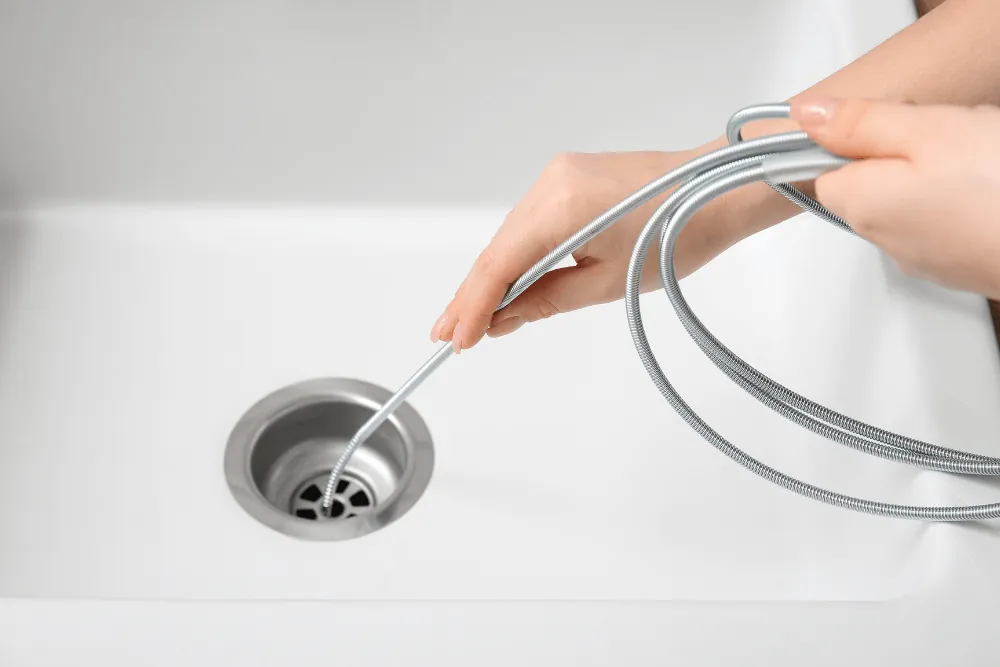
A floor drain sits in a bathroom, a utility room, a balcony or a wet room. It has a grate, a short trap and a pipe that joins the branch below, and it has two jobs: to take water off the floor and to stop sewer air coming up.
The common faults are:
- A dry trap. A floor drain that is rarely used loses its seal to evaporation, and the smell comes through the grate. Pour a jug of water in, and if the smell stops, that was the cause. A trap primer is the lasting fix.
- Hair and soap in the outlet. In a shower drain, hair and soap build up under the grate and slow the flow. Lift the grate, remove the hair and rinse. If it still runs slowly, the trap or the pipe below is partly blocked.
- A floor that does not fall to the drain. Water that pools instead of reaching the drain is a levelling problem in the floor, not a drain fault. It needs the floor corrected, not the pipe cleared.
- A cracked outlet or a failed seal at the drain body. Water that escapes around the drain can reach the ceiling below. See shower repair and ceiling and wall leak.
We clear and repair the outlet, the trap and the pipe below it, and we can put a camera into the pipe where the fault is not visible.
Balcony and air-conditioning drains in Dubai
In a Dubai building, the water from air-conditioning units and from balcony floors goes to the building's private drainage, as shown on its approved drawings, and not to the rainwater network or the street. A condensate pipe or a balcony drain that ends in a street gully or a downpipe is a defect we flag. How the correct connection is made is a matter for the building's drawings, its approved contractor and the authority, and we do not guess it.
Air-conditioning condensate lines clog for plain reasons. Algae and mould grow in the damp pan and line, and standing water in the pan means a clog. The pan and the line must fall slightly towards the outlet. A line is cleared by suction and a flush of water, and it needs checking through the cooling season, which in Dubai is most of the year. In towers, condensate lines are often shared by several apartments, so a blockage in one section can back up into neighbours.
Three points follow:
- A bathroom outlet and an air-conditioning line clog for similar reasons: a biological film and a poor fall. The principle carries across, though the pipe is different.
- Shared lines are a building matter first. A blocked line that serves several flats is for the building manager or the owners' association to authorise.
- A tray full of water above a ceiling is not a drain job alone. Water that has reached a ceiling, a wall or a floor needs the leak pages, and the test for telling an air-conditioning source from a plumbing one is already on the ceiling and wall leak page.
Pipe materials, noise and failure
A drain pipe's material affects its noise and the way it fails. Household drains use a handful of materials:
| Material | What to know |
|---|---|
| PVC (uPVC) | The usual choice for household waste. It is light and easy to join. It is thin-walled, so it carries more noise and can need lagging in sensitive spaces, and it turns brittle in cold, which is rarely a problem in Dubai |
| HDPE | Tough and flexible, used where movement or chemical resistance matters. It is less effective than cast iron at cutting noise |
| Cast iron | Heavy and quiet. It rusts from the inside over decades, and a failed joint or a pitted wall is the usual fault in an older building |
| Polypropylene | Used for acoustic pipe in new towers, where noise through the walls matters |
Where a drain is noisy, the cause is often the fixing and not the pipe. Pipes strapped rigidly to a wall carry vibration into it, and a loose bracket rattles. Mass-loaded wrap, mineral wool or foam around the pipe helps, and a clip that lets the pipe move slightly stops the knock. A failing fitting is a job for pipe fittings.
Backwater valves: what they are and what they are not
A backwater valve is a one-way flap in a drain line that closes when sewage flows backwards. If one is fitted, it sits close to the entry point on the main line, with a cleanout either side so the line can be cleared without pushing a cable through the flap. The flap needs a look every few months and after heavy rain.
Two cautions. A valve on a line changes how the line is cleared, so a plumber needs to know it is there before using a cable or a jetter. Our sewer line repair and drain jetting pages explain those methods. And the backflow prevention page is about drinking-water backflow into a supply line, a different device on a different pipe, and does not cover sewage backing up a drain.
Air admittance valves and vents: when they cause trouble
A vent that is blocked, or a valve that has stuck, shows as a smell, a gurgle or a trap that empties. The usual causes are:
- A blocked vent pipe. A bird's nest, leaves or building debris at the roof end stops air getting in, and the symptoms are gurgling and slow drains on several fixtures at once.
- A stuck air admittance valve. Dust and age make the valve stick open or shut. A stuck-shut valve behaves like a blocked vent, and a stuck-open valve lets smell into the room.
- A valve in the wrong place. An AAV must sit above the level of the fixtures it serves and in an accessible spot, because it needs air to reach it and needs replacing every few years.
- A vent that ends too low. A vent that ends near a window or an air intake puts the smell where people breathe it.
If a trap empties or gurgles and the fixture's own drain is clear, the vent or the valve is where we look next. Replacing a valve is a quick job. Changing the vent routing is an alteration and needs the building's approval.
Replacing a trap under a basin or sink
A cracked or leaking trap under a basin is a short job when the parts match. We close the isolation valve or the supply, put a bucket under the trap, unscrew the two nuts and remove the old trap. The outlet size on the basin waste and the size of the wall pipe decide which trap fits, so we measure both before we buy. A new trap goes on with its washers seated flat and the nuts tightened by hand and a small turn, because plastic threads strip. We then fill the basin and empty it, and look under the trap with a dry tissue for a weep. Where the trap and the wall pipe are out of line, we correct the alignment and do not force it, because a joint held under strain starts to leak again within weeks.
A floor drain in a Dubai bathroom
A bathroom floor drain sits in a floor that has a waterproofing layer under the tiles, so the drain body must be sealed into that layer. A drain that leaks around its body soaks the screed and can reach the ceiling below, and the leak looks like a pipe leak. If the grate is cracked or the water pools beside the drain and not in it, the floor fall needs correcting, which is a tiling job. We lift the grate, check the trap and the seal, and run water to see whether it reaches the drain or escapes beside it.
A smell that comes only in summer
Some drain smells appear in the hot months and vanish in winter. Heat dries out a trap faster and thins the water seal in a rarely used drain. Warm air also rises through a dry trap more strongly, and a bathroom with the extractor running pulls air through a dry trap from the drain. The test is to pour water into every drain in the property, including the ones you never use, and see whether the smell stops. If it comes back within days, the seal is going or the drain has a defect. A trap primer is the lasting answer for a floor drain that nobody uses.
What a camera look shows
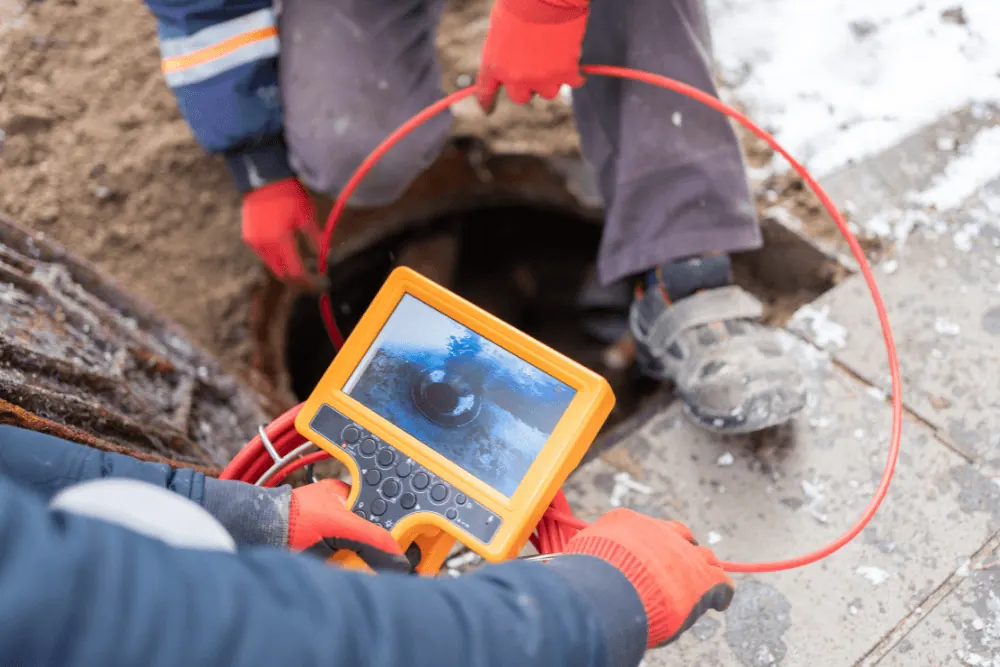
A drain camera is a small waterproof camera on a flexible rod. It shows the pipe's inside: a crack, a sag that holds water, a joint that has slipped, tree roots in a plot line, grease or scale narrowing the bore. We use one when the cause is not visible and opening the wall would be a guess. The picture is recorded with the position along the pipe, and the finding goes on the note. A camera cannot see through a full pipe, so the line is cleared first where it is blocked. See sewer line repair and cleaning for the survey of the building's line.
Permission in Dubai: who decides on a drain repair
Replacing a trap under your own basin is maintenance. Altering the drainage, adding a primer or a valve, or touching a shared line involves the landlord and the building.
This is general information and not legal advice. Tell us what your building asks for and we work to it. Where a drain job falls:
| Job | Starting point |
|---|---|
| Replacing a trap, a waste joint or a washer inside your unit | Maintenance. Tell the landlord and agree who pays. Maintenance falls on the landlord by default unless the tenancy contract says otherwise |
| Clearing or repairing a branch inside your own wall or floor | Maintenance, with the wall or floor opening agreed with the landlord and the building |
| Repairing a shared stack, riser or condensate line that serves several flats | A common part. The building manager or owners' association decides access, timing and cost |
| Changing a vent, adding an air admittance valve or fitting a trap primer | A change to the system. Written consent from the landlord and the building's approval first |
| Fitting a backwater valve on the line | A change to the private drainage. The landlord and the building first |
| Redirecting an air conditioning or balcony drain | A change to the building's drainage. It needs the building's approval, and a drain is not sent to the rainwater network |
We cannot say whether your building needs a certificate for a particular job. Building management can, and a request in writing is cheaper than a stopped job.
Warranty and the handover
What you should have when the job is finished:
- A written note: the fixtures affected, where the fault was, what caused it, what was changed and what was left.
- Before and after photographs of the trap, joint or pipe that was repaired.
- For a trap, valve or vent: the make, size and type fitted, and where it sits.
- For a condensate or balcony drain: where it now discharges, so the connection can be checked against the building's drawings.
- A camera record, where one was taken, with the position of any defect.
- Any damage found or caused, with its position and a photograph.
- A revisit date where the cause was not certain, and the reason for it.
- A clear warranty. Ask what the warranty covers and for how long, in writing.
- FAM's workmanship warranty, in writing. The warranty runs for 30 days and covers our labour only. Parts carry the manufacturer's warranty only.
How we work
- You tell us what is happening on WhatsApp: which fixtures, what you see, hear or smell, when it started, what else was running, and whether you own, rent or manage the building.
- We check on the visit which fixtures are affected, the traps and their water, the vent path and the pipe, and we record the starting state.
- We find the cause before we propose a fix, and tell you whether the fault is a trap, a branch, a vent, a stack or the line.
- We give options and a price in writing: repair, replacement or a camera look, with what each leaves untouched.
- Check permission. In a rented or managed property, ask the landlord or building management whether they need to approve this work before the visit.
- We make the repair, protect the floor and fittings, and test the fixture with water running.
- We hand over the written note and photographs, with a revisit date where the cause needed one.
Where we work in Dubai
We cover all of Dubai, including Dubai Marina, JBR, Downtown Dubai, Business Bay, Jumeirah Lakes Towers, Palm Jumeirah, Al Barsha, Jumeirah Village Circle, Dubai Hills, Mirdif, Deira and Al Quoz. See the full list of areas.
How much does drain repair cost in Dubai?
The price depends on what the fault is and how hard it is to reach. We do not publish a starting price for this job. Send a photo or a short description on WhatsApp and we give you a fixed price before we start. Prices exclude 5% VAT, and the visit fee is AED 50 plus VAT, credited if the work goes ahead.
What sets the price on a drain repair
- Access. A trap under a basin is a short job. A pipe in a wall or a floor needs the surface opened and made good.
- The cause. Clearing a slow drain and replacing a trap that has cracked are different jobs even when the symptom is the same.
- Shared or private. A shared stack or condensate line involves the building and may involve a contractor appointed by the building.
- A camera look. Where the fault is not visible, a camera survey adds to the visit and saves opening the wrong wall.
Drain repair FAQs
Why does my bathroom drain smell when the water drains normally?
Check the trap first. The pattern tells you which: a fixture nobody uses points to evaporation, and a smell at several fixtures on a floor points to a vent, a stack or a cracked pipe. See the symptom table above.
Why does my sink gurgle when the washing machine or another fixture runs?
A large flow, such as from a washing machine, can pull the seal out of a nearby trap if the line is not properly vented. Gurgling is the same mechanism noticed earlier: air is drawn through a trap to fill the space behind a heavy flow. Clearing the sink's own drain does not stop it if the vent is the problem.
Is a drain smell dangerous?
A household smell is a repair signal, and a strong smell or one with dizziness is a reason to leave the room and call. Gas in a pit or chamber is a separate hazard on our sewer line repair page.
How do I get rid of the small flies around my drain?
Drain flies breed in the film and standing water in a drain, and the cure is to remove the organic matter by scrubbing the drain with a stiff brush. Hot water gives short-term control only. Bleach and vinegar do little, never mix ammonia with bleach, and never pour insecticide down a drain. Sticky tape over the drain overnight confirms the drain is the source. If flies return after scrubbing, the trap or the pipe below is the next place to look.
Can I run my air conditioning drain to the balcony drain or the street?
No. In a Dubai building, air-conditioning and balcony drains go to the building's private drainage, as its approved drawings show, and not to the rainwater network or the street. A condensate pipe run to a street gully or a downpipe is a defect to correct. The correct connection comes from the building's drawings and its approved contractor.
Who pays for a drain repair in a rented flat in Dubai?
Maintenance usually falls on the landlord unless your tenancy contract says otherwise, and damage that a tenant causes may be treated differently. Tell the landlord in writing before the work, and agree who pays.
What is a trap primer, and do I need one?
A trap primer is a device that tops up a trap's water so it does not dry out. A floor drain that goes unused for weeks is the case for one. A primer is an alteration, so it needs the landlord's consent and the building's approval.
Does every drain need a vent?
A longer branch needs a vent, a connection to a ventilating stack or an air admittance valve. What applies to your building is a question for its approved drawings.
Does a backwater valve stop sewage coming back up my drain?
A backwater valve closes when sewage flows backwards, so it can stop a backup from the main line, though not a blockage inside your own pipes. It must not be installed vertically and cannot be snaked through, so tell any plumber it is there. The backflow prevention page is about drinking-water backflow, a different device.
How much does drain repair cost in Dubai?
It depends on the fault and the access. We give a fixed price in writing after the visit or from photos on WhatsApp, with the cause and the options. Prices exclude 5% VAT.
Book drain repair in Dubai
Tell us which fixtures are affected, what you see, hear or smell, when it started, what else was running at the time, and whether you own or rent. Photos of the drain, the trap if it is visible, and any stain help. If sewage is coming up inside, stop using the fixtures on that line and call. We will find the cause, explain whether it is a trap, a branch, a vent, a stack or the line, give you the options and a price in writing, and hand over a note with photographs.
WhatsApp: +971 55 407 7427 · Request a quote
Visit us: Office 871, Oasis Mall, Al Quoz 1, Dubai, UAE
Related services: Drain unblocking · Sewer line repair · Drain jetting · Manhole and gully · Toilet repair · Shower repair · Leak detection