
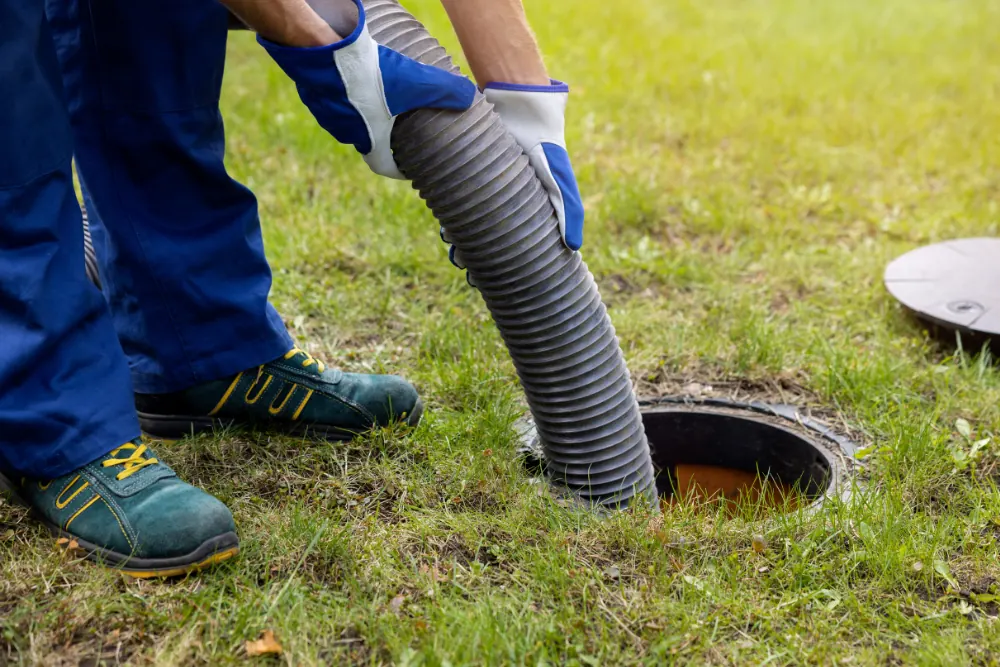
Sewage treatment in Dubai: what we do
- Finding where your wastewater goes. Network connection, tank emptied by tanker, or a private plant. The answer decides who is responsible. See septic tank and STP services.
- Drains and sewer lines up to the connection. Blockages, smells and overflows on your side. See sewer line and drain unblocking.
- Grease and what must stay out. A kitchen grease trap protects the sewer and the plant. See grease trap.
- Connections to a private treatment plant. Pipework to and from a plant. See sewage plant.
- Hand-offs. A plant's blower, controls and biology belong to the plant's operator or maker, and we say so on the first call.
- Emergency visits. We answer calls and send a plumber 24 hours a day, 7 days a week, and we do not promise an arrival time.
- Areas. Across Dubai. The list is near the end of this page, and the full list of areas is on its own page.
The stages
Sewage treatment has the same shape everywhere: take out what floats and what settles, let bacteria eat the dissolved waste, polish the water, and deal with the sludge that all of that produces.
| Stage | What happens | What it protects |
|---|---|---|
| Screening | Coarse material is caught on bars or screens. Fine screens follow where a membrane plant needs the water cleaner | The pumps and the later stages from rags and plastics |
| Grit removal | Sand and grit settle out in a channel | The pumps and tanks from wear and build-up |
| Primary settling | Heavy solids sink in a tank | Takes a share of the load off the biology |
| Biological (secondary) | Bacteria consume the dissolved and fine organic waste, then the bacterial mass settles out | This is the core of the process |
| Tertiary | Polishing: filtration and disinfection by chlorine, ozone or UV | Makes the water safe for reuse |
| Sludge handling | The settled solids are thickened, digested, dewatered and dried | The solids can be used as fertiliser or fuel once treated |
| Odour control | Capture and treat the air from the works | The neighbours |
Where Dubai's sewage goes
A building connected to the public sewer sends its waste by gravity or by pump stations to a treatment works. A building that is not connected stores its waste in a tank or treats it in a private plant. Tankers then carry the waste from tanks to a treatment works, where they discharge at a proper point.
The treated water is largely reused. The main uses are irrigation of landscaping and cooling in district systems. That reuse is the reason the quality of the treated water matters, and it is why a private plant that discharges treated water needs approval for where it goes.
The practical points for a property owner:
- If you are on the network, the treatment is not a cost to you. Your responsibility ends at the connection, and the line inside your plot is yours. See sewer line.
- If you are on a tank, you pay for the tanker. See septic tank cleaning, and septic tank and STP for the systems.
- If you have a private plant, you or the operator look after it, and you answer for where the water goes. See sewage plant.
What the quality measures mean
A treatment plant is judged on a handful of measurements of the water leaving it. These are the usual ones and what each tells you.
| Measure | What it tells you |
|---|---|
| Oxygen demand (BOD and COD) | How much organic waste is left in the water. A low figure means little is left |
| Suspended solids | Particles still floating in the water. A low figure means a clear effluent |
| Ammonia | Whether the biology is working well. It needs a well-run, well-aerated process |
| Bacteria counts after disinfection | Whether disinfection is working |
| pH | Acidity or alkalinity, which should be near neutral |
Treatment targets are different for different uses. Water for irrigation is held to a tighter target than water for some other reuse, and a number that is acceptable for one use is not a licence for another. For a private plant, ask building management or the plot's developer which limits apply, in writing, and ask the maker to guarantee the plant against those figures with the test method and the sample point.
How the biology works
- Aeration tank. Wastewater meets a mass of bacteria and other organisms with air blown in. The organisms consume the dissolved and fine organic waste. Treatment takes place over a few hours. The air comes from diffusers that make fine bubbles.
- Clarifier. The mixture flows to a settling tank where the organisms settle and a clear effluent leaves.
- Return sludge. The settled organisms go back to the aeration tank, so the population stays high enough to do the work.
- Waste sludge. The surplus is drawn off to stop solids building up.
The time the bacteria stay in the system is a control setting. Too short and the plant does not convert ammonia. Too long and the settling clumps break up. Operators control the process with settling tests and oxygen readings. The size of the aeration tank follows the daily flow and the type of plant, and the maker's design basis governs.
Small plants, in brief
A building or a group of buildings can treat its sewage on site with a small plant. The types are the conventional activated sludge plant, the package plant with a blower, the moving bed biofilm reactor, the sequencing batch reactor and the membrane bioreactor. They differ in size, in how much attention they need and in how clear the water is that they give back, but they all do the same thing: they feed bacteria air and give them time to eat the waste.
What a plant is, how it is sized and sited, how it is started up and what to ask a seller before you buy are all on our sewage plant page. This page stays with how treatment works and what the figures mean.
Two points belong here. A plant is a set of moving parts and living organisms, so it needs the maker's manual and a trained operator, and a plumber cannot service either without them. The pipework in and out of it is the plumber's part: the inlet, the outlet, the vent, the covers and any grease trap ahead of it.
What you control
The plant can only treat what reaches it. Anything that overloads it, or is toxic or hazardous, should never be discharged. What that means for a household or a restaurant:
- Fat, oil and grease from a kitchen. See grease trap.
- Solids that do not break down, such as wipes, which block the sewer first and the screens next.
- Chemicals and additives. Strong cleaners and solvents can kill the bacteria in a tank or plant. Our view on additives is on the septic tank page.
- Water that does not belong, such as roof or pool water, in the foul sewer.
The septic tank page covers what must stay out in detail, and we do not repeat it.
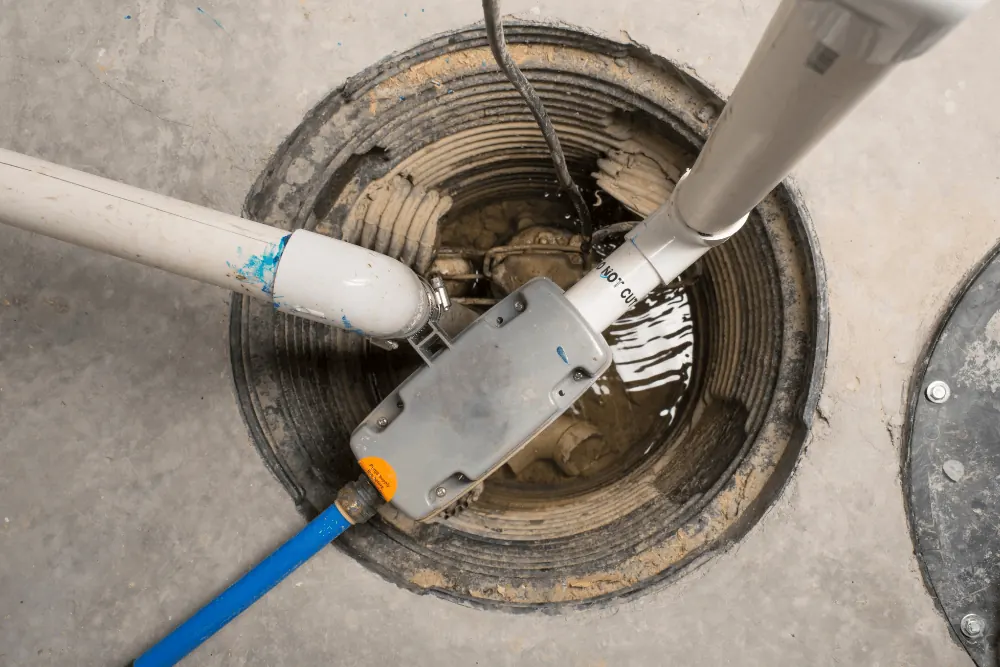
Who to call
| What is happening | Who deals with it |
|---|---|
| A slow drain, a gurgle or a back-up inside your property | A plumber, starting at the fixture |
| A smell, an overflow or a blocked private sewer line | The owner, with a plumber for the work |
| A blockage or overflow on the public network | The sewer operator, not the owner |
| A full tank or a tank that overflows | The owner, with a tanker |
| A private plant's alarm, blower or smell | The plant's operator or maker |
| A kitchen that sends grease to the drain | The business, with a grease trap |
| Sewage coming up in the home | Stop using water, keep people clear and call |
Permission in Dubai: who decides on sewage and plant work
Work on a drain, a tank or a connection touches the landlord and the building.
- A connection to the public sewer needs approval first, applied for in good time before a building is completed.
- The owner is responsible for the private sewerage network. That covers its operation and maintenance, including blockages, overflows and leakages.
- Some things must never be discharged, including anything that overloads a treatment plant and anything toxic or hazardous.
Ask your building management in writing. Tell us what your building asks for and we work to it.
How a smell at a manhole differs from a smell in the house
A smell outdoors, at a manhole or near a cover, usually means a cover that does not seal, a full tank or a stirred-up chamber after a washout, and it is worst on still, hot evenings. A smell indoors at one drain usually means a dry trap in a basin, shower or floor drain that has not been used for a while. Pouring a jug of water down it restores the seal. A smell at every drain in the house points to a blocked vent or a full tank. A smell that comes and goes with the washing machine or the dishwasher points to a trap or a partial block near that fixture. Telling us which of these matches saves a visit, because we know where to look first. See drain unblocking and manhole and gully.
What stays your job and what is the operator's
If you are on a network, what happens beyond your connection is not yours to fix. If you are on a tank, the tank, its lids and the line to it are yours. If you have a private plant, the plant is yours too, though a contract can hand its day-to-day running to an operator. The cleanest arrangement is a written one: who owns each part, who looks after it, who is called first and who pays. Tenants should ask the landlord for it. Owners of buildings should have it from the developer or the management company. When the paper is missing, the cost of the first emergency is the cost of finding out.
When the job is finished
Ask for these. They cost nothing to produce.
- A sketch or note of the drain and tank layout, with the position of the inspection covers and the outlet.
- Photographs of the access points and the work before it was covered.
- For a blockage, the cause found and the section cleared, with any camera survey.
- For a plant, the maker's service record and the date of the next visit, held by the owner.
- FAM's workmanship warranty, in writing. The warranty runs for 30 days and covers our labour only. Parts carry the manufacturer's warranty only.
How we work
- You message us with where the water or smell is, whether you are on the network, a tank or a plant, and photographs.
- We say what we think the cause is, and whether it is ours to fix or the operator's.
- We visit. The visit fee is AED 50 + VAT, credited if the work goes ahead.
- We give a price in writing.
- Check permission. In a rented or managed property, ask the landlord or building management whether they need to approve this work before the visit.
- We find the cause before proposing work, with a camera survey where the line allows.
- We do the work, protect the surfaces and clear up.
- We hand over the layout, the photographs and the findings.
Where we work in Dubai
We cover all of Dubai, including Dubai Marina, JBR, Downtown Dubai, Business Bay, Jumeirah Lakes Towers, Palm Jumeirah, Al Barsha, Jumeirah Village Circle, Dubai Hills, Mirdif, Deira and Al Quoz. See the full list of areas.
Reading the signs: smells, sounds and surfaces around a plant
A small plant tells you how it is doing long before it fails. The trick is knowing which sign points where.
| What you notice | What it usually means | What to do |
|---|---|---|
| A rotten-egg smell near the cover | The tank has gone short of air and the bacteria that work without oxygen have taken over. A blower fault, a blocked diffuser or an overload can cause it | Check the blower is running and listen for it. Call us if it is silent or the smell stays |
| A sharp chemical or bleach smell | Disinfectant or cleaning product has reached the tank and is killing the bacteria | Stop the source. Do not add anything to the tank. Tell us what went down the drain |
| A musty, earthy smell | Normal for a working tank with air. It should be faint and only close to the plant | No action, unless it grows |
| Foam on the surface | Too much detergent, or a young plant still building its bacteria | Cut back on strong cleaners and watch for a week |
| Grey or black water at the outlet | Poor treatment. The solids are not settling or the bacteria are not coping | Call us. Do not use the treated water for anything |
| A gurgle in the house drains when the washing machine empties | A partial blockage or a vent problem between the house and the tank | Do not keep running water. Have the line checked |
| A blower that is much louder than before | A worn bearing, a loose mount or a blocked air filter | Switch it off only if told to. Book a visit |
| Flies or midges around the area | Standing wet sludge or a cracked cover | Seal the cover and clean the area. Call us if it continues |
Write down what you saw and when. A note such as "smell began two days after the guests left" is worth more to the person diagnosing it than a general complaint, because plants react to load.
A year in the life of a small plant
The same plant behaves differently across the seasons, and the pattern is worth knowing.
- Summer. Heat speeds up the bacteria, which is good for treatment but uses more oxygen. A weak blower shows up first in July and August. Smells travel further in hot air, and a plant that was fine in January may complain.
- Occupancy swings. A villa that is empty for three weeks and then full of guests gives the plant a shock both ways. The bacteria starve while it is empty and are overloaded when everyone returns. If you travel, tell whoever services the plant and keep the blower running.
- Ramadan and festival periods. Cooking changes, more fat reaches the drains and meals are bigger. A plant that took everything in its stride in March may need attention after a month of heavy cooking.
- After heavy rain. Surface water that finds its way into the tank or the manhole dilutes the plant and washes out bacteria. If a cover sits below the level of the surrounding ground, water can pour in. Raise or seal it.
- Cooler months. Treatment slows a little but the plant usually runs more steadily. It is a good time for a service and for sludge removal, before the summer load.
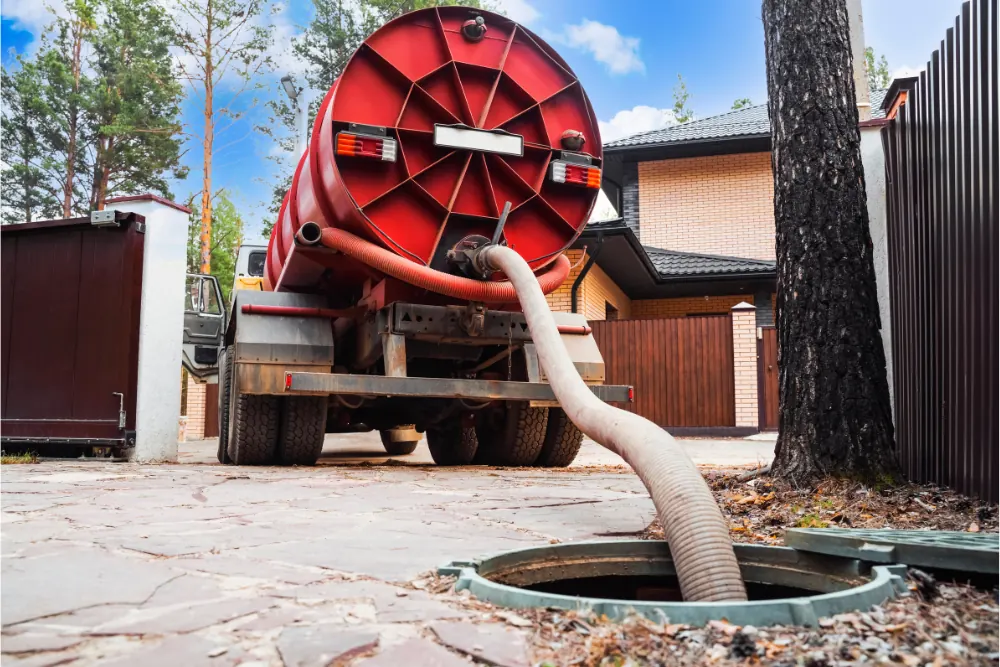
Faults we see most often
Most plant problems have ordinary causes.
- The blower stopped. It trips on a fuse, a cable fails or a diaphragm splits. The plant goes septic within a day or two and smells follow. Restore air first and the biology recovers over days.
- The tank is full of sludge. Solids build up until they carry over into the outlet. The fix is removal by a tanker, not additives.
- A pump float is stuck. The outlet pump does not start or does not stop. A float that has been tangled with a rag or wrapped in fat is the usual cause.
- A blocked inlet. Wipes, hygiene products and fat collect at the first pipe and the whole line backs up.
- Too much water, too fast. A leaking tap or toilet running all day feeds the plant continuously and leaves it no settling time. A fault in the house can overload a plant that is sized correctly.
- A broken baffle or outlet filter. Solids pass straight through. The treated water looks cloudy.
What goes down the drain, and what the plant cannot take
The bacteria in a small plant are a living thing, and what you pour in matters.
- Fine in normal quantities: toilet waste, toilet paper, washing water, normal soap and shampoo, dishwater without much grease.
- Harmful: bleach used freely, drain cleaners, paint, solvents, pool chemicals, strong disinfectants and anything labelled antibacterial in large amounts.
- Blocking: wipes, even those sold as flushable, sanitary products, cotton buds, nappies, hair and kitchen fat.
- Overloading: a very large wash day or a swimming pool backwash sent to the sewage tank. Pool water should never go to the plant.
Using a normal amount of ordinary cleaning products is fine. The plant copes with a bleach spray on a basin. It does not cope with a bucket of neat disinfectant poured down a drain.
Planning a change near a plant
Before you extend the house, add a bathroom or fit a new kitchen, think about the plant. More toilets, more people and more washing all add load. A plant sized for a four-bedroom villa will struggle when a majlis and a maid's room are added with no change to the plant.
Ask three questions before the work starts. How many people was the plant designed for? Where does the new drain connect, before or after the tank? Will construction machinery drive over the tank or the pipe? A cover cracked by a vehicle is a surprise nobody wants, and a tank pushed out of line can leak into the ground.
If a plant is on a managed community or farm, the community or owner decides what can be added. Ask them first. We give you the plumbing side: the pipe size, the fall, the cover position and the cleanout points.
What to tell us in your first message
A good first message saves a visit. On WhatsApp, send:
- the area and the type of property, and whether you own or rent
- whether you are on the network, a septic tank or a small plant
- what you saw, smelled or heard, and when it began
- a photo of the cover, the nearby drain and any manhole
- the last time the tank was emptied or the plant serviced, if you know
- whether anyone has added products to the drain recently
With that, we can tell you whether it is something to switch off, wait on or book at once.
Questions to ask before you hire anyone to work on a plant or tank
Not every company that advertises sewage work understands the biology. These questions separate those who do from those who only empty tanks.
- What exactly will you do on the day, in order? A clear answer names inspection, a sludge level check, the blower and the pumps, then any repair. A vague one is "we will clean it".
- Where does the removed sludge go? It should go to an approved disposal point and the answer should come without hesitation. Ask for the paper that proves it.
- Will you leave some of the sludge in the tank? In a working biological plant, removing everything can slow recovery. A good operator leaves enough settled material to restart the bacteria and tells you why.
- Do you check the blower and the diffusers? If the answer is no, the visit is only half the job.
- What will I get in writing afterwards? A short report with the date, the sludge level, what was found and what was done is the minimum.
- What will you not do? An honest company says what is outside its work, such as supplying a new plant, which for us is not part of the service.
What a visit from us covers
For the plumbing around a plant or tank, a visit has a fixed shape. We look at the inlet pipe and the first manhole for blockages and the fall of the line. We look at the covers for cracks and at the surrounding ground for wet patches, which show a leak. We check the outlet pipe and any pump or float, test that the float rises and falls freely, and look at the visible pipework for leaks, corrosion or poor joints. If a cleanout or a vent is missing, we say so and quote its fitting.
We tell you what we found in plain words and what is yours or the owner's to do. If the fault is inside the plant itself, such as a failed blower, we say whether it is something we can help with or one for the plant's supplier.
Keeping a simple log
A plant is easier to keep healthy when someone writes things down. A single page in a kitchen drawer is enough:
- the date of each service or sludge removal
- who did it and what they found
- any smell, noise or overflow with the date
- any change to the household, such as guests, a new bathroom or a new pool
- the number to call and the last invoice
When a problem returns, the log shows how long it took, what changed and whether the fix held. It also helps if you sell or let the property, because a buyer or tenant can see how the plant has been cared for.
How much does sewage work cost in Dubai?
- The treatment itself. Not a cost to a household that is on the network. A property on a tank pays for the tanker, and the factors are on our septic tank cleaning page.
- The work we do. Clearing a line, a survey, a repair or a connection.
- What moves the price. Whether the fault is inside the property or on the line to the connection, the depth and access, and the length of the line.
We do not publish a starting price for this job. Send a photo on WhatsApp and we give you a fixed price before we start. Prices exclude 5% VAT.
Sewage treatment FAQs
What are the stages of sewage treatment?
Screening, then grit removal and primary settling, then a biological stage where bacteria consume the dissolved waste, then tertiary polishing and disinfection, with the sludge treated separately.
Where does Dubai's sewage go?
From a connected building it goes through the public sewer to a treatment works. From a tank it goes by tanker to a proper discharge point at a treatment works.
What happens to the treated water?
It is largely reused, mainly for irrigation and cooling.
How clean is treated sewage?
It depends on the plant and the use. After full treatment and disinfection, the measures that matter are oxygen demand, suspended solids, ammonia and bacteria counts. The limits that apply to a private plant depend on the plot and the use of the water.
How big does a sewage treatment tank have to be?
It follows the daily flow and the type of plant. The aeration tank holds several hours of flow, and other plant types differ. The maker's design basis governs, and we do not size plants.
What do the bacteria in sewage treatment do?
They consume the dissolved and fine organic waste in the aeration tank and then settle in the clarifier. Part of the settled mass returns to the tank and the surplus is removed as sludge.
Can I use a bacteria additive in my tank or plant?
An additive is not a substitute for emptying or servicing, and some products can harm the bacteria. Keep fat, chemicals and solids out, and keep the tank emptied on time. See our septic tank page.
Why does a plant need power and air all the time?
The bacteria that treat the sewage need oxygen, and a blower supplies it. If the power or the blower stops for more than a few hours, the bacteria begin to die and the plant starts to smell. A plant that is switched off for days has to be restarted with care. See our sewage plant page for the start-up and servicing, and ask the maker how to keep it alive if a building will stand empty.
What does treatment cost me if I am on the network?
A home on the network does not pay a treatment bill of its own. A home on a tank pays for tankers, and a building with its own plant pays for power, servicing and sludge removal. Plant prices are on our sewage plant page.
Book a sewage and drain visit in Dubai
Tell us where the water or the smell is, whether you are on the network, a tank or a plant, and whether you own or rent. Photographs of the cover, the pipe and the area help. If sewage is coming up inside the property, keep people clear and call. We will find the cause, tell you whether it is ours to fix, give you a price in writing, do the work and hand over a note.
WhatsApp: +971 55 407 7427 · Request a quote
Visit us: Office 871, Oasis Mall, Al Quoz 1, Dubai, UAE
Related services: Septic tank and STP · Sewage plant · Sewer line · Drains overview · Drain unblocking · Drain jetting · Grease trap · Leak detection · Water testing · Emergency plumber · how plumbing works in a Dubai home