
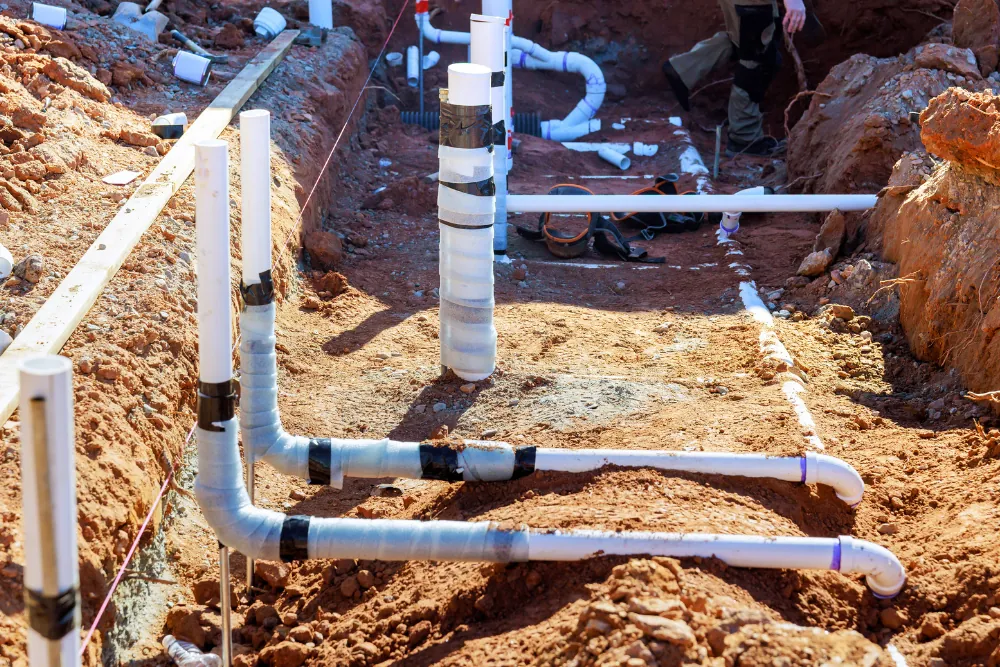
French drain in Dubai: what we do
- Finding where the water comes from, before any trench is cut: rain, irrigation, a leak, a pool or the ground itself. See leak detection.
- Designing a pipe and gravel drain for a garden, a driveway edge or a boundary, with the fall, the fabric and the outlet decided on paper.
- Surface and channel drains at a driveway, a patio or a pool surround.
- Connecting a drain to an approved outlet, and telling you when the outlet is not yours to choose.
- Sump and pump arrangements where there is no low point to run to. See pump services.
- Cleaning and testing an existing drain, with a hose test at the outlet. See drain jetting.
- Gullies and manholes on the same plot. See manhole and gully services.
- Emergency visits. We answer calls and send a plumber 24 hours a day, 7 days a week, including nights, weekends and public holidays.
- Areas. Across Dubai. The list is near the end of this page, and the full list of areas is on its own page.
What the name covers
The name French drain is used loosely. These are the products and names you will meet:
| Name | What it is |
|---|---|
| French drain | A trench with a perforated pipe in gravel that collects water from the ground and carries it away to an outlet |
| Gravel-free French drain | A perforated pipe wrapped in a fabric sleeve or a plastic core, sold as a system that needs little or no gravel. The makers' claims about flow are their own |
| Channel or trench drain | A grating over a channel that takes water from a paved surface. See the channel section below |
| Soakaway | A pit that holds water and lets it soak into the ground |
Three families sit under the name. One collects water from the soil through a perforated pipe and carries it away. One takes water from a surface through a grating, and that is a channel drain. One is a pit that holds water and lets it soak away. Ask a contractor which of the three is in the price.
What a French drain is not
It does not carry sewage, kitchen water, washing machine water or air conditioning condensate. Wastewater does not go to the rainwater network, and the two networks are covered on manhole and gully services. A "French drain for a septic system", as shoppers phrase it, is a different part: the soakaway or drainfield that treats the liquid from a septic tank. Our septic tank and STP page covers it, and roof drains and sump pumps must not discharge toward it.
What a French drain does, and what it does not
Water moves through soil as well as across it, and water beneath a structure presses on it, so a drain gives that water an exit and removes it faster than evaporation or slow flow would.
Its limits are as plain. Coarse gravel alone does not stop fine soil moving into the drain, and clogging is the biggest problem with subsurface drains. Roof runoff needs a different solution from groundwater. A French drain is a tool for water in or on the ground, on a slope with somewhere lower to go. Roof water is better caught at the downpipe, and a site with no fall and no outlet is a site for a pump or a pit and not a trench.
What is the water, and what fixes it
| The water is | Seen as | What treats it |
|---|---|---|
| Rain running across a garden or driveway | Pooling after rain, water against a wall | Falls to a gully or channel, a gully cleaned of sand, or a pit. A French drain only where the water is below the surface |
| Roof water | A wet strip along the foundation under a downpipe | A downpipe connection. See drain general and manhole and gully |
| Irrigation overspray or a leaking line | A wet patch that returns with the irrigation timer | Fix the line or the timer. See irrigation and leak detection |
| A pool leak or overflow | A damp edge, water gaining on a boundary | Find the source first. See pool plumbing |
| Water rising from the ground | A basement or ground floor that seeps, a pit that fills | The building's waterproofing and a sump, with a drain only as part of that design |
| A leaking supply or drain pipe | A wet patch with no rain and no irrigation | Pipe leak repair and sewer line |
The costliest mistakes are the fourth and the sixth rows. A trench cut beside a leaking pipe moves the water and leaves the leak running, and a drain beside a pool that loses water hides a loss that the pool bill and the water bill show. We find the source first.
Groundwater and rain on a Dubai plot
Many low-lying and coastal parts of Dubai have a high water table, and basements and ground floors are the first places it shows. After heavy rain, blocked drains and gutters make surface water worse, and villa and townhouse plots with poor falls hold water against walls. None of that is a measurement of what is under your garden. A site's water table is a measurement for the site, taken by a soil investigation or a borehole, and a gardener or a plumber without that number is guessing whether a trench will meet groundwater.
Who is responsible in a community
Where a plot sits in a managed community, the community's drainage belongs to the manager and a private trench on your plot is yours. The boundary between them is on the community's drawings, and a drain whose outlet is a community gully or rainwater line needs the manager's agreement as well as the owner's. This is general information and not legal advice.
Design figures compared
Designs vary, and none of the figures below is a fixed specification. A trench in Dubai is designed to the plot's soil and to the outlet that is allowed. These are the typical figures we start from.
Trench, stone and fall
| Item | Typical figure |
|---|---|
| Trench | About 30 cm wide and 45 to 60 cm deep at the start, deeper towards the outlet |
| Bedding | About 5 cm of coarse sand or fine gravel under the pipe |
| Stone | Clean, washed crushed stone of about 20 mm, around and over the pipe, not pea gravel with fines |
| Pipe | 100 mm perforated pipe |
| Fall | At least 1 per cent (10 mm per metre), and 2 per cent where the outlet allows |
A drop of 1 cm per metre is 1.0 per cent, and 2 cm per metre is 2.0 per cent. Over a 20 m run the two differ by 0.2 m of drop: 0.2 m at 1 per cent and 0.4 m at 2 per cent.
A 20 m run therefore means about 2.7 to 3.6 m³ of spoil before any stone goes back. The depth also grows with the run. A trench that starts 45 cm deep and falls at 2 per cent over 20 m is 85 cm deep at the outlet, and over 30 m it is 105 cm.
Fabric: wrap, sock or filter
There are three common answers to keeping soil out of the stone and the pipe:
- A sock on the pipe. A fabric sleeve over the perforated pipe, with no fabric in the trench.
- Fabric lining the trench. A non-woven geotextile around the stone, with at least 30 cm of excess folded over the top. Woven fabric is too tight and blocks over time.
- A sand filter. A graded sand layer around the stone, designed to the soil's grain size.
Fabric keeps fines out but is easily damaged, is nearly impossible to repair or replace, and clogs as particles lodge in it. When fine clay and silt blind the fabric, it stops passing water, and silt or sand that passes the fabric fills the stone and ends the drain's use. The right answer is set by the soil, which for a Dubai plot means a sample and not a guide's default.
Holes up or down
Most makers and installers put the holes facing down, so water enters from below and the pipe fills from the bottom, and the stone layer need not fill first. A minority say it matters less. The disagreement is smaller than it looks. Ask the supplier how the pipe you are buying is perforated and how it is meant to be laid.
Pipe and the clean-out
A perforated 100 mm pipe is the usual size. A 45-degree joint with a pipe extending above ground is a clean-out point, and an inlet grate at ground level collects water where it pools. A pipe you cannot reach is a pipe you cannot clean, so the clean-out is part of the design and not an extra. A drain under pavers or a slab needs it more.
Failure and lifespan
No one can honestly give a life in years for a French drain, because it depends on the soil, the filter, the stone and the maintenance. A drain built with no filter in fine soil can fill with silt within a few years, and one built with a filter designed for the soil can run much longer. Clogging is the biggest problem with subsurface drains, and fines washing out can leave voids and sinkholes. We quote no number of years, and we size the maintenance to what we find on the day.
Sand in Dubai
Dubai's soils are sandy and silty, and the filter is designed from the soil's grain-size distribution. The grain size of the soil on your plot is the design input, and a gravel size taken from a catalogue is only a default for a typical garden.
Testing and cleaning
A hose test at the outlet shows flow, and it is the right test. The interval is yours to set against what the first few tests show, and a quarterly check is a sensible start. A pipe that passes a hose test dry and fails after rain has a different fault from one that fails the hose test.
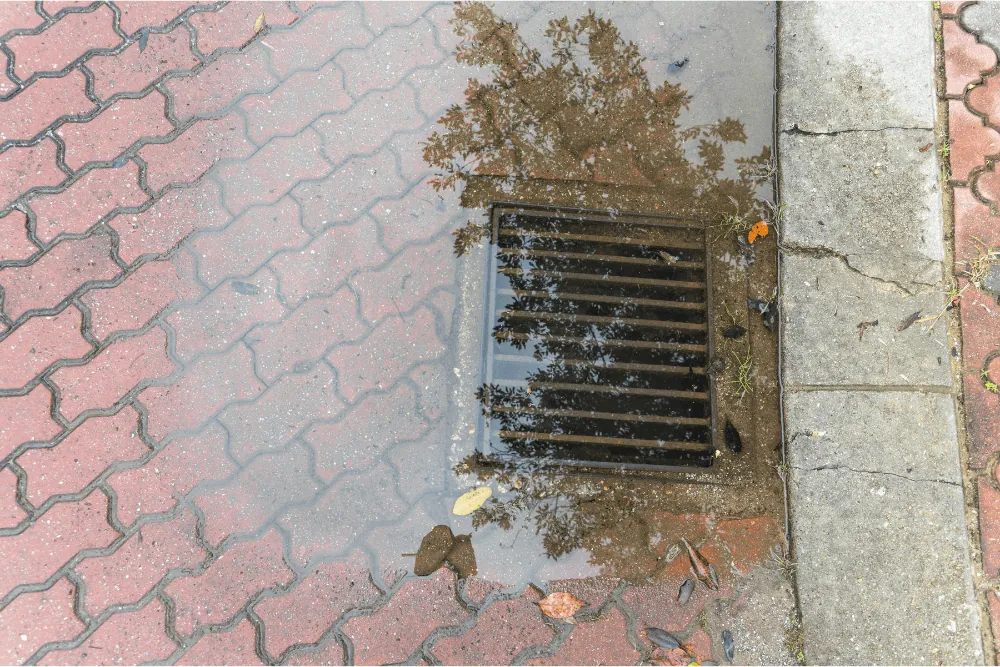
Where the water goes: the outlet
A French drain is only as good as its outlet, and in Dubai the outlet is where the permissions apply. The rules on chambers and the two networks are on manhole and gully services.
- The water cannot go to the sewer. The foul sewer is not for groundwater or rain, so a French drain is never tied into it.
- A street gully or a rainwater pipe needs approval. The collected water is groundwater and rainwater, which belongs in the rainwater drainage, and the building or the community has to agree to it. Changing a rainwater pipeline needs approval too.
- The drain must not carry wastewater. A shared trench with a washing machine or air conditioning line is a fault, because those waters go to the building's private drainage.
- A trench pumped out during works is a construction matter. A permanent drain is not construction dewatering, and we do not say which rule applies to a particular job. Ask building management or the community manager.
The decision on the outlet comes first, and the trench comes second. If the only outlet is a street gully, the job starts with an application and a design that is accepted, and until it has one, a trench can only be a sketch.
Basements, sumps and pool surrounds
People ask about basements, sump pumps, pools and garage floors.
Basements and ground floors. A basement under a Dubai building belongs to the building's waterproofing and structural design. Cutting its slab for an interior drain is a decision for the engineer who designed it and the manager who maintains it, because the developer or the management company maintains the community. See ceiling and wall leaks for water that appears inside.
Sump pumps. A sump pump moves water from a pit away from a villa's foundation. A sump pit is an outlet of last resort, and the discharge from it is governed as above. See pump services.
Pool surrounds. Water collected beside a pool includes any water the pool loses, so a drain there can hide a leak. Find the source first. See pool plumbing.
Channel drains
A channel drain, which shoppers also call a trench drain or a French trench drain, takes water from a paved surface through a grating into a channel. It is not a French drain, because it collects from the surface and a French drain collects from the ground, though both need a fall and an outlet.
| French drain | Channel drain | |
|---|---|---|
| Collects | Water in the soil | Water on a surface |
| Where | Planting beds, lawns, the toe of a slope, the edge of a foundation | A driveway threshold, a patio edge, a pool surround, a garage door |
| Visible | Buried, with a grate if one is fitted | A grating at surface level |
| Maintenance | A hose test at the outlet and a clean-out | Lifting the grating and removing sand and debris |
| Load rating | Not an item, unless it sits under a drive | A load class for the grating, from foot traffic up to heavy vehicles |
The load class is the figure to check, and it must match the heaviest wheel that will cross the grating.
A channel drain in Dubai fills with sand like any other surface drain, and one with no easy way to lift the grating is a drain that will stop working.
Laying a French drain: the order of work
We mark the line and the outlet first, then dig the trench with the fall set from the outlet back, so the pipe is never laid uphill. The bottom of the trench is levelled and a bed of sand or fine stone laid. The perforated pipe goes on the bed with the holes down, the clean-out point is formed, and the stone goes round and over the pipe in layers. The filter wrap goes on as the design says, with the overlap folded over the stone. We run water from a hose at the high end to see it reach the outlet before the trench is closed, then backfill, restore the surface and photograph each stage. A trench closed before the water test is a gamble.
A soakaway pit: when it is the right answer
Where there is no outlet and no low point to run to, a soakaway pit holds the water and lets it soak into the ground. It works where the soil takes water, and it fails where the soil is clay or the water table is high, because a pit in wet ground does not drain. A soakaway needs a test to show how fast the soil takes water, a filter to keep silt out, and a lid or a grate you can open to clean. It is not a place for wastewater or roof water that carries oil. We tell you honestly if the plot cannot take one.
Roof water: catch it at the downpipe
A downpipe that empties onto the ground beside a wall soaks the footing, and a French drain beside it is working against the cause. The cure is a pipe from the downpipe to a gully or a chamber that is approved, so roof water never reaches the ground beside the wall. Where the downpipe goes into a gully that has filled with sand, cleaning the gully is the first job, and no trench is needed. See manhole and gully.
How we choose the stone and pipe size
A 100 mm perforated pipe is enough for a garden edge or a driveway side. A longer run, a larger area or a steady flow needs a larger pipe or a second line, because a pipe that is too small backs up. The stone is clean washed stone that is large enough to leave voids, and not a fine gravel that fills them. We choose the pipe from the area drained and the flow we expect, the stone from the soil and the filter, and the fall from the outlet. If the area is large, we divide it into runs that each reach their own outlet, so one blocked outlet does not flood the whole plot.
Eight checks before you buy or accept a quote
- Which of the three the quote means. A French drain, a channel drain or a pit.
- Where the water comes from, shown. Rain, roof, irrigation, a pool, a leak or the ground. A trench beside a leak hides the leak.
- The outlet, in writing. Where the water goes, and the approval for it where one is needed. A drain with no approved outlet is a sketch.
- The fall and the depth at the outlet, as figures. On a 20 m run that is 0.2 m or 0.4 m of drop, and the trench at the outlet end is deeper than at the start by that much.
- The filter, and why. Sock, fabric or sand, with the soil as the reason. A guide's default is not a reason.
- The pipe. Material, nominal and actual size, whether the openings are holes or slits and where they face, and a clean-out you can reach.
- For a channel, the load class and the grating. Matched to the heaviest wheel, with a grating you can lift to clear sand.
- The price and the parts. The price in writing, the parts named, VAT stated, and a warranty for the labour.
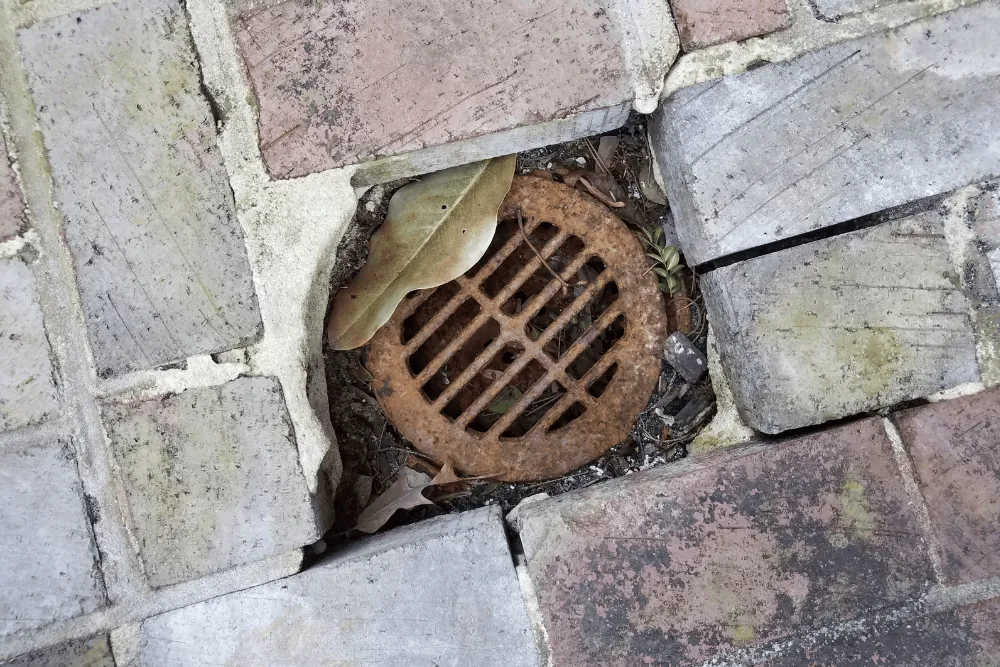
Permission in Dubai: who decides on a French drain
A drain changes the ground, the plot's water path and sometimes the community's drains, and who decides differs for a rented villa, an owned villa and a community plot. A drain whose outlet is a community gully or the community's rainwater line needs the manager's agreement as well as the owner's.
Clearing a blocked grate or testing an existing drain is maintenance, and the landlord is told in a rented villa. Cutting a trench, changing the fall of a garden, or connecting to a gully or a rainwater pipe is an alteration, and needs written consent, the community's agreement and any approval the outlet needs. Tell us what your building asks for and we work to it.
When the job is finished
Ask for these. They cost nothing to produce.
- A drawing as built, with the trench's length, its depth at each end, the fall in per cent and the outlet's position.
- Photographs of the open trench before it is backfilled: the pipe, the filter, the stone and the bedding.
- The pipe and filter specification, by name, size and material.
- The outlet, where it is, what it connects to and the approval for it where one was needed.
- The clean-out, where it is and how to open it.
- A hose test at the outlet, with the date and what was seen.
- Where the spoil went, and the surface restored.
- FAM's workmanship warranty, in writing. The warranty runs for 30 days and covers our labour only. Parts carry the manufacturer's warranty only.
How we work
- You tell us what you see and where, with photographs and the plot's layout on WhatsApp.
- We trace the water, at the first visit, before talking about a trench.
- We check what is below and around the area, from the plot's drawings and what we can see.
- We settle the outlet first, and tell you if it needs an application.
- We give a design and a price in writing, with the fall, the filter and the pipe named.
- Check permission. In a rented or managed property, ask the landlord or building management whether they need to approve this work before the visit.
- We build, test and hand over, with the drawing, the photographs and the hose test.
Where we work in Dubai
We cover all of Dubai, including Dubai Marina, JBR, Downtown Dubai, Business Bay, Jumeirah Lakes Towers, Palm Jumeirah, Al Barsha, Jumeirah Village Circle, Dubai Hills, Mirdif, Deira and Al Quoz. See the full list of areas.
Sand, silt and what clogs a French drain first
A French drain does not usually fail from the pipe. It fails from the ground around it. In Dubai's sandy soil, fine particles move with the water and settle into the gravel and the pipe slots, and over a few seasons the voids fill. A wrap of filter fabric around the gravel slows that down, and a pipe with slots facing down and a fall of about one in a hundred, so one centimetre of drop for every metre of run, keeps the water moving. A drain laid flat, or with the slots upward, holds water and silts up faster.
If a drain stops taking water, the first checks are the outlet, which may be blocked or buried, then the inspection point if there is one, then the surface layer, which may have crusted over with silt. A camera shows what the pipe holds. Jetting a perforated pipe has to be gentle, because a strong jet can blow slots open and push the gravel out. We tell you whether a clean will last, or whether the drain needs relaying.
What we quote for a French drain
- What sets our price. The length and depth, the soil, the outlet and any approval it needs, the pipe, the filter, the spoil to be removed and the surface to be restored. A channel drain is priced by the metre and its load class.
We do not publish a starting price for this job. Send a photo on WhatsApp and we give you a fixed price before we start. Prices exclude 5% VAT.
Maintaining a French drain
A French drain needs little attention, but it needs some. Keep the surface clear of leaves and silt. Check the outlet after heavy rain and clear it. If water stands above the drain for more than a day, the drain may be blocked or silted. Do not plant trees with aggressive roots near it, and do not build over it without telling us. We can inspect, flush and repair a drain on request.
French drain FAQs
What is a French drain, and is it the same as a channel drain?
A French drain is a trench with a perforated pipe in gravel that collects water from the ground and carries it to an outlet. A channel drain, which shoppers also call a trench drain, takes water from a paved surface through a grating.
Which way should the holes face?
Most makers and installers lay it with the holes facing down, so water enters from below. Ask the supplier how the pipe you are buying is perforated and how it is meant to be laid.
How deep and how steep should a French drain be?
A common starting point is a trench about 30 cm wide and 45 to 60 cm deep, with a fall of at least 1 per cent and preferably 2. On a 20 m run the two falls differ by 0.2 m, and at 2 per cent a trench that starts 45 cm deep is 85 cm deep at the outlet. The right figures are set by the outlet and the soil on your plot.
Do I need fabric around the gravel?
It depends on the soil. A sock on the pipe, a fabric lining the trench or a sand filter are the three answers, and fabric can blind with fine silt and clay. The filter is chosen against the soil, and the grain size of a Dubai plot is a measurement, not a default. Ask what filter is in the quote and why.
Where can the water go in Dubai?
Not into the sewer. The outlet needs approval where it is a street gully, a community line or a rainwater pipe, as the section above sets out.
Can I connect a washing machine or an air conditioner to a French drain?
No. A French drain is for groundwater and rainwater. Washing machine and air conditioning water go to the building's private drainage.
How long does a French drain last?
There is no fixed life. A drain with clean gravel, a perforated pipe and a filter fabric that keeps the soil out can last for many years. Silt and roots are what shorten it, so a slow outlet or standing water is the sign to have it cleaned.
Is a French drain a good idea in Dubai?
A French drain suits water in the ground on a slope with an approved outlet. Where the water comes from a leak, the irrigation or a roof, another fix is better. We trace the source first.
Do I need my landlord's permission?
For clearing or testing an existing drain, tell the landlord. For a new trench or a connection to a gully or rainwater pipe, get written consent first, and the community's agreement where there is one. This is not legal advice.
How much does a French drain cost in Dubai?
It depends on the length, the depth, the soil, the outlet and any approval it needs. We give a fixed price in writing after a visit. Prices exclude 5% VAT.
Book a French drain or land drainage visit in Dubai
Tell us where the water collects, when it appears (after rain, after irrigation, all the time), whether the plot is in a managed community, and whether you rent or own. Photographs of the wet area and the plot's layout help. If water is entering a building or a basement, say so and call.
WhatsApp: +971 55 407 7427 · Request a quote
Visit us: Office 871, Oasis Mall, Al Quoz 1, Dubai, UAE
Related services: Manhole and gully · Drain general · Drain unblocking · Drain jetting · Sewer line · Septic tank and STP · Leak detection · Pool plumbing