
Fixable pipe in Dubai: what we do
- Judging whether a pipe is fixable, from the damage, the material and the access, before anything is cut. See pipe leak repair.
- Cutting out a damaged section and closing the gap with a repair coupling or new pipe and fittings.
- Remaking a leaking joint with the right fitting. See pipe fittings.
- Repairs in PPR and CPVC, which have their own joining methods. See PPR pipe and CPVC pipe.
- Finding a leak that is not visible, before a wall or ceiling is opened. See leak detection.
- Replacing a run where mending no longer makes sense. See repiping.
- Drain and sewer lines, where lining and replacement are on sewer line.
- Emergency visits. We answer calls and send a plumber 24 hours a day, 7 days a week, including nights, weekends and public holidays.
- Areas. Across Dubai. The list is near the end of this page, and the full list of areas is on its own page.
Fixable or not: which damage can be mended in place
Whether a pipe is fixable is set by the damage and by whether a person can reach it.
| Damage | Mended in place by | What to know |
|---|---|---|
| A leaking joint or fitting | Replacing the fitting. See pipe fittings | A coupling does not cure a joint made with the wrong part for the pipe |
| A pinhole or split in a copper pipe | Cutting out the section and fitting a repair coupling or new pipe | Check the rest of the run for pitting. A pinhole often means the wall is thin elsewhere |
| A cracked or split PPR pipe | Cutting out and fusing in a new section with couplings. See PPR pipe | Fusion needs room for the welding tool, so a tight shaft is harder |
| A cracked CPVC pipe | Cut out and rejoin. See CPVC pipe for the joining method and for what cracks CPVC | A crack from a chemical can sit at more than one joint |
| A cracked PVC drain or waste pipe | Cut out and fit a slip coupling or new section | Waste couplings are for drains, not for pressurised supply |
| A leak in a wall, ceiling or slab | Finding it, then opening for access. See ceiling and wall leaks | A coupling needs room around the pipe to slide, and a concealed repair is another joint to hide |
| A pipe that is pitted, thin or brittle along its length | Not fixable by a coupling. See repiping | The next leak will be beside the repair |
The test is not the material but three questions. Is the damage a point or a length? Can the pipe be reached on both sides of it? Is the rest of the run in a state that will hold the repair? The first two decide whether a coupling fits. The third is the one a repair cannot answer, and it is why a second leak in the same run is a reason to price a replacement beside the next repair.
The repair coupling: slip, no-stop, telescoping and expansion
An ordinary coupling has a stop inside it, a ridge or dimple that limits how far each pipe goes in. A repair coupling has none. It is sold under several names: slip coupling, repair coupling, no-stop coupling, telescoping coupling and, for some types, expansion coupling.
The word "coupling" alone is the trap. A coupling with a stop closes a gap only if one of the pipes can be moved, and a repair coupling is what you buy when neither can. One end slips over a pipe, and then back over the gap. Without internal stops, slip couplings still have minimum and maximum insertion depths, so the depths must be marked on the pipe.
Cutting out the damage and closing the gap
The cut-out is the whole repair.
- Shut off and drain the line.
- Mark the damage, extending past it on both sides. Slide the coupling on, compress it fully and mark where its ends land, and those marks set how much pipe to cut out.
- Cut square on the marks. A non-square cut reduces the effective area for the chemical weld.
- Deburr and chamfer the ends, and wipe them dry.
- Prime and cement, with more cement on the sliding side than on the stationary side, and cement only up to the mark on the stationary side.
- Slide the coupling over the gap and push the two pipes together so the cemented ends are fully inserted. Hold for the time on the label.
- Wait for the cure, then pressurise slowly and inspect.
The coupling's own length sets the shortest section that can be cut out, and the pipe on at least one side must be free to move by that amount while the coupling is slid into place. A pipe clipped hard to a wall on both sides cannot be repaired this way until a clip is released.
The alternative for a pressurised water line is a solvent-welded slip coupling, or, for other materials, the push-fit, compression or fusion couplings in the next sections.
Solvent-weld repairs: cure times
A glued repair holds water only after it has cured, and the wait grows with the pipe size and the test pressure. A small pipe on a warm day waits minutes to an hour, and a large pipe waits hours. Cold or humid conditions lengthen every wait, and cement brands differ, so the cement's label governs. A repair made in a hot space is left unpressurised for the longer figure, and the maker's instruction for hot weather decides. The CPVC cure times in heat are on CPVC pipe.
Copper and plastic pressure lines: push-fit, compression and solder repair couplings
A pressure line takes more than a glued PVC coupling does, and the choice of repair coupling follows the pipe.
| Type | How it works | Cautions |
|---|---|---|
| Push-fit repair coupling | The pipe is pushed in to a depth mark and held by a grab ring and an O-ring seal | Remove internal burrs, which can restrict flow or damage the O-ring. Chamfer the end. Push to the depth mark |
| Compression repair coupling | A nut tightens an olive or ferrule onto the pipe | Do not over-tighten: about one full turn past hand-tight. Over-tightening deforms the ferrule or damages the threads |
| Soldered repair coupling | A copper sleeve soldered onto both ends | Needs a dry pipe, heat and a clean joint. Not for a pipe that cannot be drained |
| Fusion coupling (PPR) | Heated and welded on to the cut ends | Needs the right heater and timing. See PPR pipe |
Repressurise gradually after any of these. Three points about ratings and use:
- A coupling is for the pipe it is made for. A repair coupling for copper tube is for copper tube only. The tube must be chamfered, and inserted until the depth mark is aligned with the end of the fitting.
- A maker's claim for itself is not a test. A seal that is claimed to last as long as the pipe is the maker's wording. We go by the rating on the part, and by the warranty the seller will put in writing.
- The same brand sells different parts for different pipes, so the pipe list on the part is what counts, and the brand name is not. A PVC slip coupling is a separate product with a lower pressure rating than one for copper.
In Dubai, stored water can reach 40°C or higher in summer, so check that the coupling's temperature rating covers it. A booster set or a tall riser puts more pressure on a repair than a villa line behind a pressure-reducing valve, and we choose the coupling for the pressure the line sees. Whether a push-fit coupling may be closed into a wall is a question for the manufacturer and the building. See the push-fit answer on pipe fittings.
What a coupling cannot fix
A repair coupling mends a gap. It does not mend these.
- The wrong coupling for the duty. Flexible couplings and compression couplings suit drain, waste and vent lines and should not be used on a pressurised water supply.
- The wrong coupling for the pipe. A repair coupling for copper is for copper only.
- Two different materials. A repair between copper and plastic, or PPR and CPVC, is a transition and not a coupling. See joining one material to another on pipe fittings.
- A run that is failing along its length. A repair closes one gap. If the pipe beside it is thin, pitted or brittle, the next leak is next to the coupling. See repiping.
- A concealed section. A coupling inside a wall is a joint no one can see. Closing a wall over a repair is a decision on the manufacturer's instructions, the building's rules and a pressure test first, and a photograph of the repair is the record.
- A pipe that cannot move. The coupling has to slide. A pipe fixed at both ends needs a clip released or a longer cut-out.
Mending a pipe from the inside: epoxy lining and liners
Lining repairs a pipe without opening the wall. There are two kinds:
- Epoxy lining. A thin epoxy coating is blown through a metal supply pipe with compressed air from existing access points, so walls are not demolished. The coating should be certified as safe for drinking water. No honest source gives a service life in years, because the technique is not old enough to prove one.
- Liner pulled into a larger pipe. A defective pipeline is rehabilitated by pulling in a plastic liner after cleaning, and fitting it with heat and pressure. It is used for large pipes and drains, not for household supply.
Lining coats the bore. It stops a pinhole or a rusting surface, and it does not change the fittings, the valves or the pipe's wall thickness. A pipe that is lined is also a pipe that cannot be cut and joined with a repair coupling afterwards without a decision on the lining. If lining is on offer, ask for the product's drinking-water certificate for the exact coating, the cure and flushing routine before the water is used, a warranty in writing, and the name of a building that has had it for years. For drains and sewers the same questions are on sewer line.
Repairing a copper pipe
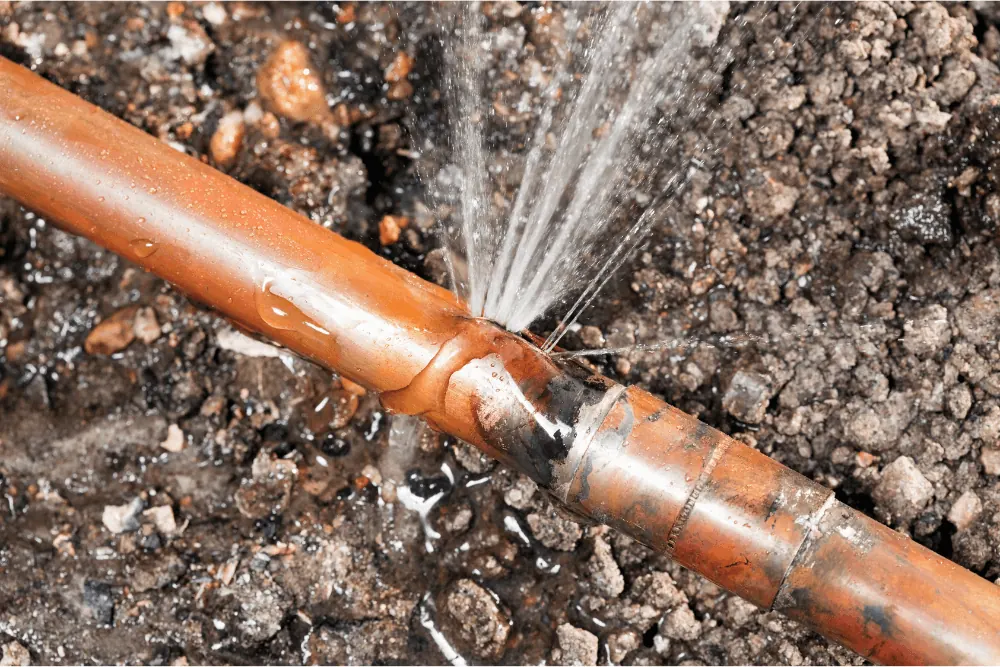
Copper pipe is common in villas and older buildings, and it fails in a few typical ways. A pinhole can mean the wall has thinned from the inside, so we check the rest of the run for green deposits and pitting before we fit a coupling. A split from a frozen or over-pressured section is rare in Dubai but a split at a joint can follow movement. We cut out the damaged length with a pipe cutter, deburr the ends, and fit a repair coupling or solder a new length, keeping the pipe dry where solder is used. The pipe either side is cleaned back to bright metal. A repaired copper line is flushed to clear flux and filings before the water is used.
A split PPR pipe in a tight shaft
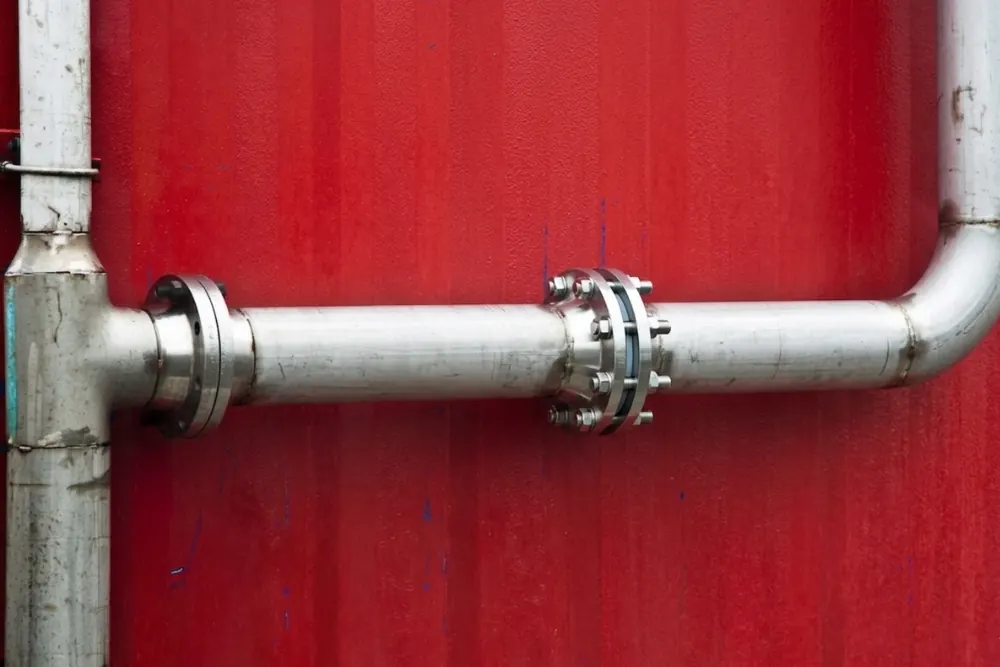
PPR is joined by heat fusion, and the welding tool needs room. In a tight shaft or behind a boxed-in wall, a cut-out and a fused section may need the opening widened, or a different coupling on the section with a transition part that suits the pipe. We check the room before we cut, and tell you whether the fix is a fusion section, a transition coupling or a longer opening. PPR that has been damaged by heat, or that cracks at several points, is a replacement and not a repair. See PPR pipe.
Making the opening for a hidden repair
When the leak is inside a wall or ceiling, we find it first with the meter test and a moisture check, then mark the smallest opening that lets us reach the pipe on both sides of the damage. The coupling needs room to slide, and the tools need room to work. We cut the tile or board neatly, keep the pieces, and close the opening only after the pressure test has held. Where the pipe will need to be reached again, we leave an access panel. A repair that is photographed with a tape measure before closing is a record that saves a ceiling later.
Testing a repair under pressure
A repair is tested at working pressure and watched, not just looked at. We close the outlets, fill the line slowly, bleed air at the highest tap, and watch the repair and the joints either side for weeping. A gauge on the line that holds steady shows no leak. We leave the line under pressure for the time that suits the repair, dry the joint with a tissue and check again, and look once more after a day. A drip that appears only under full pressure is the commonest sign of a coupling that is not fully pushed home.
Why a repaired pipe leaks again
A second leak near a repair has three usual causes. The rest of the run is thin or pitted, so the next weak spot is beside the coupling. The coupling was not fully inserted, was fitted on a pipe that was not cut square, or sits under strain from a clip that holds the pipe rigid. Or the cause of the first leak was never removed, such as a high pressure, a loose support, or a chemical on the pipe. We look for the cause before we repair the effect, and tell you if a second leak in the same run means it is time to price a replacement.
Repairing a waste or drain pipe
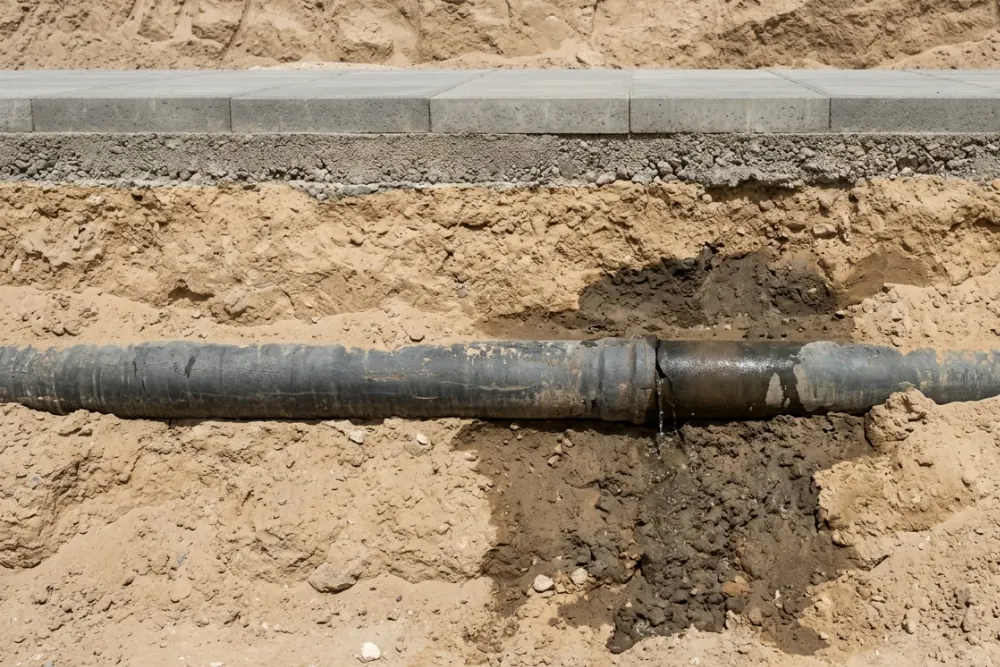
A cracked PVC waste pipe is mended differently from a supply pipe, because a drain does not run under pressure. We cut out the damaged length, clean and deburr the ends, and fit a slip coupling or a new section with fittings made for drains, keeping the fall of the pipe so it still drains. A waste coupling is never used on a pressurised supply line. After the repair we run water through and watch the joint, since a drain joint that weeps under flow shows only when water is passing. A cracked pipe in a floor or a wall is found with a camera or a flood test before it is opened. See drain repair.
While you wait for a plumber
If a pipe is leaking, close the nearest isolation valve or the main, and open a tap at the lowest point to drain the line. Put a bucket under the leak and a towel round it. Do not wrap tape round a pipe and walk away, because a leak under tape runs along the pipe and shows somewhere else. Do not cut into the pipe to see what is inside. Photograph the damage and the pipe either side, and tell us the pipe's material and size if you know them. A clear photograph tells us what coupling and tools to bring.
Eight checks before you buy or accept a quote
- The damage, shown. A photograph or a mark on the pipe that shows whether the damage is a point or a length, and a statement of what the rest of the run looks like.
- The repair named. Cut-out and coupling, fitting replaced, section replaced, or lining. A quote that says only "repair pipe" has not answered.
- The coupling, by pipe and duty. The pipe it is rated for, its pressure and temperature, and its approval for drinking water if it carries any. Not the brand alone.
- The access. Whether the pipe can slide, whether a clip must be released, and whether any wall or ceiling is opened and made good.
- The cure and the test. For a glued repair, the cement and primer used, the cure time for the size and pressure, and who tests it. For other couplings, the insertion mark and the gradual repressurising.
- The mixed joints. Any place where two materials meet, and the transition part used.
- The concealed parts. Any coupling that will sit in a wall, a ceiling or a slab, whether the manufacturer allows it, and a photograph before it is closed.
- The price and the parts. A price in writing for the work, the parts named, VAT stated, and a warranty for the labour.
Permission in Dubai: who decides on pipe repairs
Pipes inside a flat or villa are the owner's responsibility, and in a rented home they also touch the landlord. A riser or a shared line in a block is the building's, so a repair that needs the supply shut off for others, or that opens a shaft, goes through building management. The fuller account is on pipe leak repair.
A coupling on a branch inside the unit is maintenance, and needs a message to the landlord. Opening a wall, replacing a run, relining a pipe or touching a riser is an alteration, and needs written consent in a rented home and the building's approval. Tell us what your building asks for and we work to it.
When the job is finished
Ask for these. They cost nothing to produce.
- A note of the damage and the repair, with where the pipe was cut and what was fitted.
- Photographs before and after, including any part that will be closed in.
- The parts used, with the coupling's pipe type, size, pressure and temperature rating.
- The cement and primer, if the repair was glued, with the cure time allowed.
- A pressure test, with the pressure held and for how long.
- A dry check after 24 hours, of the repair and the pipe either side.
- A note of the pipe's state, if the rest of the run looks thin, pitted or brittle, with a price for the next step.
- FAM's workmanship warranty, in writing. The warranty runs for 30 days and covers our labour only. Parts carry the manufacturer's warranty only.
How we work
- You tell us what you see and where, with photographs of the pipe and the damage on WhatsApp.
- We visit, trace the pipe and look at the access, and find out whether the damage is a point or a length.
- We tell you whether the pipe is fixable, with the route we would use and what we cannot see.
- We give a price and a method in writing, with the coupling or fitting named.
- Check permission. In a rented or managed property, ask the landlord or building management whether they need to approve this work before the visit.
- We isolate, cut, fit and test, and photograph any part that will be closed.
- We hand over the note, the photographs, the pressure test and the warranty.
Where we work in Dubai
We cover all of Dubai, including Dubai Marina, JBR, Downtown Dubai, Business Bay, Jumeirah Lakes Towers, Palm Jumeirah, Al Barsha, Jumeirah Village Circle, Dubai Hills, Mirdif, Deira and Al Quoz. See the full list of areas.
Temporary and permanent repairs
Not every repair is meant to last. Knowing the difference helps you decide.
| Repair | Intended use | Lasting? |
|---|---|---|
| A rubber clamp over a pinhole | A stop for a small leak until a proper repair | Short term |
| Epoxy putty or tape | Emergency control on a small leak | Short term |
| A repair clamp with a gasket | A neat fix on sound pipe | Medium term, if the pipe around it is sound |
| A cut-out and coupling | A proper repair of a damaged section | Long term |
| Replacing a length of pipe | A fix for old, corroded or damaged sections | Long term |
| Re-lining a pipe from the inside | A fix for a pipe that cannot be reached | Long term, in the right conditions |
We tell you which kind of repair you are getting, and whether the pipe around it will need attention soon.
When the pipe is the problem, not the leak
A pipe that has leaked once may leak again. If it is old, thin, scaled or pitted, a patch at one point shifts the pressure to another. Look for these signs:
- Several leaks in the same line over a short time
- Rust-coloured or flaking pipe near the leak
- Green deposits on copper, or white crust on joints
- A pipe that is soft or brittle in plastic
- Water that discolours when the tap first opens
A string of repairs on an old line costs more than renewing it. We tell you honestly when a line has had its time. See repiping.
Water quality after a repair
After any repair, flush the line until the water runs clear. Debris, cement, flux or cutting oil must not stay in the pipe. Open the tap at the end of the run and let it run for a few minutes, then check the aerators for grit. If a repair has been on a drinking water line, run the water until it tastes and looks normal before use.
Records worth keeping
Note the date, where the repair is, the pipe material and size, and the fitting used. A photo of the repair before it is covered can save a ceiling later. If the pipe is in a wall, mark the position on the plan or take a photo with a tape measure. Keep the invoice for the warranty and the landlord.
Who should repair what
A small repair on an accessible pipe is a plumber's job. A repair on a pipe in a shared wall or riser involves building management. A repair on a pressurised main involves the utility or the building. Tell us where the pipe runs and whether it is yours, and we explain who needs to be told before any work starts.
How much does it cost to fix a pipe in Dubai?
- The parts. A pipe, a fitting or a clamp is priced on the pages for each. See pipe leak repair and pipe fittings.
- The work. Isolating, cutting out, fitting the coupling, testing and making good.
- What moves the price. The pipe material and size, the length to cut out, the access, whether a wall or ceiling is opened, a mixed joint, the number of repairs, the coupling, and the cure time.
We do not publish a starting price for this job. Send a photo on WhatsApp and we give you a fixed price before we start. Prices exclude 5% VAT.
Fixable pipe FAQs
Can a leaking pipe be fixed without replacing it?
When the damage is a point on a pipe that can be reached, it can. A pipe that leaks repeatedly, or is thin or brittle beside the damage, is a case for replacement. See repiping.
What is a slip coupling?
A coupling with no internal stop. Slip couplings are also known as repair couplings or no-stop couplings. They lack the internal ridge that limits how far a pipe can be inserted, which lets one end slip over a pipe and then back over the gap.
Can I use a normal coupling to repair a pipe?
Only if one of the pipes can be moved. A normal coupling stops each pipe at a ridge, so it cannot close a gap between two fixed ends. Flexible and compression couplings are for drain, waste and vent lines and not for pressurised water supply, so a normal drain coupling is the wrong part on a supply line.
How long must a glued PVC repair cure before water is turned on?
It depends on the size and the pressure. A small pipe waits minutes to an hour and a large pipe waits hours. Cold or humid conditions lengthen the wait, and the cement's label governs.
Can a push-fit coupling fix a pipe permanently?
Makers rate push-fit couplings for permanent service on the pipe they are made for, within their pressure and temperature ratings. Whether one can be closed into a wall is a question for the manufacturer and the building. See pipe fittings.
What pressure and temperature do repair couplings take?
Each product has its own rating, and the rating on the part you are fitting is what counts. A PVC slip coupling is rated lower than a push-fit coupling for copper. We choose the coupling for the pressure and the temperature the line sees.
Can a pipe be fixed from the inside?
Epoxy lining coats the bore of a metal supply pipe, and close-fit lining pulls a liner into a larger pipe. Both are specialist jobs. See sewer line for drains.
Is epoxy lining safe for drinking water?
Ask for the certificate for the exact coating, the flushing routine before use, and a warranty in writing.
When should I replace a pipe instead of fixing it?
When the damage is a length and not a point, when the same run has leaked before, when the pipe beside the damage is pitted, thin or brittle, or when the repair would sit where no one can see it. See pipe leak repair and repiping.
How much does it cost to fix a pipe in Dubai?
We give a written price after a visit, once we know the pipe, the length and the access.
Book a pipe repair visit in Dubai
Tell us the pipe material and size if you know them, where the damage is, whether the pipe can be reached, whether water is escaping now, and whether you rent or own. Photographs of the pipe and the area help. If water is escaping, close the nearest isolation valve and call.
WhatsApp: +971 55 407 7427 · Request a quote
Visit us: Office 871, Oasis Mall, Al Quoz 1, Dubai, UAE
Related services: Pipe leak repair · Pipe fittings · Repiping · Pipe general · PPR pipe · CPVC pipe · Leak detection · Sewer line