
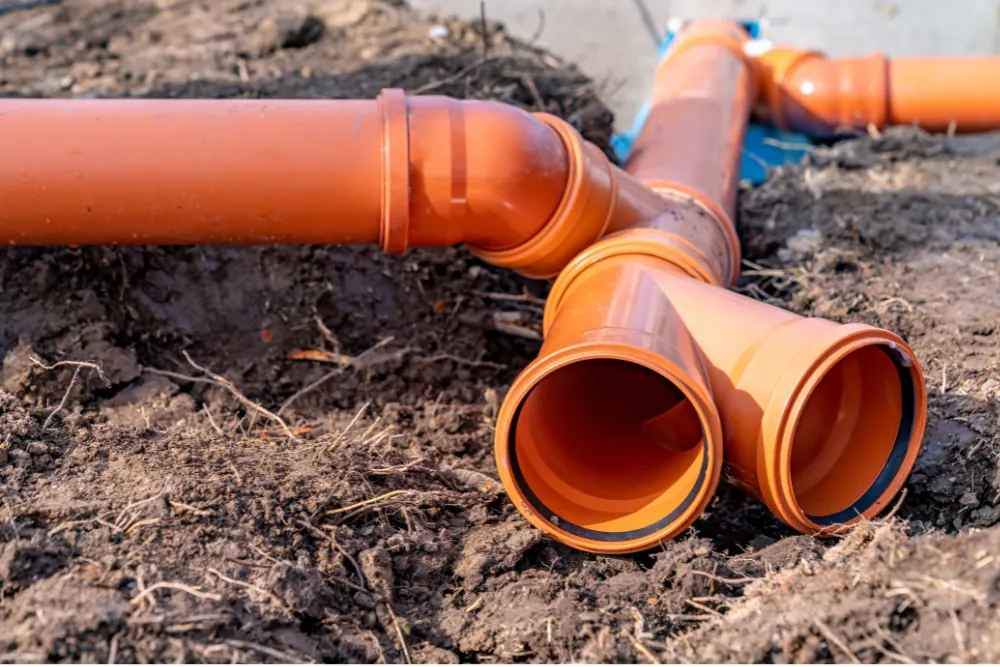
Pipe fittings and connectors in Dubai: what we do
- Fitting selection. The right fitting for the pipe material, size, pressure and temperature, including PPR, CPVC, uPVC, PEX, copper and GI.
- Leaking fitting repair. Finding which joint is leaking and why, then re-making it or replacing it.
- Replacement. Elbows, tees, couplings, unions, adapters, reducers, caps and plugs, in new work and repairs.
- Transitions between materials. Plastic to brass, copper to steel, one plastic to another, with the correct adapter.
- Threaded joints. Identifying the thread, choosing the seal and tightening it correctly.
- Union and isolation points. Fitting unions where a pump, heater or filter will need to be disconnected one day.
- Testing. Every new or replaced joint is tested at working pressure before it is hidden or handed back.
Neighbouring topics have their own pages. Comparing pipe materials, and deciding when to replace pipe, is on our repiping page. Stopping a leak on the pipe itself is on our pipe leak repair page. Finding a leak you cannot see is on our leak detection page. Flexible connectors under sinks, basins and toilets are on our hoses page, and shut-off and check valves are on our valve repair and replacement page.
What each fitting does
A fitting joins pipe, changes its direction, changes its size or ends it. Knowing the names makes a quote, a parts list or a conversation with a supplier easier to follow.
| Fitting | What it does | Where you meet it | Watch-point |
|---|---|---|---|
| Elbow | Changes direction. Common angles are 45° and 90° | Round corners, up to a ceiling run, into a wall | Every elbow is another joint to make and another place to leak |
| Tee | Splits a line into a branch | Where a bathroom or kitchen branch leaves a main | The branch must be the right size and in the right place before the wall closes |
| Coupling | Joins two lengths of the same size in a straight line | Repairs, extensions, joining cut pipe | On a hot line, the pipe either side must be free to move |
| Union | Joins two pipes in a way that lets them be separated later without damage | Beside a pump, heater, filter or tank | The one fitting designed to be undone. Worth fitting at every piece of equipment |
| Reducer | Steps a pipe down from a larger size to a smaller one | Where a main feeds a branch | Placed too early in a line, it restricts every fixture after it |
| Adapter | Changes from one joining method to another, such as plastic to a metal thread | At taps, valves, heaters and pumps | Male or female thread, which thread type, and which size |
| Bushing | Reduces the size of a threaded opening | Fitting a smaller thread into a larger socket | Adds a joint, so use a reducer where there is a choice |
| Nipple | A short length of threaded pipe with male threads at both ends | Between two threaded fittings | In steel, a nipple in a wet place corrodes like any other threaded steel |
| Cap | Closes the end of a pipe. A cap fits over the outside | Ending a pipe that is no longer used | A capped branch left live holds stagnant water |
| Plug | Closes a threaded opening. A plug threads into the opening | Blanking a spare port on a heater, tank or manifold | Needs the right thread and a seal |
Note the difference between the last two: a cap fits over the outside of a pipe and carries a female thread where it is threaded, while a plug threads into an opening and carries a male thread.
A rule that follows from the table: count the joints. Each one is a place a leak can start, and a hidden joint is a future repair you cannot reach. Elbows, tees and adapters earn their place where the route needs them, and not where a straighter route would do without them.
The fitting must match the pipe: how each joint is made
The fitting does not just have to fit the size. It has to be made for the pipe material, because each material is joined by a different method. A fitting made for one pipe can be useless on another.
| Pipe | How the joint is made | The fitting | Can it be undone? |
|---|---|---|---|
| PVC, uPVC, CPVC | Solvent cement, with primer | Plastic socket fittings of the same material | No. Cut out and replace |
| PEX-A | Cold expansion | Expansion fittings | No |
| PEX-B and PEX-C | Crimp ring | Crimp or clamp fittings | A clamp can be released. A crimp ring is cut off |
| Copper | Solder, compression or press | Capillary, compression or press fittings | Compression can be undone. Press is effectively permanent. Solder is permanent in normal use |
| GI (galvanised steel) | Threads | Threaded fittings | Yes, with effort. Corroded threads can seize |
The details of each method follow.
Solvent-cemented fittings: PVC, uPVC and CPVC
Solvent cement softens the surfaces of the pipe and the fitting, and the two fuse as the solvent evaporates. The joint is only as good as the preparation.
- Cut the pipe square, deburr the inside edge, chamfer the outside edge and remove dirt.
- Dry fit the pipe, which should slide part of the way into the socket before it meets resistance.
- Prime the inside of the socket, then the pipe, then the socket again. Primer is required for PVC and CPVC.
- Apply cement to the pipe and the socket, and assemble within five minutes of priming.
- Push the pipe fully home with a quarter turn and hold it for 30 seconds to stop it pushing back out. Wipe off the excess.
- Allow the cure time for the pipe size, temperature and humidity before pressurising.
Two warnings apply. Cure time grows in cold weather and with larger pipe, and solvent-welded joints must not be tested with compressed air or gas. A pressure test uses water. The cement maker's cure time for the temperature on site applies, as on the repiping page.
A solvent-cemented joint cannot be repaired. A leaking joint is cut out and replaced with new pipe and couplings.
Heat-fused fittings: PPR
PPR fittings are fused, not glued. The pipe end and the socket are heated together and pushed together, and as they cool they become one piece.
Two points matter for fittings in particular.
- Heating time follows the size. The maker's chart sets the time for each pipe diameter and wall. Too little heat risks a joint that has not fused, and too much risks a narrowed bore. Neither shows clearly from outside.
- Same system, same maker. A fitting from a different maker may differ in socket depth and wall.
For connection to taps, valves, heaters and pumps, PPR uses adapters with a metal threaded insert. The pipe is sold in millimetres and the thread in inches. Both numbers must be right.
A fused joint that leaks is cut out and replaced with new fittings and pipe.
PEX fittings: crimp, clamp, expansion and push-to-connect
PEX is joined four ways, and which one is used decides how much flow the fitting gives and whether the joint can be undone.
| Method | How it works | What to know |
|---|---|---|
| Crimp ring | A copper ring is compressed over PEX-B or PEX-C pipe | Inexpensive. The plastic crimp fitting has a smaller bore than other materials, which restricts flow. A loose crimp can leak, so a go/no-go gauge is used to check it |
| Clamp | A stainless clamp is tightened over the pipe | Easy to take apart and fast. Smaller bore restricts flow. A miscalibrated tool can cause leaks or damage |
| Expansion | The pipe end is expanded and the fitting ring is pushed in, then the pipe shrinks back onto it | Used with PEX-A only. Full-bore, strong joint, and it needs an expansion tool |
| Push-to-connect | The pipe is pushed in and gripped by teeth | No special tools and easy to remove. Costs more. The teeth can slide off the soft pipe under strain or freezing, so we do not use them in concealed places |
Two practical points. Crimp fittings go with PEX-B or PEX-C pipe and expansion fittings go with PEX-A, so the pipe type must be known before the fitting is bought. And do not mix brands, because it can compromise the joint and reduce or void the warranty. PEX is indoor-only because UV damages it, as we say on the repiping page.
Copper fittings: solder, compression and press
Copper is joined three ways.
- Solder (capillary). The fitting is heated and solder is drawn into the gap by capillary action. It makes a permanent joint and needs a flame and a careful hand.
- Compression. A nut squeezes a ring (an olive) onto the pipe. It needs spanners, not heat. It can be undone and re-made.
- Press. A press tool crimps a sealed fitting onto the pipe with no flame. It is quick and permanent, and the fittings cost more.
Compression joints suit visible places where a joint may need to be undone, such as under a sink or at a heater. Soldered or pressed joints suit runs that will be hidden. Press has an advantage where a flame is a risk, and the cost of the fittings against the saving in labour decides the rest.
Push-fit connectors
Push-fit fittings push on and grip, with no tools or heat. They work on plastic and copper pipe, with inserts for plastic.
Whether a push-fit fitting may be buried in a wall is a question for the fitting maker and the building. Ask what both allow before a mechanical joint is closed into a wall.
Our rule is that a joint closed into a wall is either a permanent type or a fitting its maker rates for concealed use, and it is tested before the wall is closed and photographed so its position is on record.
Threads: BSP, NPT, taper and parallel
GI pipe, brass valves, taps, heater connections and adapters are joined by threads. A threaded joint has two parts: the thread form, which is how the ridges are cut, and the sealing method, which is what actually stops the water. Different systems use different forms and different seals, and they do not substitute for one another.
| Thread | Form | How it seals |
|---|---|---|
| NPT (taper) | 60° thread, tapered | The tapered male wedges into the female, with sealant |
| BSPT (pipe thread, tapered) | 55° Whitworth thread, tapered | Thread interference, with sealant |
| BSPP (pipe thread, parallel) | 55° thread, parallel | A sealing ring or washer compressed at the shoulder, not the thread |
The thread type is marked on many fittings, and the datasheet confirms it.
The mismatch that causes slow leaks
NPT and BSPT look alike. They share the same taper, and at the common ½ and ¾ inch sizes they share the same thread pitch. They differ in thread angle, 60° against 55°, so the flanks do not meet. An NPT male may thread into a BSPT female but will not seal.
Equipment sold in Dubai comes from manufacturers in many countries. The practical rule is to identify the thread before buying the mating fitting, using the product datasheet or a thread gauge, and not to assume. A joint that screws together easily and holds on a quick test is not proof that the threads match.
Parallel threads and taper threads need different seals
A taper thread (NPT, BSPT) seals by jamming tighter as it goes in, with sealant filling the gaps. A parallel thread (BSPP) does not jam. It seals at a washer or ring, and the thread only holds the parts together. BSPP needs no thread sealant because a washer or ring does the sealing, such as the copper crush washer on a pressure gauge.
That changes the repair. A weeping BSPP joint points first to a worn, flattened or missing washer, and wrapping the thread in tape and cranking it tighter will not cure that. A tapered joint that weeps may lack sealant, or have damaged threads. We identify which kind it is first.
Sealing a threaded joint
PTFE tape and thread-sealant paste fill the gaps between the threads of a tapered joint.
- Direction. Wrap the tape in the direction the fitting tightens, clockwise when looking at the thread end. Wrapped the other way it unravels during assembly.
- Number of wraps. Thin tape needs more wraps than thick tape. Leave the first thread bare so no tape enters the pipe.
- Plastic threads need restraint. Too many wraps, or too much force, can split a plastic fitting or crack a female thread.
Tape is a seal for the thread gap. It is not a repair for a damaged thread, a wrong thread, a cracked fitting or a missing washer.
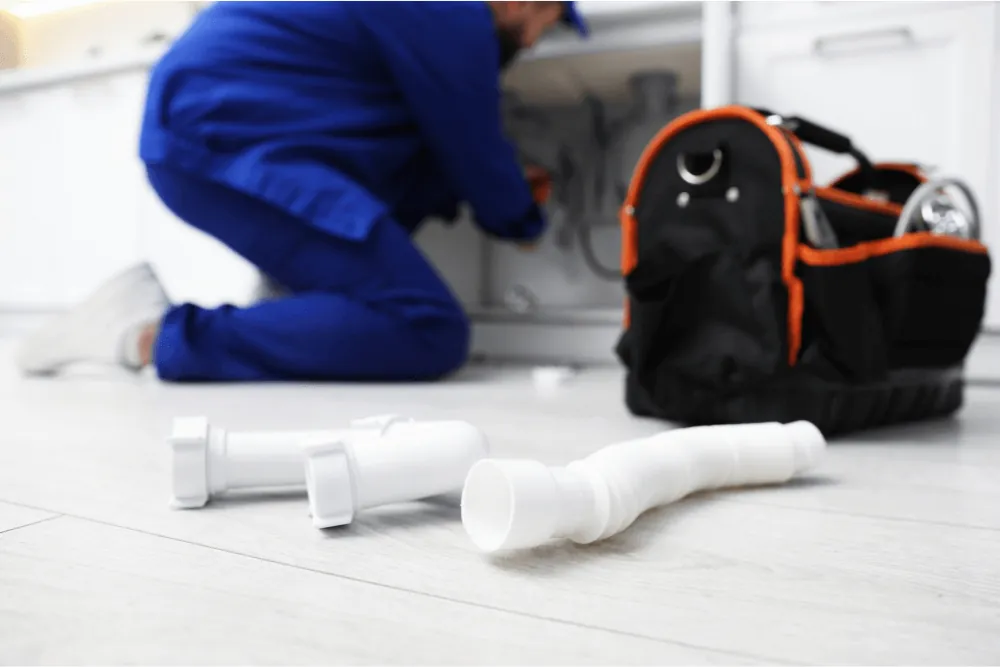
Brass fittings and why they fail from the inside
Brass is a material for threaded adapters, valves, taps and heater connections. It is an alloy of copper and zinc, and in some water it loses its zinc. This is called dezincification.
What to look for on an exposed brass fitting:
- A pinkish or copper colour on the surface where it should be yellow.
- Green crust around the body of the fitting, not just the thread.
- A weep at the body, not at a joint.
- Cracks or pin-holes in the body.
Dezincification-resistant (DZR) brass is the usual answer. Concealed water fittings should be DZR or gunmetal. We check the markings, and we ask for DZR brass on concealed work.
If brass keeps failing in one building, the water is a suspect, and a water test shows what it is doing. See water quality testing.
Joining one material to another
Every change of material needs the right transition fitting. The principles of mixing materials, including copper to galvanised steel, are on our repiping page. For fittings, the working list is:
| From | To | The fitting |
|---|---|---|
| PPR | A brass tap, valve or heater thread | A PPR adapter with a metal threaded insert |
| PPR | CPVC | A threaded or compression transition. The two plastics do not fuse together |
| PPR or CPVC | Copper | A threaded adapter on each side: plastic with a metal insert, and a threaded copper adapter |
| Copper | Galvanised steel | A dielectric union or a plastic transition, to stop galvanic corrosion |
| PEX | Copper or brass | A PEX adapter with a male or female thread, matched to the PEX type |
The thread side of every adapter must be matched to the thread system on the other part. Plastic threads should be tightened with restraint, as described above. We list every transition on a job, so none is buried unrecorded.
Sizing and ratings
Size
PPR and PVC pipe is sold by outside diameter in millimetres, while threads are named in inches, so an adapter label such as 20 × 1/2 names the pipe and the thread separately. A reducer or bushing changes the size, and a reducer steps a pipe from larger to smaller. Pipe size is chosen for the flow it carries, and a reducer near the start of a run that feeds several fixtures limits the flow to all of them.
Pressure and temperature
A fitting has its own pressure rating and temperature rating, and the pipe system is only as strong as its weakest part. Hot lines need fittings made for hot water. A fitting rated for cold use only belongs on a cold line.
Markings
A genuine fitting is marked with the maker, size, material and pressure class. Ask for the certificate for the exact product, and treat a claim on a seller's page with no certificate as a claim only.
Which fittings a particular building accepts is set by its management, its master developer or the consultant's specification. Ask for the approved list before buying fittings yourself. Ask the installer for the datasheet and the pressure class of what is going in.
Why a fitting leaks
Find where the water appears and what kind of joint it is. The pattern points to the cause.
| Where it leaks | Possible cause | The fix |
|---|---|---|
| Thread of a tapered joint | Missing or too little sealant, wrong or damaged thread, NPT/BSPT mismatch | Dry, clean and re-seal if the threads are sound. Replace the part if they are not |
| BSPP joint | Worn, flattened or missing washer or ring | Replace the washer. Tape will not seal it |
| Compression nut | Nut under- or over-tightened, damaged olive, pipe not cut square | Re-seat with a new olive, or re-make the joint |
| Push-fit | Pipe not cut clean, not fully inserted, or damaged O-ring | Cut back to clean pipe and re-insert, or replace the fitting |
| Solvent-cemented joint | Joint not cured when pressurised, missing primer, poor preparation | Cut out and replace the joint |
| PPR fused joint | Wrong heating time, crooked push, mixed brands | Cut out and replace the joint |
| PEX crimp | Loose crimp ring | Cut off and re-make, checking with a gauge |
| Body of a brass fitting | Dezincification: cracked or porous body, green or pink crust | Replace with a DZR fitting |
| Union | Worn gasket or seal, loose nut | Replace the seal and re-tighten |
| Only when the water is hot | Expansion loading the joint, pipe moving against a fixed fitting | Re-support the pipe and allow for movement. See repiping |
| Wet surface with no drip | Condensation on a cold pipe | Insulate. See pipe insulation |
Three checks you can do
- Dry it and watch. Wipe the fitting and the pipe until dry, wrap a dry tissue around the joint and look at where it gets wet first. Water can run along the pipe before it drips, so the wet point may not be the leak.
- Check the thread. If a fitting that has been tightened still weeps, identify the thread and the seal before tightening again. More force on the wrong seal cracks the part.
- Check for a second cause. A single weeping joint can be the symptom. A pipe pulled by expansion, or hit by repeated pressure surges, can leak a fitting that was made correctly. For hammering, see valve repair and replacement.
If the leak is on the pipe wall and not a fitting, or the damage is in a wall, see our pipe leak repair and ceiling and wall leak pages.
Fittings in a Dubai villa or flat: where they fail first
Some fittings fail more often than others, and knowing which saves a search. Flexible connectors and their nuts under basins, sinks and toilets are the most common, and they are on our hoses page. After them come the threaded joints at taps, valves and water heaters, where hot water, scale and movement work on a joint every day. Then come the unions beside pumps and tanks, where vibration loosens nuts and wears gaskets. Last are the buried or concealed joints, which fail rarely but cost the most when they do. A yearly look at every visible fitting, with a dry tissue around each, finds the first three before they leak. A concealed joint is only as good as the day it was tested, which is why we test every joint under pressure and photograph the position before a wall is closed.
Supporting pipe near a fitting
A fitting is the weak point of a pipe, and the support around it decides how long it lasts. A heavy valve hanging on a thin pipe pulls on the joint with every surge. A hot pipe that cannot expand pushes on the fitting at each end. A pipe that is not clipped rattles and loosens a fitting. Put a clip close to each side of a tee or an elbow, support a valve or a heater connection from the wall or the frame and not from the pipe, and leave room for a hot pipe to move. A leak that returns at the same joint after the fitting is replaced is often a support problem and not a fitting problem. See repiping.
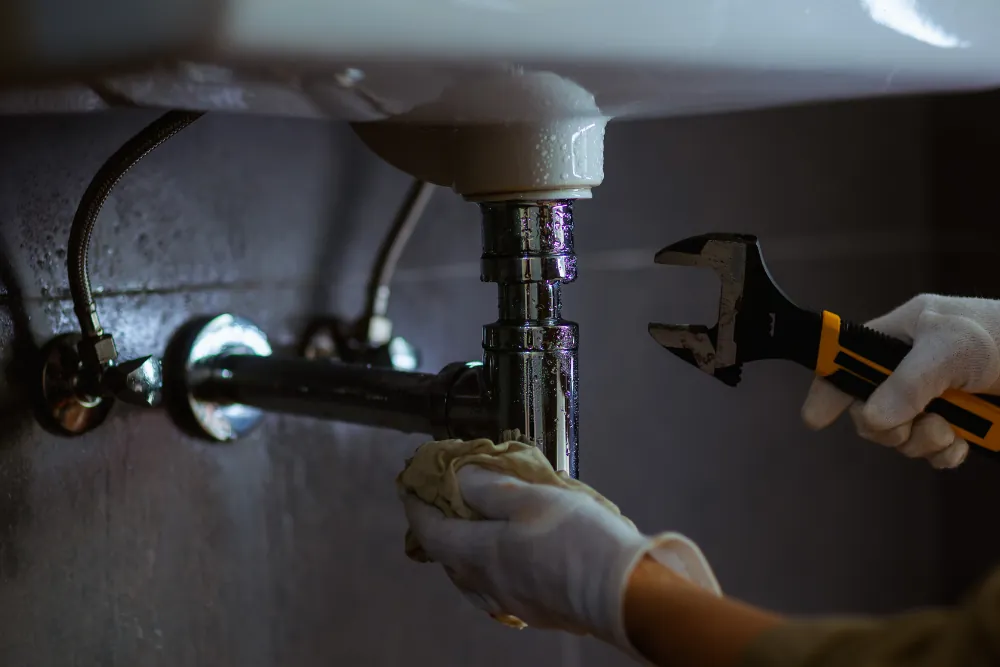
Quality of the part: what a cheap fitting costs
A fitting is a small part and a large risk, and the cheapest one on a shelf is not always the cheapest in the end. Poor fittings have thin walls, threads cut roughly, brass that dezincifies quickly, and sizes that vary from one batch to the next. A thread that is slightly off leaks however carefully it is sealed, and a fitting that cracks inside a wall is a second repair. We buy from suppliers whose parts we know, we check each fitting for casting faults, burrs and thread condition before we fit it, and we say what we are fitting on the quote. If you supply your own, we look at it and say if we think it is a risk.
How we replace a fitting
- Isolate and drain the section.
- Identify the material, size and thread of what is there, not what it was assumed to be.
- Cut out a fused or cemented joint, or undo a threaded or compression one, taking care not to damage the pipe either side.
- Choose the replacement to match the pipe system, the pressure class, the temperature and the thread. Where a fused or cemented fitting is cut out, the gap is closed with new pipe and couplings, or with a repair coupling made for the purpose.
- Make the joint by the maker's method: fuse, prime and cement, crimp, press, solder, tighten or seal.
- Wait for cure where solvent cement is used.
- Test with water at working pressure and check the joint by eye and by touch.
- Record it. If the fitting is hidden, we photograph it and note its position.
Where equipment will need disconnecting, such as a pump, a filter or a heater, we fit a union or an isolation valve as part of the job, so the next service does not mean cutting pipe.
Buying fittings yourself
If you are buying fittings for a repair, these details save a wasted trip.
- The pipe material. PPR, CPVC, uPVC, PEX, copper or GI.
- The size in millimetres or inches. Check which, and measure the outside diameter.
- The thread, if there is one. Taper or parallel, and the system.
- Hot or cold. And the pressure class if one is printed on the pipe.
- The brand of the existing system. For fused and PEX systems, the same maker.
- A photo or the old part. Take it to the supplier.
- For hidden brass, DZR brass. Gas and fire-system fittings are not our work.
Where we fit and replace pipe fittings in Dubai
We cover all of Dubai, including Dubai Marina, JBR, Downtown Dubai, Business Bay, Jumeirah Lakes Towers, Palm Jumeirah, Al Barsha, Jumeirah Village Circle, Dubai Hills, Mirdif, Deira and Al Quoz. See the full list of areas.
How much do pipe fittings and connector repairs cost in Dubai?
The price follows what has to be done to the joint.
- Call-out and diagnosis. Finding which joint is leaking and why.
- The fitting. Its material, its size and whether it is rated for hot water.
- The joint method. Press and expansion need tools. Soldering needs time and care.
- Access. A fitting under a sink is quick. One inside a wall means opening it.
- Reinstatement. Tile, paint or waterproofing if a wall has been opened.
- Out-of-hours work. We answer calls and send a plumber 24 hours a day. Out-of-hours visits are quoted on WhatsApp like any other job.
We do not publish a starting price for this job. Send a photo on WhatsApp and we give you a fixed price before we start. Prices exclude 5% VAT.
Pipe fittings and connectors FAQs
What is the difference between BSP and NPT threads?
They differ in thread angle: 55° for BSP and 60° for NPT. BSPT and NPT are both tapered, while BSPP is parallel and seals at a washer or ring. NPT and BSPT are not interchangeable, even though at the common sizes they share the same pitch. A mismatched joint can pass an air test and still leak under water pressure.
Can I use PTFE tape on any threaded fitting?
On tapered threads in domestic water, yes, with care. On a parallel BSPP joint, the washer or ring seals, so tape does not replace it. Where the fitting maker specifies a sealant, use that.
How many turns of PTFE tape should I use?
It depends on the tape. Thin tape needs more wraps, often 4 to 6, and thicker tape needs 2 to 3. Wrap in the direction the fitting tightens and leave the first thread bare. Stop when the thread shape still shows through. On plastic threads use fewer wraps.
Is a push-fit connector safe inside a wall?
Only if the maker rates it for concealed use and the building allows it. Ask the building and the manufacturer, and keep a record of where the joint is.
Why does my fitting still leak after I tightened it?
Looseness is only one cause. A BSPP joint needs a washer. A tapered joint may have the wrong thread or damaged threads. A compression joint may have a damaged olive. A brass fitting may be cracked from dezincification. Tightening further on a cracked or mismatched part can crack it. Identify the joint type first.
Can a fused PPR or solvent-cemented joint be repaired?
No. Both are permanent. A leaking joint is cut out and replaced with new pipe and couplings or a repair coupling.
Can PPR and CPVC fittings be used together?
Not as one welded system. They are different plastics joined by different methods. They meet at a threaded or compression transition, and the pipe system should otherwise stay in one material and one maker.
Should I use compression or press fittings on copper?
Press suits hidden runs and larger jobs. It needs a press tool, it is permanent and each fitting costs more. Compression suits visible places where the joint may be undone. The pipe, the location and the building's specification decide.
What is a union for?
A union lets two pipes be separated without cutting them. We fit one beside a pump, heater, filter or tank so the equipment can be disconnected for service or replacement.
Do you supply the fittings, and which brands do you use?
Yes. We supply and fit, and we also fit fittings you have bought. The brand follows the pipe system already in the building, because a fused or PEX system should stay with one maker. Ask for the brand and the pressure class on the quote.
Book a pipe fitting or connector repair in Dubai
Tell us where the leak is, what the pipe is made of, whether it is hot or cold, and what is already fitted. A photo of the joint and the pipe on either side helps. We will send a plumber to identify the fitting, find the cause and fix it.
WhatsApp: +971 55 407 7427 · Request a quote
Visit us: Office 871, Oasis Mall, Al Quoz 1, Dubai, UAE
Related services: Repiping · Pipe leak repair · Leak detection · Hoses · Valve repair and replacement · Pipe insulation