
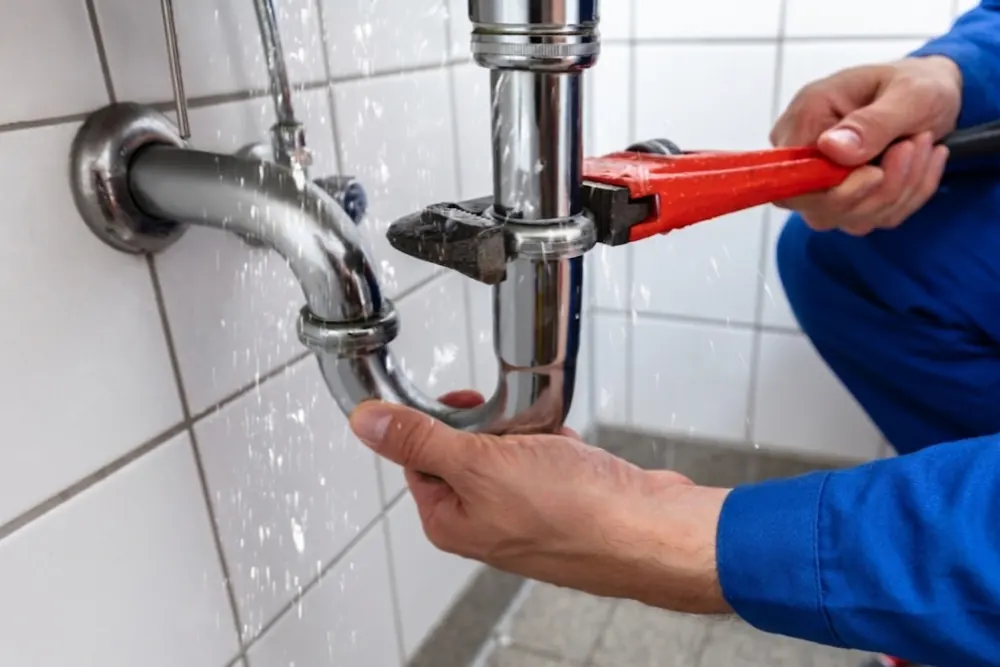
Leaking tap repair in Dubai: where is the water coming from?
The place the water appears tells you which part has failed. Look closely, because a tap can leak from four different points, and each has a different repair.
| Where it leaks | What may have failed | What it looks like |
|---|---|---|
| Drips from the spout when the tap is off | A worn washer, a damaged valve seat, or a worn ceramic disc cartridge | A steady drip from the spout |
| Leaks around the handle when the tap is on | A worn O-ring or seal on the spindle, or a loose stem screw | Water creeping down from under the handle |
| Leaks at the base of the spout or swivel | A worn O-ring where the spout turns | A wet ring at the base that grows when you swing the spout |
| Puddle or damp under the sink | A supply hose, an isolation valve, a compression joint or the waste trap | Wet cabinet floor, a musty smell, stained wood |
| Damp wall or ceiling near a shower or wall-mounted tap | A leaking cartridge body or connection inside the wall | Staining, bubbling paint or tiles that feel damp |
| Water sprays from the tap body | A cracked or corroded body, or a failed hose connection on a pull-out tap | Water where there should be none |
| Handle is stiff, loose or will not shut off fully | A worn cartridge, scale, or a spindle that has come loose | You turn it and the drip continues |
| Flow is weak after a repair | Debris or scale blocking the aerator or the cartridge | Spluttering or reduced flow |
Dry the tap and the cabinet with a cloth, then watch for a few minutes. The wet spot that returns first is the source. If water appears under the sink but the tap above is dry, the problem is below the tap, and the tap itself may be fine.
What a drip costs
A drip looks small, and it is easy to underestimate. A tap that drips once a second adds up to many litres a day and thousands of litres a year, and a fast drip loses far more. You can measure it: put a measuring jug under the spout for an hour and multiply.
Those figures are for one tap. A flat with a dripping kitchen tap, a dripping basin tap and a leaking shower adds them together.
Know your tap: the 30-second identification
You need to know what type of tap you have, because the parts inside differ. A simple test tells you.
Turn the tap handle on. If it turns through a full rotation or more, it may be a compression tap with a rubber washer. If it turns a quarter of a turn, from fully closed to fully open, it may be a ceramic disc tap. A single lever that lifts and swings may be a cartridge or ceramic disc mixer.
| Type | How to recognise it | What wears out |
|---|---|---|
| Compression (washer) tap | Handle turns several times. Separate hot and cold taps are possible | The rubber washer on the valve seat, the O-ring on the spindle |
| Ceramic disc tap | Quarter-turn handle, or a single lever. Smooth action | The ceramic cartridge or its seals |
| Cartridge mixer | Single lever, found in kitchens and showers | The cartridge, its O-rings and seals |
| Ball mixer | Single handle on a ball joint, common on kitchen sinks | Seats, springs and O-rings around the ball |
Ceramic disc taps can still fail at the seals, or when scale builds on the discs.
Mixers, monoblocs and wall-mounted taps
- Two-handle mixer. One spout with separate hot and cold handles. Each handle has its own valve, so one side can leak while the other is fine.
- Single-lever mixer. One lever controls flow and temperature through a cartridge. The cartridge is the main wear part.
- Pull-out or pull-down kitchen tap. A mixer with a hose that runs into the spout. The hose and its connection are extra leak points.
- Sensor and touchless taps. They have a solenoid valve, a sensor and a power supply as well as the plumbing, so faults split between electrical and water parts.
- Wall-mounted taps and concealed shower mixers. The visible part is a trim. The valve or cartridge body sits in the wall, which changes how it is reached.
If you are not sure what you have, send us a photo of the tap from the front and the side, plus the cabinet below it.
Why taps start to leak
Most leaks come from small parts that wear out, not from the whole tap failing. The cause points to the repair.
- A worn washer. In a compression tap, the washer presses against a seat to stop the water. With use, it hardens, flattens or cracks, and a small gap lets water through.
- A damaged valve seat. The brass seat can corrode or collect scale. A new washer will not seal against a pitted seat.
- A worn O-ring. O-rings seal the spindle and the swivel spout. When they wear, water escapes at the handle or the base.
- A worn ceramic cartridge. The discs are hard, but their seals and surfaces can wear, and scale can stop them closing fully.
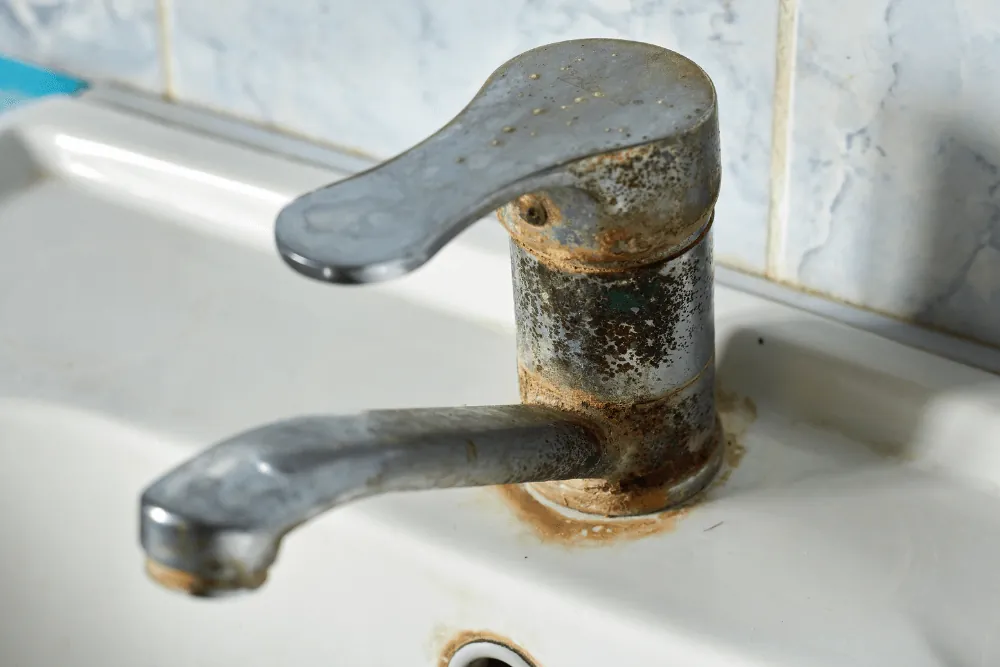
- Scale and deposits. Mineral deposits build up on moving parts and seats and stop them sealing.
- Loose parts. A stem screw or a gland nut that has worked loose can leak at the handle.
- High water pressure. High pressure can be the root cause of a leak. If several taps drip, or a new washer does not hold, ask us to check the pressure. See pressure reducing valves.
- A corroded or cracked body. Once a tap body is damaged, replacement is the only repair.
- Over-tightening. Forcing a tap shut crushes the washer and scores the seat, and that creates the leak you were trying to prevent.
Dripping spout
A tap that drips from the spout when it is fully closed is not sealing at the valve. The repair depends on the type.
Compression tap
The repair is to replace the washer. The tap is isolated, the handle and the bonnet removed, the valve unscrewed, and the old washer replaced. We then look at the seat. If it is pitted or scored, we dress it with a seat cutter or replace the valve. A new washer on a damaged seat starts to drip again within weeks.
Ceramic disc or cartridge tap
The repair is to replace the cartridge. Cartridges are model-specific, so we identify the make and size before fitting. We try cleaning first when the cartridge is in good condition.
Why a drip returns after a repair
- The seat was not dressed or replaced.
- The wrong washer or cartridge was fitted.
- The new part was over-tightened.
- Scale or debris was left in the valve.
- High pressure is forcing water past a seal that would hold at normal pressure.
If your tap dripped again within days of a repair, tell us. A repeat drip is a signal that the cause was not the part that was changed.
Leaking handle
Water creeping out from under the handle when the tap is on means the seal around the spindle has failed. Possible causes are an O-ring, a gland packing or a loose stem screw. Tightening the screw may stop it. If not, the O-ring or packing is replaced.
On a single-lever mixer, a leak around the lever points to the cartridge or its seals. The cartridge is replaced, and we check the body for scale and damage.
A leaking handle should not be left. The water runs into the cabinet or the wall behind the tap, and it is easy to miss for a long time.
Leak at the base of the spout
A swivel spout on a kitchen or basin mixer is sealed by O-rings at its base. When they wear, water seeps out as the spout turns. We replace the O-rings and re-grease the swivel.
If the leak is at the point where the tap meets the sink or worktop, the fixing nut or the seal under it may be loose. A loose tap can also move and strain the connections beneath, so we tighten it from below and check.
Leak under the sink
Water under the sink may not come from the tap. Check these in order, because each has a different fix.
- The flexible hoses that connect the tap to the supply. They crack, bulge or leak at the ends. Replace the hose.
- The isolation valves on each hose. They can drip from the stem or the outlet. We reseal or replace them. See valve repair and replacement.
- The tap's own connection. A nut that is loose, or a tap tail that is corroded.
- The waste and trap. A leaking trap, a loose nut or a cracked pipe drips only when water is running down the drain. If the leak appears when you use the sink and not when the tap is simply on, look here. See basin and vanity plumbing.
- Condensation on cold pipes. A pipe can sweat and drip without a leak. The dry-wipe test shows it: dry the pipe and see whether water returns at a joint or all along the surface.
A dry tissue held against each joint shows which one is wet. Put a tray or towel under the sink while you wait for us, and move anything stored there that water can damage.
Our page on hoses and flexible connectors covers replacing them.
How urgent is your leaking tap?
Not every leak needs a visit today. Use this to decide.
| What you see | How soon | What to do meanwhile |
|---|---|---|
| Water spraying or flowing from the tap body, a hose or a valve | Now | Close the isolation valve, or the main supply, and call |
| Wet cabinet floor, or water running down the pipes below the sink | Today | Close the isolation valve, empty the cabinet and put a tray down |
| Damp wall, stained ceiling or wet tiles near a shower or wall tap | Today | Stop using that shower or tap and call |
| Handle leaks while the tap is in use | This week | Wipe the area dry each day and watch for damp below |
| Steady drip from a closed spout | This week | Close the isolation valve at night if the drip is fast |
| Slow drip from a spout, no damp anywhere | Within a couple of weeks | Book a repair before the seat wears |
A leak you can see on a surface is only part of the picture. A leak that runs behind a wall or under a cabinet can do damage before it shows.
No isolation valve? How to stop the water first
Some taps have a small isolation valve on each supply under the sink, and some do not. Without one, closing the water means going further back.
- Look under the sink first, including behind the waste pipe and at the back of the cabinet.
- Look for a valve for the bathroom or kitchen, near the entry of the supply pipe into the room, if there is one.
- Use the main valve for the flat or villa, near the water meter or where the supply enters, if you have one. In a flat, this may be in a service cupboard or a riser. If you cannot find it, ask building management.
- Open another tap after closing the valve, to let the pressure out and confirm the water has stopped.
If there is no valve at all, we can fit isolation valves during the repair. They make every later job quicker and safer. See valve repair and replacement for the valves we fit.
Leaks in shower mixers, concealed valves and wall-mounted taps
A shower mixer or wall-mounted tap has the same parts as a basin tap, but the valve body is built into the wall. That changes the repair.
- Dripping shower head or spout when the shower is off. The cartridge is not closing, or the diverter is worn. Replacing the cartridge is the repair for a cartridge fault. A showerhead leaking at its connection is a separate fault, and it is often cured by cleaning the thread, wrapping new thread tape and tightening the connection.
- Water around the handle or trim. The O-ring or cartridge seal has worn, as in a basin tap.
- Damp wall, stained ceiling below or tiles that feel wet. The leak may be behind the wall: a loose connection, a cracked body or a pipe joint. Do not keep using the shower if the wall is wet. We trace the source before opening anything, using the methods on our leak detection page.
- Handle that will not turn or will not stop the water. The cartridge has seized with scale or worn out.
On a concealed mixer, the cartridge may be replaceable from the front by removing the handle and trim, without opening the wall. If the valve body is damaged or the leak is in the pipework, the wall has to be opened. We confirm which before we start, and we tell you what the finish will need afterwards. Our own team does the tiling and restoration after the plumbing work.
For shower faults beyond the valve, see shower repair.
Kitchen taps: pull-out hoses, swivel spouts and sensor taps
Kitchen taps work harder than most. They swing, they pull out, and they run hot water for long periods.
- Pull-out or pull-down hose. The hose runs through the spout and under the sink, with a weight on it. It can leak at its crimp, at the spray head or at the connection under the sink. A wet cabinet floor with a dry tap above points here. The hose is replaced as an assembly.
- Swivel spout. O-rings at the base wear with use. A drip at the base when you move the spout is the sign.
- Sensor and touchless taps. If one runs on, dribbles or will not stop, the fault may be the solenoid valve, the sensor or the batteries. We check the water side and tell you if the fault is electrical.
- Instant hot or filtered water taps. These connect to a tank or a filter. A leak may come from the unit, not the tap. See our kitchen sink plumbing page.
A kitchen tap that leaks inside the cabinet is more urgent than one that drips into the sink, because the water reaches chipboard and plywood out of sight.
A hot tap that drips
A tap that drips only on the hot side is a fault in the hot valve or cartridge. It is worth fixing quickly, because the dripping water has been heated. Isolate the hot supply under the sink to stop the drip until we arrive.
Water dripping from a pipe on or near the water heater is a different fault. It may be the heater's relief valve doing its job. See our water heater repair page.
Fix a leaking tap yourself: a safe method with stop points
Some tap faults are straightforward, and a careful person with basic tools can fix them. The method below suits a standard washer or cartridge tap. If you are unsure, stop and send us a photo.
What you need
- Adjustable spanner or pipe grips
- Flat and cross-head screwdrivers
- A cloth or towel
- The replacement part, matched to your tap
- Plumber's grease, if the new part calls for it
- A small container for screws and parts
Steps
- Identify the tap and the leak. A full-turn handle points to a washer, and a quarter-turn handle to a ceramic disc.
- Turn off the water. Close the isolation valves under the sink, both hot and cold if it is a mixer. If there are no isolation valves, close the main supply to the flat or villa.
- Plug the sink. A small screw or O-ring lost down the drain is gone.
- Photograph each step. Lay the parts out in the order they come off.
- Remove the handle. Lift the cap or use a small screwdriver to expose the screw, then undo it.
- Remove the bonnet or cartridge. Use a spanner on the brass valve or cartridge, turning slowly.
- Replace the worn part. Fit the new washer, O-ring or cartridge. Bring the old part to a shop to match it, or send us a photo.
- Check the seat. On a compression tap, look at the seat the washer sits on. If it is rough, scored or pitted, WhatsApp us.
- Reassemble in reverse order. Tighten firmly, not hard.
- Turn the water back on slowly and test the tap in both positions. Look for drips at the handle, spout and base.
- Check under the sink with a dry tissue at every joint.
Where to stop and WhatsApp us
- The handle will not come off, or the cartridge will not come out.
- The tap body is corroded or cracked.
- You cannot identify the part, or the new one does not fit.
- The tap still drips after you have replaced the part.
- The leak is behind a wall or under a floor.
- Several taps are dripping.
- The isolation valve will not close fully, or it leaks when you turn it.
An isolation valve that will not close is a common stopping point. Forcing it can break it and flood the sink area. Close the main supply instead, and call.
What not to do
- Do not over-tighten. Forcing a tap shut or a nut tight crushes washers and strips threads. Tighten until snug.
- Do not force a stuck part. A cartridge or bonnet that is seized with scale may snap or damage the body.
- Do not use the wrong part. A washer that is a different size, or a generic cartridge, will leak or fail quickly.
- Do not wrap a leaking joint in tape and leave it. Tape on the outside hides a leak and does not stop it.
- Do not ignore a leak under the sink. A slow drip rots the cabinet floor and can reach a neighbour below.
- Do not leave the water on while you take a tap apart. It is the quickest way to flood a kitchen.
Repair or replace the tap?
Most leaking taps can be repaired for less than the cost of a new one. A few cannot be, or are not worth it.
| Situation | Repair or replace | Why |
|---|---|---|
| Worn washer or O-ring in a sound tap | Repair | Small parts, and the tap is otherwise fine |
| Worn ceramic cartridge, and a matching cartridge is available | Repair | Cartridge replacement restores a good tap |
| Pitted valve seat on a compression tap | Repair if the seat can be dressed, replace if not | A new washer will not seal on a damaged seat |
| Cartridge no longer made, and no matching part | Replace | A repair needs a part that fits |
| Corroded, cracked or pitted tap body | Replace | The body cannot be sealed |
| Pull-out hose or spray head leaking | Repair the hose or head | The tap is not the problem |
| Same tap leaking again and again | Replace | The cause is the tap body or the pressure |
| Tap is worn, loose or unsafe | Replace | Repair may not last |
| You are changing the sink or worktop | Replace | Easier to fit a new tap during the job |
| A tap you want to upgrade | Replace | See tap and mixer installation |
We give you both prices on the day, so you can choose.
What happens on a tap repair visit
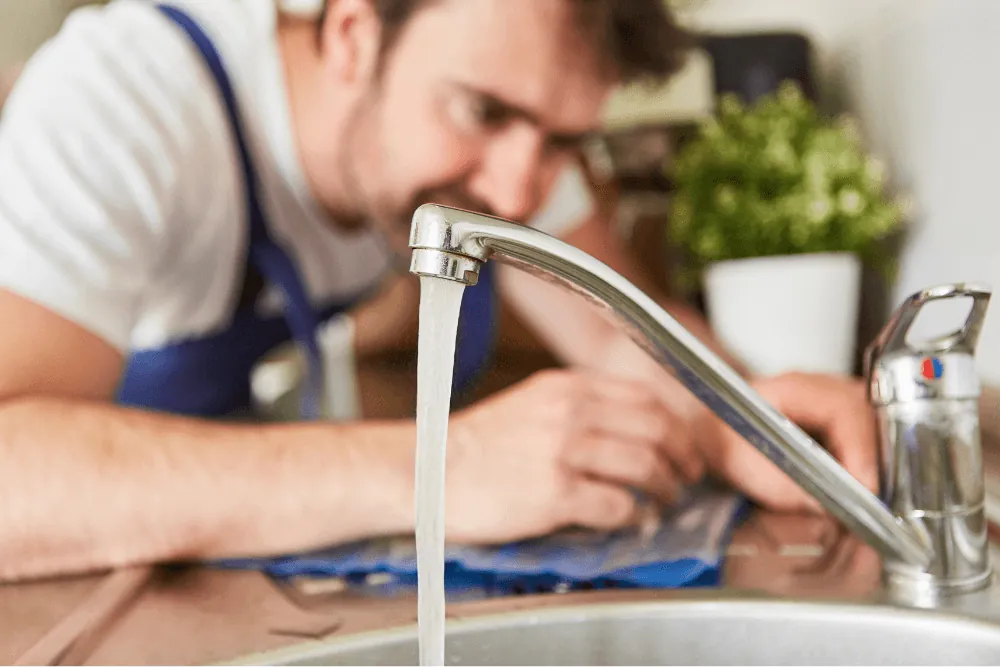
A visit follows a clear order, and we explain what we find at each step.
- We ask what you have seen. Where the water appears, how long it has been going on, and whether it is the hot side, the cold side or both.
- We dry the area and watch to confirm the source.
- We close the supply and check the isolation valves. If a valve will not close, we deal with that first.
- We take the tap apart and inspect the washer, seals, cartridge, seat and body.
- We tell you the cause and the price before we replace anything. The price is fixed before we start and changes only if you add work.
- We fit the part, matched to your tap.
- We test in every position, hot and cold, with a dry tissue under every joint.
- We tell you what to look for if the leak returns.
After the repair: low flow, spitting and noise
A tap that flows weakly or spits after a repair may have collected debris. Closing and opening the supply can disturb sediment in the pipes, and grit can lodge in the aerator, the cartridge or the hose.
- Unscrew the aerator at the tip of the spout and rinse it. Grit and scale collect in the mesh.
- Open the tap fully with the aerator removed for a few seconds to flush the line.
- Check the isolation valve is fully open. A valve left half-closed after a repair gives low flow and a whistle.
- Look at the hose on a pull-out tap for a kink.
If the flow stays low on only one tap, the cartridge may be partly blocked. If it is low on every tap in the home, the cause is in the supply. See our low water pressure page.
Outdoor, balcony and utility taps
Garden taps, balcony taps and utility taps leak in the same ways as indoor ones: a worn washer drips from the spout, and a worn packing or O-ring leaks at the handle. The repair is the same as for a washer or compression tap, but outdoor fittings take more weather and wear. For these, see our outdoor tap and hose bib page. A leak from an outdoor tap that you cannot find may be underground, and our leak detection team can trace it.
Taps in offices, shops and restaurants
Commercial taps are used far more than domestic ones, so their washers, cartridges and sensors wear sooner. A tap that drips in a restaurant kitchen or a staff washroom runs all day.
- Sensor and push taps have timed valves that can stick open or fail to close.
- Pre-rinse sprays and long-reach kitchen taps have hoses and swivel joints that leak.
- Lever and elbow taps in clinics and washrooms wear at the pivot.
- Taps with no isolation valves make it hard to repair without shutting down a whole section.
We plan work around opening hours where we can, and a plumbing maintenance contract can schedule regular checks. We offer maintenance contracts priced per building. Ask for a quote on WhatsApp.
Leaking tap in a rented flat: who pays?
Check your tenancy contract before you pay. It usually places the plumbing infrastructure with the landlord and routine upkeep with the tenant, and a contract can set an amount below which the tenant pays for minor repairs.
A washer or a cartridge is a small repair, and a replacement tap is a larger one. Which side pays depends on your contract.
- Tell your landlord or property manager in writing when you notice the leak.
- Keep the invoice and any photos.
- Ask first if your building requires an approved contractor.
We are plumbers, not legal advisers. Your contract decides.
What a leaking tap costs to repair in Dubai
We quote the price before we start. The cost depends on the part and the access, and not on a single standard price.
- The type of tap. A basic washer is cheaper than a specific mixer cartridge.
- The part itself. Parts for common taps are easy to find. Parts for imported or designer taps may need to be ordered.
- Where the leak is. A drip from a spout is quicker than a leak inside a wall.
- Access. A tap in a tight cabinet, a concealed mixer or a wall-mounted fitting takes longer.
- Number of taps. Fixing several in one visit costs less than separate visits.
- Whether the tap needs replacing. A new tap adds the cost of the tap and fitting.
- The visit. The visit fee is AED 50 + VAT, credited if the work goes ahead.
Prices exclude 5% VAT and are fixed before we start. We answer calls and send a plumber 24 hours a day, 7 days a week, and we do not promise an arrival time.
- Basic leak repair, such as a washer, a minor leak or a flush mechanism, from AED 145 + VAT.
- Tap or mixer replacement, labour only, from AED 145 + VAT. The tap itself is extra.
For other jobs we give a fixed price on WhatsApp before we start.
Ask for the price in writing on WhatsApp before we begin.
Keeping taps from leaking
A few habits make taps last longer.
- Close taps gently. Turn until the water stops and no further.
- Look at hoses, valves and the cabinet floor for damp, stains or corrosion.
- Know your isolation valves. Turn each one off and on now and then so it does not seize.
- Clean the aerator. Unscrew it and rinse out any grit. A clogged aerator makes the water spit and cuts the flow.
- Fix a drip early. A weeping washer wears the seat, and the repair becomes bigger.
Where we repair taps in Dubai
We cover all of Dubai, including Dubai Marina, JBR, Downtown Dubai, Business Bay, Jumeirah Lakes Towers, Palm Jumeirah, Al Barsha, Jumeirah Village Circle, Dubai Hills, Mirdif, Deira and Al Quoz. See the full list of areas.
Leaking tap repair FAQs
Why is my tap dripping when it is turned off?
The washer, valve seat or ceramic cartridge is no longer sealing. On a compression tap the usual cause is a worn washer, and on a quarter-turn tap it is the cartridge. Scale on the seat or cartridge can stop either from closing fully.
How much water does a dripping tap waste?
More than most people expect. A slow drip adds up to thousands of litres over a year, and a fast one loses far more. Put a jug under the spout for an hour to measure yours.
Why is water leaking under my sink when the tap looks dry?
The cause is below the tap: a flexible hose, an isolation valve, a loose nut or the waste trap. Dry everything and watch to see which joint wets first.
Can I fix a leaking tap myself?
You can try it if you can close the water, identify the tap and match the part. Stop if a part is stuck, the tap body is corroded, the isolation valve will not close, or the leak returns.
Do I need a new tap or can it be repaired?
Most leaks are repairs. Replace the tap when the body is cracked or corroded, parts are not available, or the same tap keeps leaking. We give you both prices.
Why does my tap keep dripping after I changed the washer?
The seat may be pitted, the washer may be the wrong size, or high pressure may be forcing water past the seal. A damaged seat needs dressing or replacing.
Who pays for a leaking tap in a rented flat?
Check your tenancy contract. By default the landlord maintains the property unless the contract says otherwise, and a contract can set an amount under which the tenant pays for minor repairs. Report the leak in writing and keep the invoice. This is not legal advice.
Do you repair shower mixers and concealed valves?
Yes. Where a cartridge can be replaced from the front, the wall stays closed. A damaged valve body or a leak in the pipework needs the wall opened, which we confirm first.
Do you offer a guarantee?
Yes. We give a 30-day workmanship warranty on our labour. Parts carry the manufacturer's warranty only.
Book a leaking tap repair in Dubai
Tell us where the water is coming from and what type of tap you have. A photo helps. We will send a plumber to fix it.
WhatsApp: +971 55 407 7427 · Request a quote
Visit us: Office 871, Oasis Mall, Al Quoz 1, Dubai, UAE
Related services: Tap and mixer installation · Kitchen sink plumbing · Basin and vanity plumbing · Shower repair · Leak detection · Emergency plumber