
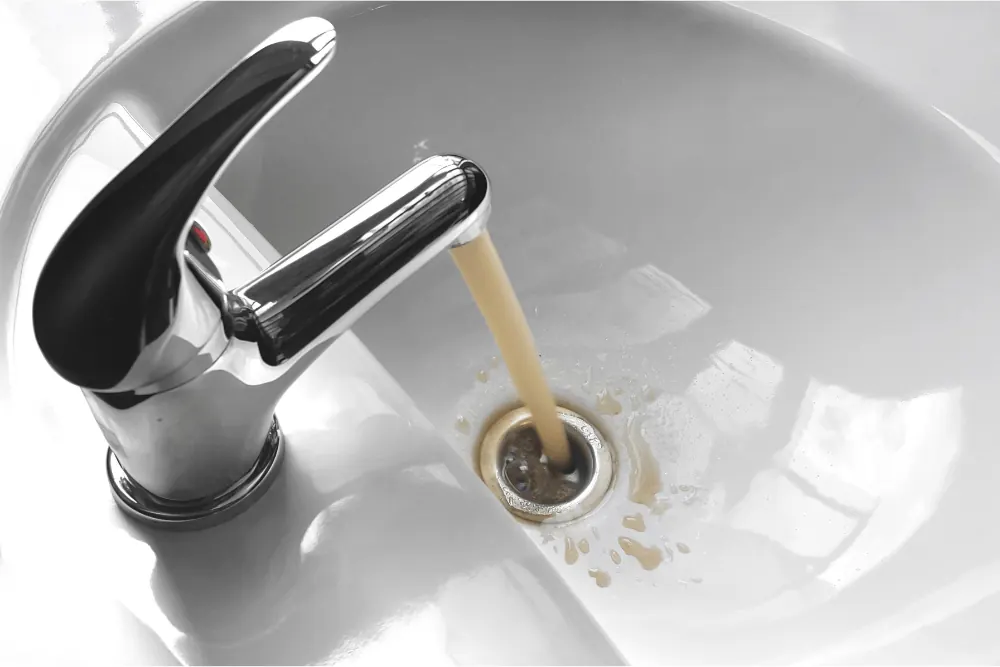
Smelly or discoloured water in Dubai: what we do
- Source tracing. We compare cold and hot taps, one tap and all taps, and the tank outlet against the kitchen, to place the problem.
- Tank checks. Sediment, algae, covers, vents and overflow screens, and the date of the last cleaning.
- Heater checks. Sediment, anode rod, thermostat setting and hot-side smells.
- Pipe checks. Corroded or galvanised lines, dead-end branches and stagnant sections.
- Drain checks. Dry floor traps, trap seals and vent faults, which can cause a smell that gets blamed on the water.
- Flushing, cleaning and repair. Flushing lines, cleaning or replacing parts, and arranging tank cleaning where that is the cause.
- Testing. On-site readings and laboratory samples, before and after the work.
- Emergency visits. We answer calls and send a plumber 24 hours a day, 7 days a week, and we do not promise an arrival time.
Neighbouring topics have their own pages. Reference values and sampling are on our water quality testing page. Tank cleaning is on our water tank cleaning page. Heater faults are on our water heater repair page. Drain blockages are on our drain unblocking page.
A ten-minute diagnosis you can do yourself
Run these checks in order. Each one removes a possible cause.
- Smell the water away from the sink. Fill a clean glass with cold water, step away from the sink, swirl it and smell it. If the glass is clean, the smell is coming from the drain or the disposal, and the water is fine.
- Let a glass of cloudy water stand. If it clears from the bottom upward, it was air. If it stays cloudy or leaves a layer at the bottom, it carries particles.
- Compare cold and hot. Collect a glass from each.
- Compare taps. One tap means the fixture, the aerator or the branch pipe. Every tap points upstream, to the tank, the riser, the main or the heater.
- Compare neighbours. In a building, the same problem in other flats points to the building tank or riser, and to your own pipes when they are not affected.
- Run the cold tap nearest the tank or the entry point for several minutes. If the water clears, the stain came from stagnant pipe.
- Note the timing. Did it start after the tank was cleaned or refilled, a repair, a supply interruption, a holiday with the property empty, or a hot spell?
- Take photos of a glass against a white background, the tap and the tank hatch, with the time. They help us, and they help management.
What the pattern means
| Pattern | What to know |
|---|---|
| Smell in the sink, not in a carried glass | Drain, trap or disposal |
| Cold and hot both smell or discolour, all taps, neighbours too | Building tank, riser or supply |
| Cold and hot both affected, your unit only | Your own branch pipes or filter |
| Hot only | Water heater or hot pipes |
| Cold only | Cold pipes, tank or fixtures |
| One tap only | That tap, its aerator or its branch |
| First draw in the morning only, clears after a minute | Stagnant pipe or fixture |
| Returns every few days | A tank refilling with fresh sediment, or a dead-end branch |
| Began right after a repair or tank cleaning | Disturbed deposits, or cleaning residue still being flushed |
This table points to a place to look first. It is not a verdict, which is why we sample at more than one point when the pattern is unclear. See water quality testing.
When it is urgent
Most discoloured water is a nuisance. A few signs are not.
- Yellow or green water with a foul smell, and anyone unwell. Vomiting, fever or diarrhoea together with discoloured, foul-smelling tap water is a health matter. Treat it as one until a test says otherwise.
- A petrol, diesel, solvent or chemical smell in the water itself. Stop using the water and call the building's management and the water supplier.
- Sewage in the water, not just at the drain.
- A baby, an elderly person or someone with weak immunity in the household and any unexplained change in the water.
If any of these applies:
- Stop drinking and cooking with the water. Use sealed bottled water. Boiling kills bacteria. It does not remove chemicals, metals or a fuel smell.
- Report it in writing to building management or your landlord, with photos and the time.
- Keep a sample in a clean glass jar, labelled with the date and tap, and refrigerate it. A lab may want it.
- See a doctor if there are symptoms, and WhatsApp us when you are ready for the plumbing side.
- Contact the water supplier if management does not act.
The colour guide
Each colour has a short list of usual causes.
| What you see | Usual cause | What to do |
|---|---|---|
| Milky or cloudy, clears from the bottom of a standing glass | Air bubbles | Nothing. Run the tap. If it persists after a day, have it looked at |
| Brown, red or orange | Iron from pipes, tank or heater | See the next section |
| Yellow | Iron or manganese from the supply or home plumbing, or sediment | See the next section |
| Green-yellow | Algae in a tank that has not been cleaned | Tank inspection and cleaning |
| Blue or blue-green | Copper corrosion in stagnant water, especially in new pipes | Flush before use and have the pipes checked |
| Pink, orange or red slime on fixtures | Bacterial biofilm, which grows on damp surfaces | Clean and disinfect the fixture, and dry it after use |
Brown, orange and yellow water
This is the colour of iron. Rust is iron oxide, and it can arrive from four places.
- Sediment in the tank. Deposits settle on the floor of a tank and are stirred up when it refills or the pump starts hard. A tank overdue for cleaning has more to give.
- Corroding internal pipes. Old galvanised or steel lines rust from the inside, and the rust flakes into the water, worst after the water has sat still. Where a section is badly corroded, replacing it is the fix.
- The water heater. Sediment and rust build up in the tank, and a used-up anode rod lets the steel wall corrode. The water is brown on the hot side only. See the hot water section below.
- A disturbance to the supply. A repair, a valve operation or a change in flow can stir deposits in a main or riser.
Is it safe?
Rust-coloured water is mainly a matter of appearance and taste, and it stains laundry and fixtures. In a building with a storage tank, brown water with a smell deserves a check, because it can be the same sign as a dirty tank. If the water also smells, tastes metallic or has been through a long period without tank cleaning, test it before drinking. See water quality testing.
How to flush your own pipes
- Do not run hot water. It draws discoloured water into the heater, where sediment makes it worse.
- Do not run the washing machine or dishwasher while the water is discoloured.
- Bypass or switch off filters and softeners while it clears, so the cartridges do not clog.
- Run the cold tap nearest the entry point until it runs clear, then each cold tap in turn.
- Wait an hour and repeat if it comes back.
- Watch for patterns. If it clears and returns the next morning, the cause is stagnant pipe. If it returns after every refill, the cause is the tank.
What stops it for good
| If the cause is | The fix |
|---|---|
| Tank sediment | Tank cleaning and disinfection, then a retest. See water tank cleaning |
| Corroded galvanised or steel pipes | Replace the section. See repiping |
| Heater sediment or rust | Flush the heater, check the anode rod and element. See water heater repair |
| Fine particles from the supply | A sediment filter. See whole-house water filter |
| Stagnant dead-end pipe | Remove the dead leg or flush it on a schedule |
A filter treats the symptom. It does not stop a pipe from corroding or a tank from silting, and a filter that catches rust loads quickly and needs frequent changes.
Smelly water, by smell
Name the smell first. Each has a short list of causes.
| Smell | Usual cause | How to confirm | Fix |
|---|---|---|---|
| Rotten egg or sulphur | A drain or trap. Or bacteria in the water heater, if the hot tap only | Carried-glass test, then cold against hot | Clean the drain. Treat the heater. If the cold side too, check the tank |
| Sewage | A drain, a dry or leaking trap, or a vent fault | Carried-glass test | See drain unblocking. Refill dry traps |
| Musty or earthy | Stagnant pipe, a drain, a softener or other treatment device, the heater, the tank or the supply | Does it show in cold water, in all taps, in untreated water? | Flush stagnant water. Clean or service the device. Check the tank |
| Metallic | Old iron pipes or the heater. Possibly the aerator | Compare untreated and treated water, and clean the aerator | Flush. Replace corroded pipe |
| Petrol, diesel or solvent | Contamination. Not a normal plumbing smell | Smell a fresh glass | Stop using the water and report it. See the urgent section |
Rotten egg and sulphur
A sulphur, rotten-egg or sewer odour usually comes from a drain rather than the water. If only the hot water smells, bacteria in the water heater may be the cause. Bacteria build up when taps go unused, when hot water sits unused or is shut off, or when the heater thermostat is set low, and the smell can be strongest in summer.
So there are three places to look, and the glass test separates them.
- A carried glass is clean, the sink smells. The drain, trap or disposal.
- The glass smells, hot only. The heater.
- The glass smells, cold and hot. The tank, the pipes or the supply.
Chlorine
Chlorine is added to keep water safe, and some people notice it more than others. Letting a jug of water stand open in the fridge overnight lets the taste fade. Warm water in home pipes can smell stronger. In Dubai, a sun-warmed roof tank or a warm riser is a place to expect it. If the smell bothers you, a carbon filter removes it. The trade-off is that the water downstream loses its chlorine residual. See whole-house water filter and RO purifier.
A chlorine smell is a different thing from a chemical or petrol smell. We measure the level, so you know whether it is high or only noticeable. See the free chlorine entry on our water quality testing page.
Musty and earthy
Musty smells come from several places. Dubai adds one more place to check, the storage tank. Algae, biofilm or sediment in a tank that has not been cleaned can give water a musty edge, and a tank that is open to heat and light gives algae the conditions to grow.
Metallic
A metallic taste can mean iron. Old iron pipes in the home or the water heater can be the cause. Iron itself is mainly a nuisance, but metals are the one thing a smell test cannot answer, so we test for them when the plumbing is old. See water quality testing.
Is it the drain, not the water?
Sulphur and sewer odours often come from a drain, not the water. The carried-glass test shows which. If the water is clean, the fix is in the drain.
- A dry trap. A floor drain or an unused basin dries out, and sewer gas comes up. Keep unused drains filled. Pour water into them regularly.
- A dirty trap or disposal. Food and grease build a film that smells. Cleaning the trap removes it.
- A drain that is slow. A partial blockage holds waste in the pipe.
See our drain unblocking page for drains, and leak detection if a trap or waste pipe is leaking out of sight.
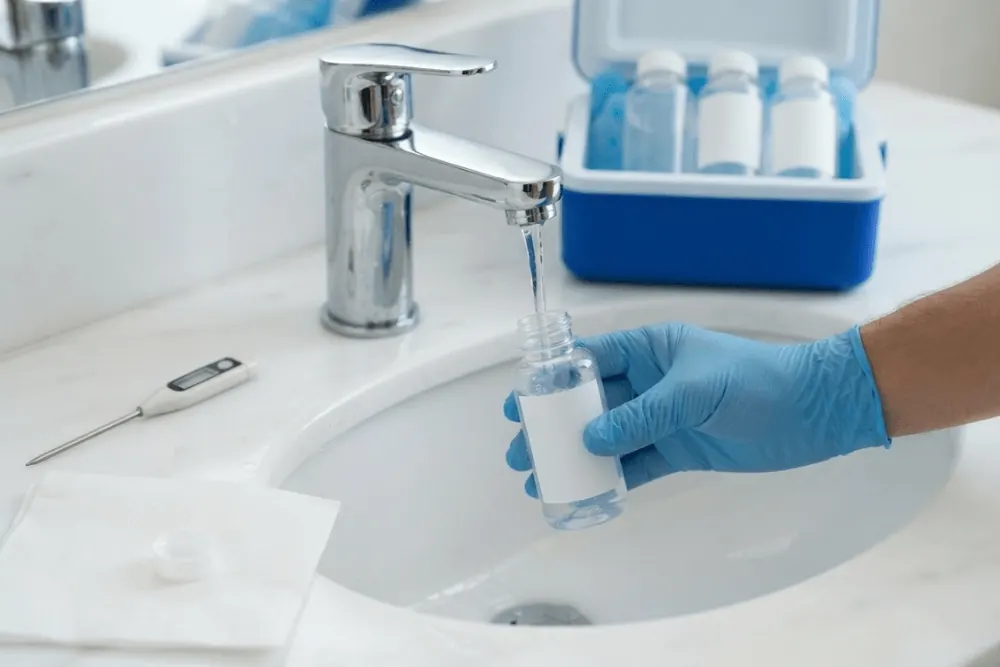
Hot water only
If the problem is on the hot side only, the cold supply is not the cause. A water heater can be the whole problem for three reasons.
- Sediment and rust in the tank. Hot-only brown water or grit comes from here. Tank heaters need flushing at least once a year and more often where the water scales heavily.
- Bacteria and the anode rod. A heater that sits unused or runs cool can grow bacteria that give off a sulphur smell, and a used-up anode rod lets the tank corrode. The fixes are to flush the tank, disinfect it and flush it thoroughly, and replace the anode rod. We choose the rod to suit how the heater is used.
- Temperature. A setting near 60°C limits bacteria in the tank. A mixing valve at the outlet then limits what comes out of the tap. Changing the setting is a job for a plumber unless you are experienced with heaters.
Do not drink water straight from the water heater tank. Heater faults and replacement are on our water heater repair page.
The tank
If every tap in the unit is affected, and the neighbours too, the tank is the first suspect. In a rented flat you can ask management for the latest water test results, the cleaning records and before-and-after photos.
What we look for at the tank:
- Sediment on the floor, and whether the outlet sits low enough to draw it.
- Algae and biofilm, which grow where light and warmth reach the water.
- Covers, vents and overflow screens. A tank should be covered and built so that insects, dust and birds cannot get in. See water tank installation and repair.
- The date of the last cleaning. Tanks are commonly cleaned about every six months, and more often if the water shows sediment.
- How long water stays in the tank. A tank much larger than the building needs holds water for too long.
If the tank is the cause, the cure is a cleaning by a competent company followed by a test. See water tank cleaning.
The pipes
Pipes cause trouble in two ways: corrosion and stagnation.
- Corrosion. Old galvanised or steel lines rust from the inside. Rust shows as brown or orange water, worse after the pipe has sat. Where a section is badly corroded, replacing it is the fix. See repiping.
- Stagnation. Water that sits in a dead-end branch, an unused bathroom or a seldom-used outdoor line picks up taste and smell. Copper corrosion in stagnant water gives a blue-green colour, especially in new pipes. The fix is to flush the branch or remove the dead leg.
- Hoses and fittings. A worn washing-machine hose, a cracked flexible connector or a perished washer can shed black particles or leave a rubber taste.
A property that has been empty
A flat or villa left empty for weeks gives the pipes time to go stale. Before you move back in:
- Run every cold tap until the water is clear and cool.
- Run the hot taps next, once the cold side is clear, so the heater refreshes.
- Flush toilets and showers, and fill dry floor traps.
- Smell and look at a carried glass before you drink.
- WhatsApp us if anything stays wrong. A sample from the tank outlet and the kitchen will tell us where it starts.
Escalating to management or your landlord
If the cause is the building tank or riser, you cannot fix it from inside your flat. A clear process gets it handled.
- Write it down. Email building management or the landlord. Include the date, the taps affected, hot or cold, and photos of a glass against a white background.
- Ask three specific questions. When was the tank last cleaned, by which company, and what was the laboratory result?
- Ask for the cleaning record. A company that cleans tanks properly can show what it did and what it found.
- Set a date. Ask when the tank will be inspected and cleaned, and ask for the new result afterwards.
- Keep your records. Photos, emails and a jar sample.
- Follow up in writing if nothing happens, and copy the landlord.
We can attend as an independent plumber, take samples at the tank outlet and your tap, and write up what we find.
Patterns we see, and what they usually turn out to be
These are typical patterns and not individual cases. Each shows how the comparison steps lead to a cause.
- A smell in the guest bathroom only, and a carried glass is clean. A floor drain or basin trap that has dried out after weeks unused. Refilling the trap fixes it.
- Brown water on the first draw of the morning that clears in under a minute. A stagnant stretch of old steel or galvanised pipe. Flushing helps for a while, and replacing the section ends it.
- A sulphur smell from the hot tap only, after the home was empty. Bacteria in a heater that sat unused or ran cool. Flush, disinfect, check the anode and set the temperature sensibly.
- Brown water in every flat after the tank was refilled. Sediment stirred up in the building tank. The fix is the tank, and it is management's to arrange.
- Cloudy water that clears from the bottom after a repair. Air in the lines. It settles within a day.
- A musty edge to the water in summer only. Warm water, algae or biofilm in a tank or a sun-warmed riser. Check the tank cover, the vent and the last cleaning date.
- Black flecks from every tap. A perished hose, washer or filter cartridge shedding rubber or carbon. Find the part and replace it.
Summer and winter in Dubai
In summer, tank and riser water warms, chlorine fades faster and anything growing in the water grows faster, so smells and tastes tend to be stronger. Hot water that sits unused in a heater turns stale more quickly. In winter the water is cooler and the problem often quietens, so a smell that goes away in January and returns in June is a clue that warm storage is involved. We note the season, the tank position and whether the roof tank is shaded or in the sun, because each changes what we expect to find.
Keeping water fresh: a simple routine
| Task | Interval | Why |
|---|---|---|
| Clean and disinfect the tank | About every six months, and sooner if the water shows sediment | Sediment and algae build up and are drawn into the supply |
| Change filter cartridges | Per the unit. See whole-house filters and RO purifiers | A spent cartridge stops filtering and can grow bacteria |
| Check the tank cover, vent and overflow screen | At each cleaning | A damaged cover lets dust, insects and birds in |
| Flush the water heater | At least once a year | Sediment shortens the life of the element and tank |
| Run unused taps and fill dry traps | Weekly | Stale water and dry traps cause smells |
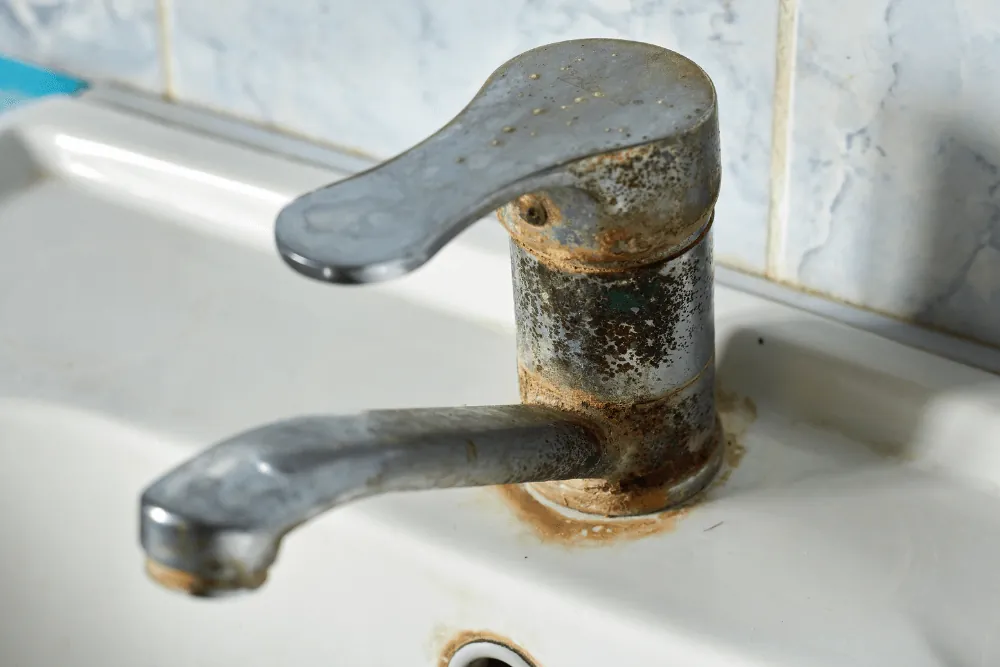
What we do on site
- Listen and look. What you see and smell, when it started and what changed.
- Compare points. Cold against hot, tap against tap, tank outlet against kitchen. The visit fee is AED 50 + VAT, credited if the work goes ahead.
- Inspect. The tank where accessible, the pump, the filters, the heater, the traps and the accessible pipework.
- Test. On-site readings for chlorine, pH, turbidity and TDS, and laboratory samples where bacteria or metals are the concern.
- Tell you the cause in plain words, with photos.
- Fix it. Flush, clean, replace or repair, or arrange the tank cleaning.
- Retest. The same points, to show the water has changed.
- Advise on prevention. A flush routine, a cleaning date, a service plan.
What not to do
- Do not keep running hot water while it is discoloured. It pulls sediment into the heater.
- Do not wash light laundry until the water runs clear.
- Do not buy a filter first. Find the source, or the filter fights a problem it cannot stop.
- Do not pour bleach or chemicals into the tank or the pipes. A wrong dose or a mix of products is dangerous and can leave residues in the water.
- Do not mix cleaning products when treating drains.
- Do not ignore a smell that comes with illness or a chemical odour.
- Do not climb onto a roof tank or enter a tank.
- Do not assume it is the supply. The tank, the pipes and the drain are all ahead of it as suspects.
- Do not drink water from the water heater tank.
A short diary that helps us find the cause
Water problems often come and go, and a record narrows the search quickly. Keep a note for a week:
- The time of day when the problem is worst
- Which taps are affected, hot, cold or both
- The colour and the smell
- Whether it clears when you run the tap, and how long it takes
- Whether anyone has used a lot of water, such as filling a pool or running a pump
- Whether work is going on in the building or the street
A pattern, such as brown water every morning after the pump runs, or a smell only from the hot tap, points straight at a cause.
Simple home checks that are safe
Fill a clear glass from the tap and look at it in daylight. Let it stand and see if the colour settles or clears. Smell it. Check the aerator for grit. Compare the cold tap in the kitchen with one in a bathroom. Compare the hot and cold at the same basin. None of these tests whether the water is safe to drink, but they help describe the problem. If in doubt, do not drink it, and have it tested. See water testing.
When to test the water
If a smell or a colour returns after a flush, or if anyone feels unwell after drinking the water, have it tested. A test gives facts, and a plumber can then fix the cause. See water testing. Until the water is checked, use bottled water for drinking and cooking.
How much does it cost to fix smelly or discoloured water in Dubai?
The price follows the cause, which is why we diagnose first.
- Diagnosis. A visit with comparison points and on-site readings.
- Laboratory samples, if bacteria or metals are tested.
- Flushing and cleaning. Lines, traps, aerators and fixtures.
- Heater work. A flush costs less than a new anode rod, element or heater.
- Tank cleaning, arranged through a company that does the work properly.
- Pipe repair or replacement. A short section costs less than a riser or a full line.
- Treatment equipment, where a filter is the right answer.
We do not publish a starting price for this job. Send a photo on WhatsApp and we give you a fixed price before we start. Prices exclude 5% VAT.
Where we fix smelly and discoloured water in Dubai
We cover all of Dubai, including Dubai Marina, JBR, Downtown Dubai, Business Bay, Jumeirah Lakes Towers, Palm Jumeirah, Al Barsha, Jumeirah Village Circle, Dubai Hills, Mirdif, Deira and Al Quoz. See the full list of areas.
Smelly and discoloured water FAQs
Why is my tap water brown or yellow?
Iron is the usual cause. It comes from sediment in the tank, from corroding internal pipes, from the water heater, or from a disturbance to the supply. Compare cold against hot and your unit against your neighbours to place it.
Is brown water safe to drink?
It is mainly a matter of appearance and taste. In a building with a tank, brown water that also smells deserves a test before you drink it, and yellow or green water with a foul smell and illness calls for stopping use at once.
Why does my water smell like rotten eggs?
The smell usually comes from a drain, not the water. If only the hot tap smells, bacteria in the water heater may be the cause. If the cold side smells too, check the tank.
How do I tell a drain smell from a water smell?
Fill a glass with cold water, step away from the sink and smell it. If the glass is clean, the drain or the disposal is the source.
Why is my water cloudy or milky?
It can be air. Let a glass stand. If it clears from the bottom, it was air. If it stays cloudy or leaves sediment, it is carrying particles, and the tank or pipes need a look.
Why does my water smell of chlorine?
Chlorine is added to the supply, and water warming in tanks or pipes can smell stronger. Let a jug stand or chill it. We can measure the level and fit a carbon filter if you want it removed.
Why is only my hot water affected?
The cause is the heater or the hot pipes. Sediment, rust, bacteria and the anode rod are the usual suspects. See our water heater repair page.
How do I flush my pipes?
Leave the hot water alone, run the cold tap nearest the entry point until it clears, then each cold tap in turn, and repeat after an hour if needed. Do not run the washing machine while the water is discoloured.
Should I install a filter for brown water?
Not before finding the cause. A filter catches particles, loads quickly with rust and does not stop the source. Fix the tank, pipe or heater, then decide on a filter.
Do you offer a guarantee?
Yes. We give a 30-day workmanship warranty on our labour. Parts carry the manufacturer's warranty only.
How much does it cost?
We do not publish a starting price for this job. Send a photo on WhatsApp and we give you a fixed price before we start. Prices exclude 5% VAT.
Book a smelly or discoloured water inspection in Dubai
Tell us what the water looks and smells like, which taps are affected, hot, cold or both, and when it began. Photos of a glass of the water against a white background and of the tank hatch help. We will send a plumber to trace the source and fix it.
WhatsApp: +971 55 407 7427 · Request a quote
Visit us: Office 871, Oasis Mall, Al Quoz 1, Dubai, UAE
Related services: Water quality testing · Water tank cleaning · Water heater repair · Drain unblocking · Whole-house water filter · Repiping