
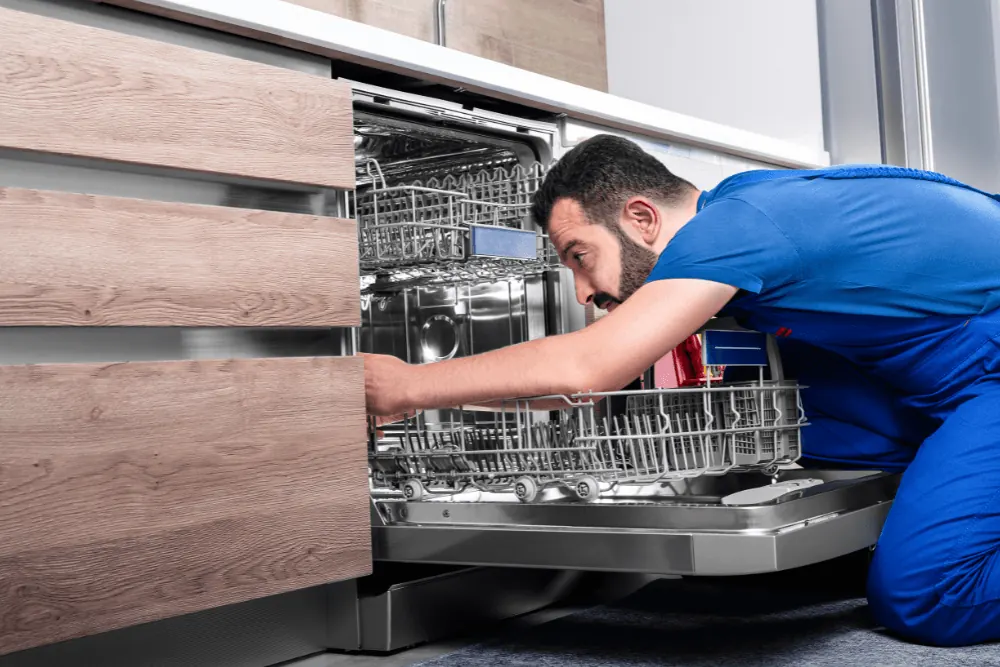
Washing machine plumbing in Dubai: what we do
- Connecting a new or replacement washing machine to the water supply and the drain.
- Inlet hose replacement, including checking the hose fittings, the seals and the tap.
- Isolation taps for the machine: fitting or replacing the tap the hoses connect to.
- Drain hose, standpipe, trap and wall outlet checks, so the machine drains without overflowing or siphoning.
- Slow draining and overflow at the standpipe, where the cause is in the pipe or the trap.
- Leak tracing at the tap, the hoses and the drain connection.
- Low fill or slow fill checks: whether the supply pressure or a blocked inlet is the cause.
- Leak-protection hoses where you want them, with the compatibility caveat below.
- A written note of the machine make and model, the hoses fitted and their dates, and the test result.
- Emergency visits. We answer calls and send a plumber 24 hours a day, 7 days a week, and we do not promise an arrival time.
Neighbouring topics have their own pages. The drain side in detail is on washer drain. Hose types and ratings are on hoses, taps and valves on valve repair and replacement, and a blocked line beyond the standpipe on drain unblocking. A machine plumbed under a kitchen sink shares the sink's waste, which is on kitchen sink. Slow filling that affects the whole home is on low water pressure and booster pump, scale in a machine on water softener, and water on the floor or through a ceiling on pipe leak repair and ceiling and wall leak.
Who does what: the plumber or the appliance technician
The line runs between the pipes outside the machine and the parts inside it.
| Problem | Who | Why |
|---|---|---|
| Leak from the tap, the hoses or the drain connection | Plumber | These are the building's pipes and fittings |
| Slow draining or overflow at the standpipe | Plumber | The standpipe, trap and drain are the building's |
| Slow filling with the tap fully open | Plumber first, then the technician | Supply pressure or a blocked hose inlet first, then the machine's inlet valve |
| Leak from the door, the drawer or the base of the machine | Appliance technician | These parts belong to the machine |
| Error codes, motor, pump, control board | Appliance technician or the manufacturer | Inside the machine |
| Warranty | The seller or manufacturer | Read your warranty terms, because opening the machine yourself can void them |
Inlet hoses: how they fail and how long they last
The hose is the part that causes the flood.
| Point | What to know |
|---|---|
| Age | The risk of failure rises with age, and old hoses are the ones that split. The hose is under supply pressure all the time, even when the machine is idle |
| Rubber hoses | The rubber hardens, cracks and bulges. A bulge, a crack, a stain or a weep at the fitting means replace it now |
| Braided hoses | A stainless braid resists cutting and twisting better than plain rubber, and often carries a longer guarantee. It does not mean the inner hose lasts longer, and the inner tube can still fail under the braid |
| Fittings | Metal fittings can crack from crimping, rust and corrode until they break apart. Replace a hose whose fitting shows rust or green deposits |
| Tightening | Hand-tighten, then a little more with a tool. The thin-walled connector is easily crushed by pliers, so grip it with a pipe wrench or curved-jaw pliers |
A rubber hose that leaks at all should be replaced immediately. For hose ratings and types in general, see hoses. We write the fitting date on the hose when we replace it, so the next replacement date is on the hose and not in your head.
The drain side, and where it is covered
A washing machine plumbing job has two ends: the water that goes in and the water that comes out. This page is about the first end and the connection of the machine. The outlet side, with hose heights, standpipe and trap sizes, the spin test, pump and filter faults and smells, is on our washer drain page, and we do not repeat it here.
What we check on the drain side when we connect a machine is limited to a few things. The hose end sits in a standpipe or a wall outlet with an air gap around it. The hose is not kinked behind the machine. The outlet takes the machine's flow without backing up on a test spin. If it does not, we stop and treat it as a drain job, because the cause is in the pipe and not in the machine.
Under a sink or into a wall outlet
A machine that shares a kitchen sink's waste puts the machine's pumped flow into the same trap as the sink, so a slow sink and a slow machine are one problem. The waste outlet is on kitchen sink. A wall outlet (a wall box) takes the hose through a fitting in the wall and goes to the building's drain, which makes it the building's part and not yours.
Water pressure: what the makers require
Machines are rated for a pressure range, and the ranges differ by maker and by model. A flat with weak pressure may suit one maker's machine and not another's. The fixes are to open the supply tap fully, check the stopcock, replace saddle clamp taps with isolating valves, and ask the maker about the fill timeout.
For Dubai, pressure depends on the building and the floor, and the whole-home causes are on low water pressure and booster pump. A supply above a machine's maximum is a pressure-reducing valve question. Before we connect a machine we check the pressure at the tap with the flow running and compare it to the minimum in the machine's manual, because a machine that fills slowly in a high-rise may be within its limits on paper and still time out.
Leak protection: burst-stop hoses, shut-off taps and sensors
Three layers are on offer, and they stack:
- The isolation tap that someone actually closes. The cheapest protection, and the one that works if you use it. A tap that is closed when the machine is not running protects against a burst while you are away.
- A hose that is replaced on a date. A fresh hose is the cheapest insurance against a burst.
- A burst-stop hose or a sensor kit. A hose with a valve that closes on a surge, or a sensor that shuts the supply when it detects water, adds a second layer.
We check that any protective device suits the machine's manual first, since some makers warn that a burst-stop hose or a sensor can trigger a fault code or interfere with the fill. We do not guarantee that a protective device will stop every flood.
Common faults and where they come from
This table keeps to the plumbing side.
| Fault | What to know |
|---|---|
| Water on the floor, source unknown | Dry the tap, hoses and standpipe, run a cycle with a tissue held to each joint, and watch. See pipe leak repair if the water is coming from a wall |
| Leak at the tap or the hose fitting | A worn washer in the hose fitting, a loose nut, or a corroded tap. We replace the washer or the hose and reseat the connection |
| Hose bulging or cracked | Replace immediately |
| Machine fills slowly or times out | A part-closed tap, a blocked inlet filter, a kinked hose or weak pressure |
| Hammering when the machine fills | A fast-closing inlet valve on a high-pressure supply. See water hammer arrestor |
| Overflow at the standpipe | See the drain hose section above and washer drain |
| A smell from the drain | A dry trap, a blocked standpipe or sludge in the hose. See washer drain |
| White scale on the drum or hoses | Hard water. See water softener |
A full diagnosis of the drain beyond the standpipe is on drain unblocking.
Laundry space in Dubai flats
What to check in a flat:
- Power. A machine bought for another market needs its rated voltage and frequency checked against the supply here, and the check belongs to the electrician or the seller.
- Where the water goes. A laundry cupboard or a balcony corner in a flat is the worst place to find a leak after the fact, because the floor drain, if there is one, may be small, and the unit below shares the slab.
- Space. A machine in a tight cupboard needs room to be pulled out, and room for the hoses without kinks.
- Ventilation. A laundry that stays damp grows mould.
We note where the floor falls, where the nearest drain is and what is under the machine before we connect it. A machine on a balcony or in a shared service area also raises a building-rules question that is covered under permission below.
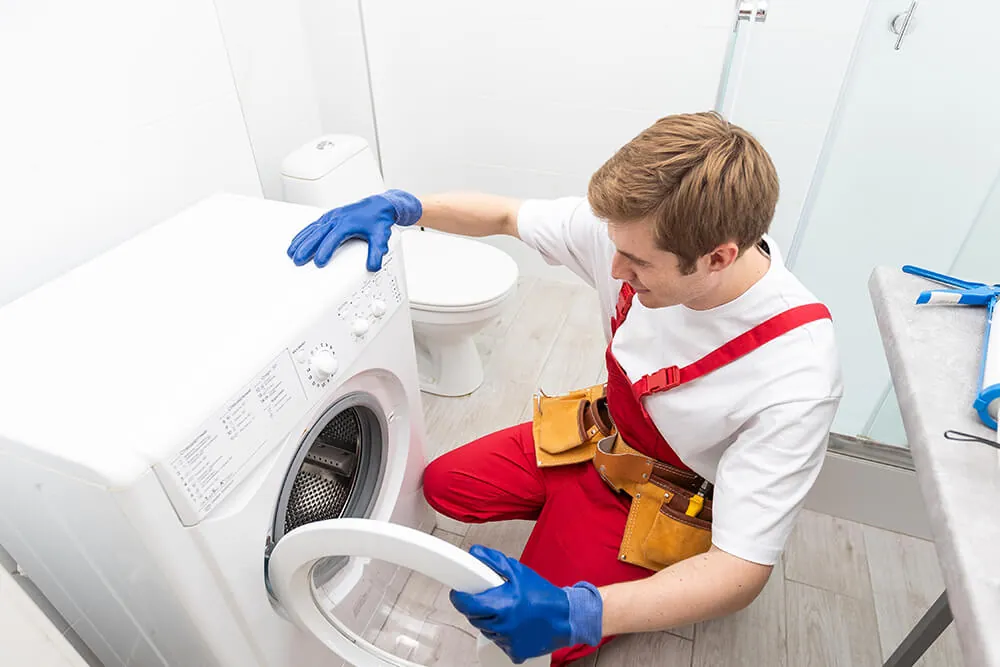
Scale and hard water
How to test the water and what treatment does is on water softener. A machine that heats slowly or shows white deposits inside is a machine question first, which an appliance technician diagnoses, and a water test is a separate step.
Installing a new machine or replacing an old one
A like-for-like swap on connections that already work is quick, and a first connection is a plumbing job.
| Job | What it involves | Who is involved |
|---|---|---|
| Replacing the machine on working connections | Disconnect, fit new hoses, reconnect and test | The tenant or owner, with the plumber |
| First connection | A new tap, a new standpipe or a new waste route | Written consent and building management |
| Moving the machine | New supply and waste routes, which cost more than a swap | Written consent and building management |
| Replacing a tap, hose or standpipe only | A repair, covered in the sections above | The landlord, by default, if it is a failure |
| Adding a leak-protection hose or kit | Compatibility with the machine's manual, then fitting | Plumber |
| Disposal of the old machine | An add-on. The old machine is electrical waste and goes to a proper disposal | The plumber or the seller |
Common mistakes
| Mistake | What to know |
|---|---|
| Reusing old hoses | Do not reuse old hoses on a new machine. Their washers have been compressed once already |
| Leaving a leaking hose in place | Replace any hose that leaks at all, immediately |
| A seized or partly open tap | Quarter-turn lever taps can look open and not be |
| Pressure outside the maker's range | A booster or a valve below the minimum, a pressure-reducing valve above the maximum |
| Buying leak-protection hoses without checking the machine | Some trigger an error code |
| Sealing the drain hose into the standpipe | It invites a siphon and the drum empties during the wash |
Testing before we leave
We run a short cycle with the taps open, hold a tissue to each hose fitting and the tap joint, watch the standpipe during the pump-out and the spin, check the hose does not move under vibration, and look at the joints again after the cycle. We check the isolation tap closes fully, and we write the hose date on the hose.
Permission in Dubai: who decides on washing machine plumbing
Replacing a hose or a failed tap is maintenance. Adding a machine connection where there was none, moving one, or altering shared pipework is an alteration. This is general information, not legal advice. The fuller account is on our shower installation and water heater installation pages. Where a washing machine job falls:
| Job | Starting point |
|---|---|
| A leaking or aged hose, a failed tap, a blocked standpipe | A repair, and the landlord's by default, unless your contract says otherwise. Tell the landlord first and get the decision in writing |
| Connecting a tenant's own machine to existing connections | Check your tenancy contract and ask building management if the machine is in a shared or service area |
| Adding a connection, a tap, a standpipe or a drain | An alteration. Written landlord consent and building management first |
| A machine on a balcony or in a shared service space | Building management decides, and many buildings do not allow it. Ask before we connect |
| A new socket | The electrics change. Written consent, and our electricians for the new point |
We cannot say whether your building needs a certificate for a particular job. Building management can, and a request in writing is cheaper than a stopped job. Tell us what your building asks for and we work to it.
Warranty and the handover
What you should have when the job is finished:
- A written note of the machine make and model, the hoses fitted and their dates, the tap and standpipe details, and where the isolation tap is.
- The test result: the fill, drain and leak checks, with the date.
- The machine's manual, kept. The pressure range, the hot and cold requirement and the drain hose height are in it.
- The warranty terms. A machine's warranty and a hose's warranty are the maker's or seller's, not ours.
- FAM's workmanship warranty, in writing. The warranty runs for 30 days and covers our labour only. Parts carry the manufacturer's warranty only.
How we work
- You send us the machine, the tap and the problem on WhatsApp: a photo of the back of the machine, the tap and the drain, the make and model, and whether you rent or own.
- We check the connections before the day: the tap type, the drain route and height, the pressure and the manual. The visit fee is AED 50 + VAT, credited if the work goes ahead.
- We give options and a price in writing, including hoses, tap, standpipe, trap and any leak-protection parts.
- Check permission. In a rented or managed property, ask the landlord or building management whether they need to approve this work before the visit.
- We isolate the supply, disconnect the old machine or hoses, and fit the new parts, with new hoses and a tap that closes fully.
- We test: the fill, the pump-out and spin, and every joint.
- We hand over the written note, with the hose date and the test result.
Where we work in Dubai
We cover all of Dubai, including Dubai Marina, JBR, Downtown Dubai, Business Bay, Jumeirah Lakes Towers, Palm Jumeirah, Al Barsha, Jumeirah Village Circle, Dubai Hills, Mirdif, Deira and Al Quoz. See the full list of areas.
Choosing where the machine sits
A machine that is placed badly is a nuisance and sometimes a danger. Before a new machine is installed, check the position.
- Floor. A washing machine vibrates when it spins. A solid, level floor is needed, and a tiled floor in a flat is usually fine. A raised timber or a weak floor will shake. Level the machine on its feet and use anti-vibration pads if needed.
- Access. There must be room to pull the machine out for service and to reach the taps behind it. A machine pushed tight against the wall hides leaks.
- Water. A hot and cold supply, or cold only, depending on the machine. Most modern machines take cold only and heat inside.
- Waste. The drain must be at the right height and have a trap. A drain hose that sits too low can siphon the drum empty.
- Power. A socket within reach of the lead, away from splashes, and protected.
- Floor drain or tray. In an upstairs flat or a utility with a good finish, a floor drain or a tray under the machine limits the damage from a leak.
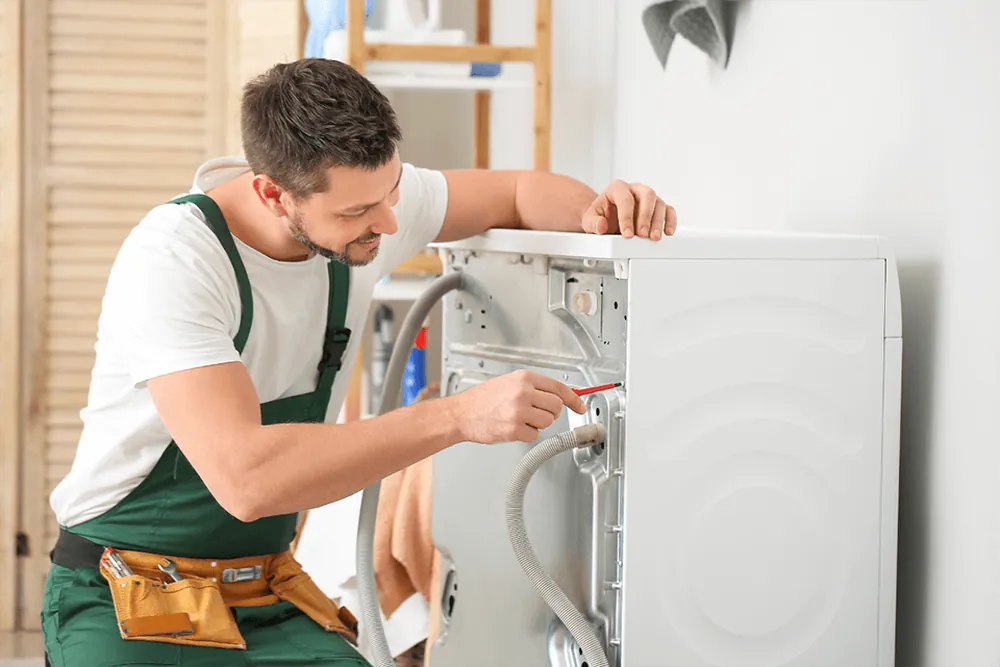
What the tap behind a machine should be like
A washing machine tap is a small thing that matters on the day of a leak. A good one is a quarter-turn valve with a hose connector, mounted on the wall at an easy height. A tap that is stiff, corroded or hidden behind the machine will not be closed in time. We fit or replace the taps for you, so that you can shut the machine off in seconds, and so that a hose can be changed without closing the whole flat.
Shut the tap after each wash if you can. It reduces the time that hoses are under pressure. A burst-stop hose or a leak sensor helps, but a closed tap is the best protection when you go out or away.
The first wash after a new installation
A new connection should be tested before it is left. We recommend this sequence, which we follow.
- Open the taps and check the hose connections dry with a tissue.
- Run a short cycle with no load, and watch the inlet and the drain.
- Check for leaks at the taps, hose nuts, the drain connection and the floor.
- Watch the drain during pumping, and listen for gurgling, which shows a poor vent or a partly blocked trap.
- Run a second short cycle after ten minutes and check again.
- Tell the household which tap to close in a leak and how to close it.
Why machines leak when they seem fine
Most machine leaks come from the plumbing around them, not the drum.
- A cracked or aged inlet hose, which swells before it fails.
- A loose or damaged washer inside a hose nut.
- A drain hose that has slipped out of the standpipe during a spin.
- A blocked trap or standpipe that overflows.
- A split door seal or a loose detergent drawer, which are for the appliance technician.
- A pressure that is too high, which makes hoses age early.
If water appears on the floor, close the tap, switch off the machine and photograph the wet area. Wipe the hoses dry and see where they weep.
Noise and vibration
A machine that sounds like a lorry on the spin cycle is usually not level, not stable or overloaded. Pipes can add to it. A hose or pipe that touches the wall can transmit a vibration into the room. We place clips and cushions where they help, and refit the hoses so they do not rub. If the noise comes from inside the machine, it goes to the appliance technician.
Moving house and moving the machine
When you move, close the taps, empty the hoses, and fit the transit bolts that the makers supply before you move the machine. At the new place, check the taps and the drain before connecting. A machine that has been moved without its bolts can fail in the first week.
Keeping the machine and the plumbing happy
Leave the door ajar after a wash to dry the seal. Clean the filter and the drawer. Run a hot cycle with a descaling product now and then, if the water is hard and the maker allows it. Use the right amount of detergent. Do not overload the drum. Look at the hoses every few months.
Connecting a machine for the first time: the inlet side in order
The inlet side is simple and unforgiving, because it is under mains pressure. We fit an isolating tap on the cold supply, and on the hot supply if the machine takes hot. The tap is reachable without pulling the machine out, since a tap you cannot reach is not an isolation point. We flush the pipe before we connect, so grit does not reach the machine's inlet filters. The hoses go on hand-tight with their washers seated and a quarter turn with a tool at most, because a washer needs no force. We open the tap slowly and look at each joint with a dry tissue, and we look again after the first fill.
If the inlet has no isolating tap, we say so on the quote. If the tap is old and seized, we replace it before we connect, because a tap that fails in the middle of a job is a flood.
Pressure and the fill time
If a machine takes a long time to fill, the cause may be the tap, the hose strainer or the supply pressure. Close the tap, remove the hose from the machine and clean the small filter in the inlet with a brush. If the filter is clean and the flow is still weak, check the tap and the pipe behind it. A machine with a pressure that is too low can fail to fill properly and show an error. One with a pressure that is too high stresses the hoses and the valves. We measure both and tell you what to do.
How much does washing machine plumbing cost in Dubai?
In Dubai, the price follows these items:
- The job. A hose swap, a first connection, a standpipe, a leak trace or a move.
- The visit and diagnosis. The visit fee is AED 50 + VAT, and it comes off the bill when you go ahead with the work.
- Labour. Isolation, fitting, connecting and testing.
- Parts. Hoses, tap, standpipe, trap, washer seals and any leak-protection kit, with the maker's rating.
- New pipework. A new supply or waste route, and making good.
- Pressure work. A booster pump or a pressure-reducing valve, from their own pages.
- Electrical work for a new socket, by our own electricians.
- Access. A tight cupboard, a balcony, or a building that limits working hours.
We do not publish a starting price for this job. Send a photo on WhatsApp and we give you a fixed price before we start. Prices exclude 5% VAT.
Washing machine plumbing FAQs
Can you connect my washing machine in Dubai?
Yes. We connect the water supply and the drain and test them. Repairs inside the machine are for an appliance technician or the manufacturer.
When should inlet hoses be replaced?
Replace them at the first sign of a bulge, crack, stain or rust at the fitting, and on a date even if they look fine, because the failure is often hidden inside. We write the date on the hose when we fit it, so the next replacement is on the hose and not in your head.
Should I use braided hoses or rubber?
A braided hose resists cutting and twisting, but the inner tube can still fail, and braided hoses do not necessarily last longer than good reinforced rubber. Both types need replacing on a date.
Do I need a standpipe, or can the hose go straight into the wall?
Either can be right, and it depends on what your building has. A standpipe with a trap is common in flats, and a wall outlet is common in newer ones. The sizes, the height and the air gap are on our washer drain page. Send us a photo of where the hose ends now and we say which you have.
Why does water come back up when the machine drains?
That is a drain problem and not a machine problem, and the causes and the tests are on our washer drain page. If the machine is new, we also check the connection and the hose when we visit.
Do I need both hot and cold connected?
Hot and cold may both be needed, depending on the machine's specification. Many machines run on cold only, and heat the water themselves. Read the manual for yours.
Why does my machine fill slowly?
Makers set a minimum supply pressure. We check the tap, the hose and the pressure at the tap with the flow running. Whole-home causes are on low water pressure.
Do I need a floor drain?
A floor drain is a good idea in any laundry, to give an occasional overflow somewhere to go. We note where the nearest drain is before we connect a machine.
Can I put a washing machine on my balcony or in a shared area?
Building management and your tenancy contract decide, and we ask before we connect a machine in a shared or service space.
Who pays for a burst hose in a rented flat?
A leaking or aged hose is a repair, and the landlord's by default unless your contract says otherwise. A new connection or a moved one is an alteration that needs written consent. Damage to a neighbour's unit is a separate question we cannot answer. This is not legal advice.
How much does a washing machine connection cost in Dubai?
We do not publish a starting price for this job. Send a photo on WhatsApp and we give you a fixed price before we start. Prices exclude 5% VAT.
Book a washing machine connection or repair in Dubai
Tell us what the machine is doing or which one you have bought, where it stands, and whether you rent or own. Photos of the back of the machine, the tap and the drain help. If water is leaking, close the isolation tap and call. We will check the connections, replace or repair the hoses, tap or standpipe, test the machine, and give you a written note.
WhatsApp: +971 55 407 7427 · Request a quote
Visit us: Office 871, Oasis Mall, Al Quoz 1, Dubai, UAE
Related services: Washer drain · Hoses · Valve repair and replacement · Drain unblocking · Kitchen sink · Low water pressure · Pipe leak repair · Water softener