
Water pumps in Dubai: what we do
- House and booster pumps. Fitting, setting up and repairing the pump that gives a property pressure. See booster pump installation and repair.
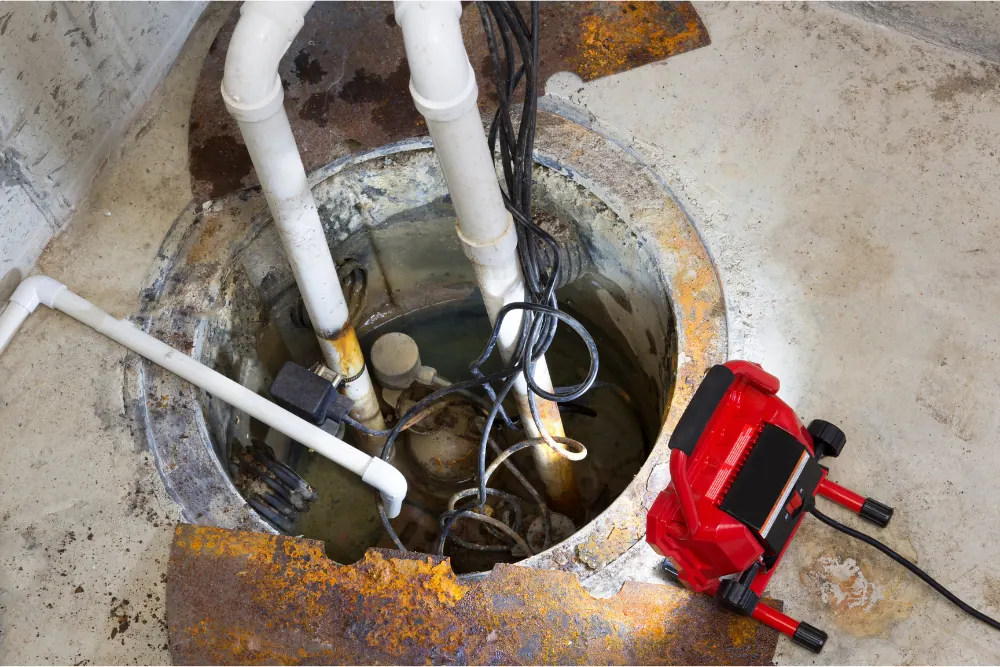
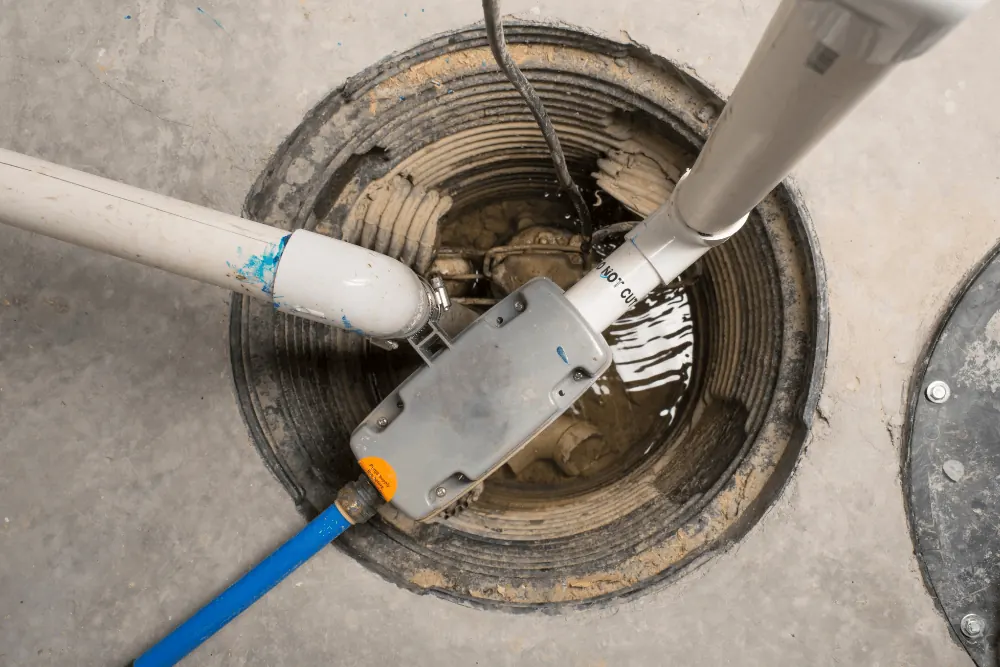
- Submersible, borehole and sump pumps. Pumps that sit in the water, in a borehole, a sump pit, a sewage chamber or a tank. See submersible, borehole and sump pump repair.
- Low pressure diagnosis. Finding out whether the pump, the tank, the pipes or the supply is at fault. See low water pressure.
- Tank transfer pumps. The pump between a ground tank and a roof tank. See water tank installation.
- Pumps for water features, pools and gardens. See pool plumbing and irrigation.
- Supplying the pump. We supply and fit, and we also fit items you have bought.
- Emergency visits. We answer calls and send a plumber 24 hours a day, 7 days a week, and we do not promise an arrival time.
We do not carry out fire-system work, so fire pumps are not on our list.
Which pump does which job
| Pump | What it does | Where it is found | Where it is answered |
|---|---|---|---|
| Hand pump | Moves water by muscle: a lever or crank drives a piston, diaphragm or rotor | A drum, a small tank, a well or an emergency supply | The hand pump section below |
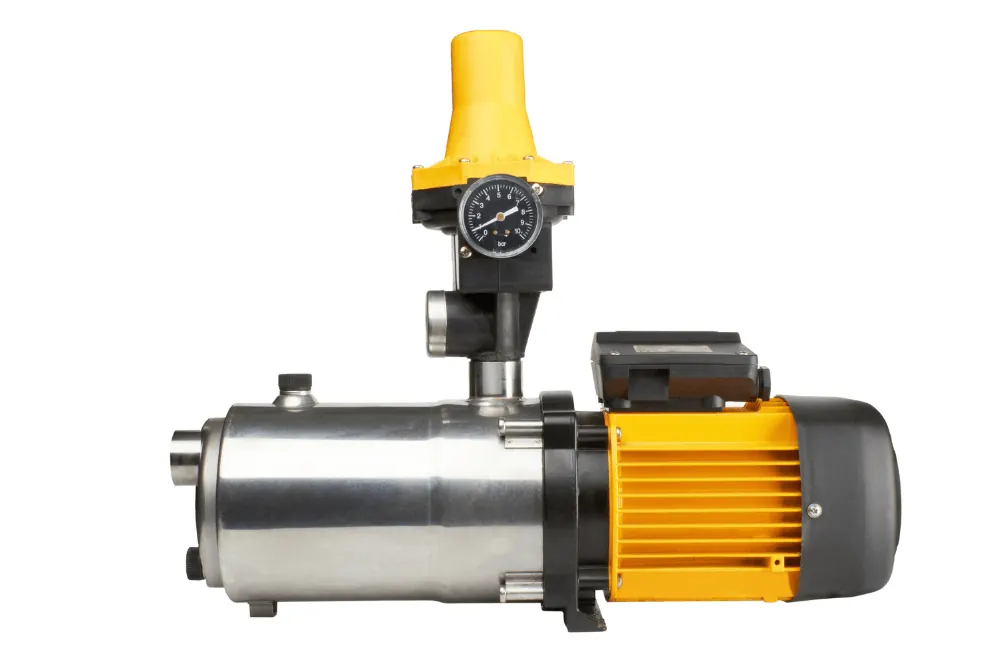
| House water pump, booster pump | Raises the pressure of a supply that is too weak | Between the tank and the taps in a villa, or on a unit's supply in a building | Booster pump |
| Transfer pump | Moves water from one tank to another | Ground tank to roof tank | Water tank installation |
| Submersible pump | Pump and motor in one sealed unit that sits in the liquid | A borehole, a sump pit, a sewage chamber or a tank | Submersible pump |
| Recirculating or circulating pump | Keeps hot water moving round a loop so it is at the tap sooner | A hot water loop on a larger heater system | Water heaters in Dubai |
| Fountain and water feature pump | Lifts water to a spout or over a weir | Gardens, courtyards and lobbies | The fountain section below |
| Irrigation and sprinkler pump | Feeds a garden zone at the pressure the heads need | Villa gardens | Irrigation |
| Pool pump | Circulates pool water through the filter | Pool plant rooms | Pool plumbing |
| Sewage and sump pump | Lifts wastewater or flood water | Basements, car park pits, sewage chambers | Submersible pump |
| Fire pump | Feeds a building's fire-fighting system | The plant room of a building with a fire system | Not our work. We do not carry out fire-system work |
| Washing machine drain pump | A small pump inside the machine that empties the drum | Inside the appliance | Washing machine plumbing covers the plumbing around the machine |
Hand pumps and the suction limit
A hand pump is the simplest pump to explain, so it comes first. It is a pump driven by muscle: a lever or crank drives a piston or a diaphragm. It suits a drum, a small tank or a standby supply, and it is not a way to fill a roof tank, because the deeper the water, the more strokes and effort for each litre.
A pump that sits above the water and sucks it up has a hard limit, set by the air pressure on the water, and the practical limit is lower than the theoretical one because of friction and wear. That applies to every pump that sits above the water, hand or electric. A pump beside a ground tank whose water level is a few metres below the pump inlet is inside the limit. A deep borehole is outside it and needs a submersible pump below the water.
Water pumps in Dubai: reading the label
A pump is rated by four things.
| Figure | What to know |
|---|---|
| Flow | How much water the pump moves, in litres per minute or cubic metres per hour |
| Head or pressure | How high or against what pressure it pushes, in metres or bar |
| Power | The motor, in watts, kilowatts or horsepower |
| Voltage and phase | The supply the motor is built for, and whether it is single or three phase |
Horsepower is a label, and the labels disagree
A pump sold as 1 hp may be a motor that gives that power at the shaft, or a motor that draws that much from the wall, or a marketing figure that matches neither. The practical rule: compare pumps in watts, and find out whether the watts are the input from the wall or the output at the shaft. A pump's datasheet states both.
The voltage trap
The supply in the UAE is 230 V at 50 Hz. A pump built for 110 V is made for a different supply. Check the nameplate before you pay, and ask us if the label is not clear.
Maximum flow and maximum height do not occur together
A pump's label often shows a maximum flow and a maximum height, such as 35 L/min and 35 m. They are the two ends of its curve. At maximum flow the height it can push is nearly zero, and at maximum height the flow is nearly zero. The pair does not describe any real working point, and that is why a pump that looks right on the label can disappoint at your tap.
What your duty point is
Your duty point is the flow you need at the height or pressure you need it. A shower and a basin need a modest flow, and a pump filling a roof tank needs a larger one at a greater height. A garden zone needs a larger flow again. The motor must supply more power than the water carries, because no pump turns all the power it takes in into water power, so a pump with a small motor cannot deliver a large flow at a large height, whatever its label says.
- A house duty is small. The flow and height at your duty point are what matter, and not the label.
- A big flow at a big height is not a small-motor job. An irrigation zone or a tall roof tank needs a motor that is large enough, with something left over for losses.
- A label pair is a ceiling. The pump delivers less than its maximum flow at any real height. The flow it delivers at your height is on the maker's curve.
Ask for the curve, or a table of flow at three heights, mark your height on it and read the flow. If the seller cannot give one, the label figures are the only data, and they describe the two ends of the curve and not the middle. Our booster pump page has a worked example for a house.
How long a tank takes to fill
Fill time is the tank's volume divided by the flow the pump delivers at the real height. A 2,000 litre tank takes 100 minutes at 20 litres a minute, and just under an hour at 35. A 5,000 litre tank takes more than four hours at 20.
Two uses for the sum:
- Find out what your pump delivers. Note the tank's volume, time how long it takes to fill from the low level to the float switch, and divide. The answer is the delivered flow at your height. Compare it with the label. A delivered flow well under the label is expected, for the reason in the section above, and a delivered flow that has fallen since the pump was new is a fault to diagnose.
- Plan the fill. If a tank has to be full by a certain time, the sum says what delivered flow is needed.
Float valves, overflow pipes and the tank itself are on our water tank installation page. The bucket-and-timer measurement of flow at a tap is on our low water pressure page.
Choosing a pump: seven checks before you buy
- Where is the water, compared with the pump? A pump that sits above the water must stay inside the suction limit described in the hand pump section. Water much deeper than the pump inlet needs a submersible pump below it.
- What flow at what height? Work out your duty point, then read the maker's curve at that height.
- What voltage? Check the nameplate against 230 V at 50 Hz before you pay. A 110 V pump is built for a different supply.
- What do the watts mean? Find out whether the figure is input from the wall or output at the shaft.
- Is there dry-run protection? Dry-run protection is an accessory on many pumps, and dry running can destroy a pump motor. Our booster pump page covers protection on a house set.
- What does the warranty cover? Ask for the terms in writing, and keep the invoice.
- Who installs it, and who connects the electrics? A seller often does not say. We do the plumbing, and our own electricians make the electrical connection.
Fountain and water feature pumps
Water feature pumps are sized from the effect you want. For a gentle trickle, choose a pump whose maximum height is about the height you need. For a strong spray, choose one whose maximum height is higher. A pump too large for a small basin can spray water out of it. Plan the basin level, a top-up and the pump's cover together, and keep the pump submerged, because running dry damages it. Our pool plumbing page covers evaporation loss from open water and pool and feature pumps.
What the symptom points to
Our booster pump page has the fault table for house sets, and it is the one to use for a tank-fed booster. This is the general version.
| Symptom | What to know |
|---|---|
| Runs, but no pressure | The tank or well running dry; a clogged foot valve; an air leak in the suction piping; a worn pump or a leak in the pump assembly; piping leaks or water running somewhere in the building; low voltage; a closed valve or a stuck gauge |
| Switches on and off rapidly (short cycling) | A waterlogged pressure tank; a missing or incorrect air charge in the tank; a bad pressure switch, for example one with burned contacts; the cut-out set too high; debris in the switch's sensing port; a collapsed or stuck tank bladder. See pressure tank |
| Hums and does not start | A failed start capacitor, a seized impeller or a motor fault. Switch it off |
| Will not stop | A stuck switch, a leak that keeps the pressure down, or a pump too small for the demand. Switch it off at the breaker |
| Noisy or vibrating | Air in the suction line, cavitation, worn bearings or a loose mount |
| Leaks at the pump | A failed mechanical seal or a loose union |
| Trips the breaker | An electrical fault, an overload or a seized pump. Leave it switched off |
The first check is the tank. A pump that runs with the tank empty shows as "runs, no pressure", and our booster pump page lists low water in the tank among its causes. What you can do safely is look at the tank level, the isolation valves on the pump's line and whether the breaker has tripped. Do not open the electrical box. A pump that hums and does not start, or that will not stop, is switched off at the breaker and left for a visit.
Where pumps sit in Dubai homes
In a villa, the main pump is often in a pump room, a garage corner or a small enclosure near the ground tank, and a transfer pump lifts water to the roof. A pool or garden pump has its own plant room. In a flat, a small booster may sit in a utility cupboard or on a balcony, and the building's pumps are in a plant room that is not yours to enter. Wherever a pump sits, it needs air to cool it, a dry floor, room to open the valves and a switch you can reach. A pump in a closed, hot cupboard runs hot and fails early, and one on a wet floor rusts at the base and at the electrics. Tell us where yours sits when you call.
Signs a pump is near the end of its life
A pump rarely fails without warning. It runs louder than it used to, or hums for a moment before it starts. It takes longer to fill the tank, or the pressure at the tap has dropped. It cycles more often, or the motor feels hotter than before. There is a damp stain or a drip at the seal. The breaker trips more often, or the lights flicker when it starts. Each of these has a cheaper fix when it is found early. A seal or a capacitor is a small job, and a motor that has been running hot for months is not. Photograph the nameplate and note the date when you first notice a change.
Power cuts, restarts and pumps
When the power comes back after a cut, a pump may start with an empty line or against a closed valve. Switch off at the isolator, check that the tank has water and the valves are open, and switch on again. If the pump hums and does not start, do not keep switching it on, because a motor that is stalled draws heavy current and overheats. In a villa where power cuts are common, a pump with dry-run protection and a switch that resets itself safely is worth the extra cost. We tell you what yours has.
Noise at night
A pump heard through the wall at night is a common complaint. A hard base carries vibration into the floor, so a rubber pad or a flexible connector helps. A pump that starts and stops in the night points to a tank or a leak, not just to noise. A pump that runs through the night can mean a float switch that has stuck, so the tank never fills to its stop. If the sound has changed from what it was, send us a short video of the pump running, and we tell you whether it needs a visit.
What to have ready when you call about a pump
The right information on the first message saves a visit. Send a photo of the pump and its nameplate, and one of the tank and the valves around it. Say what the pump serves: a whole villa, a roof tank, a garden, a pool or one flat. Say what it does now and what it did before. Tell us when the problem began, and whether anything changed that day, such as a power cut, a tank cleaning, a plumber's visit or building work nearby. Say whether the pump is running, humming or silent, and whether you have switched it off. If the pump is old, tell us roughly how old. A short video of the pump running, with the gauge in view, is the most useful thing you can send.
Pumps and the rest of the system
A pump is one part of a system, and many pump calls are about something else. A pump that runs but gives weak pressure may be fine, with a blocked strainer, a half-closed valve or a leak downstream. A pump that cycles may be right, with a tank that has lost its air. A tank that never fills may have a stuck float and a healthy pump. That is why we look at the whole line before we propose a repair: the tank level, the suction side, the pump, the tank and switch, the pipes and the taps. Replacing a pump that was not the fault is the most expensive way to find out. See low water pressure for how we work through it.
Keeping a pump healthy
A pump that is looked at twice a year lasts longer than one that is ignored. Keep the pump room clean and ventilated. Look at the seal and the unions for drips. Listen to the pump when it starts and stops. Check the gauge, and write down the cut-in and cut-out. Make sure the tank has clean water and the strainer on the suction side is clear. Test the isolation valves so they move. Keep the label legible and the paperwork in one place. If the pump is in a hot room, shade or ventilate it. A planned visit to check these things costs far less than a call at night. See plumbing maintenance.
Repair or replace a pump
Ask for both prices in writing, side by side. Three facts decide which is better, and one of them is on this page.
- The price of a pump that fits the duty. At the low end a visit and a part can approach the price of a new pump, and at the high end they cannot. Check that a replacement fits the duty before you compare prices.
- What failed. A seal, a capacitor, a switch, an impeller and a motor are different jobs at different prices. Our booster pump page lists the parts of a house set and what each does.
- Whether the pump ever matched the duty. If the flow at your head was never what the property needs, a repair restores a pump that was wrong when new. The fill-time sum and the maker's curve show the mismatch.
A repair carries whatever warranty the repairer gives, so ask for it in writing. FAM's workmanship warranty runs for 30 days and covers our labour only. Parts carry the manufacturer's warranty only.
The service checklist for a house set, with the checks that belong at each visit, is on our booster pump page.
Permission in Dubai: who decides on a pump
A pump changes the pressure and adds an electrical load, so in a flat the building and the landlord have a say. We do not guess, and we ask before we book. In a flat, tell building management in writing before a pump is fitted. A borehole pump has its own page, submersible, borehole and sump pump repair. Tell us what your building asks for and we work to it.
Warranty and the handover
What you should have when a pump job is finished:
- A written note of the pump fitted: make, model, nameplate power (input and output if stated), voltage, and the flow and head on the curve at your duty point.
- A photograph of the nameplate, and the invoice kept with it, for the warranty.
- The settings we changed, written down, with the position of every isolation valve we set.
- Photographs of the connections and the suction line before they are covered.
- FAM's workmanship warranty, in writing. The warranty runs for 30 days and covers our labour only. Parts carry the manufacturer's warranty only.
How we work
- You tell us what is happening on WhatsApp: what the pump does, what it serves, and whether you own or rent. A photograph of the nameplate saves a visit.
- We visit, check the water supply to the pump, the pump and the electrical protection, and say which part is at fault before proposing anything. The visit fee is AED 50 + VAT, credited if the work goes ahead.
- We give options and a price in writing, repair and replacement side by side where both are possible.
- Check permission. In a rented or managed property, ask the landlord or building management whether they need to approve this work before the visit.
- We do the work, isolate the supply, protect the surfaces, prime the pump and test it against its duty.
- We hand over the written note and photographs and show you the isolation valves for the pump.
Where we work in Dubai
We cover all of Dubai, including Dubai Marina, JBR, Downtown Dubai, Business Bay, Jumeirah Lakes Towers, Palm Jumeirah, Al Barsha, Jumeirah Village Circle, Dubai Hills, Mirdif, Deira and Al Quoz. See the full list of areas.
Choosing a pump supplier and spares
Before you buy a pump, ask whether the maker has a local agent, whether spare seals, bearings and impellers are stocked and whether the pump has a service manual. A pump with no spares is a pump with a short life in practice, however good the metal. Keep the label details, the purchase receipt and the wiring diagram together in a folder. When a pump fails, the model number on the label is the first thing anyone will ask for, and a faded label is a delay. Photograph it the day the pump is installed. Note the date of each service and what was replaced. A pump that is looked after for ten years costs far less than a pump replaced every three. We give a fixed price on WhatsApp before we start, and prices exclude 5% VAT, and the 30-day workmanship warranty covers our labour on the job.
How much does pump work cost in Dubai?
Two prices make up the bill: the pump and the work.
- The pump. The price follows the type, the power, the flow and head it delivers, and whether it is a basic or a pressure-controlled model.
- The work. Isolating the supply, removing the old pump, fitting and connecting the new one, priming, setting protection and testing.
- What moves the price. The size and type of the pump, whether the work is a repair or a replacement, the access, the electrical work, and the height of the delivery point.
We do not publish a starting price for this job. Send a photo on WhatsApp and we give you a fixed price before we start. Prices exclude 5% VAT.
Water pump FAQs
How far can a hand pump lift water?
A pump that sits at the surface and sucks water up has a limit set by the air pressure on the water, and in practice the limit is lower than the theory. For a deeper well, the pump or its cylinder has to sit in the well.
How many watts is a 1 hp or 0.5 hp pump?
A horsepower label is a rough guide, and different makers mean different things by it. Compare pumps in watts, and find out whether the figure is input from the wall or output at the shaft. The datasheet states it.
Can I use a 110 V pump in Dubai?
The supply is 230 V at 50 Hz, so a 110 V pump is built for a different supply and should not be plugged in. Match the nameplate voltage to the building's supply before you buy, and ask us if the label is not clear.
How much does a water pump cost in Dubai?
The price depends on the type of pump, its power, the pressure and flow you need, and whether we are repairing or replacing it. We give a fixed price on WhatsApp after a visit or from photos. Prices exclude 5% VAT.
How long will a pump take to fill my tank?
Divide the tank's volume in litres by the pump's delivered flow in litres a minute. A 2,000 litre tank takes 100 minutes at 20 L/min. The delivered flow at your height is below the label maximum, so time the fill and divide to find yours.
What size pump do I need for a fountain or water feature?
Work out the flow you want and the height from the pump to where the water leaves the spout, then read the pump's curve at that height. For a gentle trickle, a pump whose maximum height is about the head will do, and a strong spray needs more. A pump too large for a small basin can spray water out of it.
Why does my pump keep switching on and off?
Most often the pressure tank has lost its air or its bladder has failed, so the pump has no cushion. A faulty pressure switch or a leak can also do it. Switch it off at the breaker and WhatsApp us, and see pressure tank.
Can a house water pump run without water?
No. If the tank is empty or a valve on the suction line is closed, switch the pump off, because running dry damages the seal and can destroy the motor. Dry-run protection is an accessory on many pumps, and some include it in a control unit.
Can you repair my brand of pump?
In most cases, yes. Send a photograph of the nameplate and tell us what the pump does, and we will say whether we can repair it or whether replacing it makes more sense.
Book a pump repair or installation in Dubai
Tell us what the pump does, what it serves and whether you own or rent. A photograph of the nameplate and the area around the pump helps. If the pump is running with no water reaching it, switch it off at the breaker and call. We will find the cause, give you the options and a price in writing, do the work and hand over a note.
WhatsApp: +971 55 407 7427 · Request a quote
Visit us: Office 871, Oasis Mall, Al Quoz 1, Dubai, UAE
Related services: Booster pump installation and repair · Submersible, borehole and sump pumps · Low water pressure · Pressure tank · Water tank installation · Water tank cleaning · Pool plumbing · Irrigation · Valves · Emergency plumber