

Plumbing in Dubai: what we do
- Repairs and emergencies. Leaks, bursts, blocked drains and overflows. See our emergency plumber page.
- Planned maintenance. Scheduled visits for buildings and homes. See plumbing maintenance.
- Renovation and fit-out plumbing. First fix and second fix for bathrooms and for new villas and flats. See plumbing company in Dubai.
- Pipework and fittings. Supply pipe, drain pipe and the joints between them. See pipes and piping and pipe fittings.
- Fixtures. Toilets, basins, kitchen sinks, showers and baths. See toilet installation, kitchen sinks and shower installation.
- Hot water, pressure and treatment. See no hot water, low water pressure and water filters.
How a home's plumbing is put together: three systems
A home has three plumbing systems, and each works on a different principle. The table sets them side by side.
| System | What it carries | How it moves | Where to read |
|---|---|---|---|
| Supply | Cold and hot water to taps, showers, heaters and appliances | Under pressure | Pipes, valves, booster pumps and water tanks |
| Drain and waste | Used water and soil from every fixture | By gravity, down a slope | Drains and sewer line |
| Vent | Air | It keeps the pressure equal on both sides of each trap | The sizes below |
A trap holds a water seal that blocks sewer gas from escaping into the house, and a vent stops the trap water being siphoned away. A drain must slope down to the stack all the way. That slope has to fit in the floor or the ceiling void, which is why the position of the stack limits where a toilet can move. Our plumbing company page covers moving fixtures.
A fourth system sits outside the three. On a riser diagram, rainwater is a separate system, so a blocked roof leader is a different job from a blocked bathroom drain.
Reading plumbing drawings: plan, riser, isometric, shop and as-built
A set of plumbing drawings is a stack of sheets, each drawn for a different reader.
| Drawing | What it shows |
|---|---|
| Plan (layout) | One per floor, drawn over the architect's plan: horizontal pipe runs, fixtures, valves, clean-outs and pipe sizes |
| Riser diagram | A vertical schematic, not to scale, of how floors stack and connect: tanks, pumps, rising mains and drain stacks. Water and waste pipes are solid lines and vents are dotted |
| Isometric | A single-line, three-dimensional-style view of one fixture cluster or stack. It shows the order of connection, the fall and the vent, with sizes, fittings, valves and slopes |
| Detail | A large-scale section of a hard junction: a shaft, a tank room, a pump room or a trap |
| Shop drawing | The contractor's fabrication-level sheet, checked against the site |
| As-built | The record of what was installed, marked up wherever the installation departs from the issued drawing, and handed over at completion |
An isometric lets a reviewer check for measurement or code errors, because it states depths, angles and the positions of fittings.
The as-built is the sheet that says where the pipes run behind a tiled wall before anyone drills it. A job that ends without one leaves the next plumber, and the next leak detection visit, guessing. We photograph the pipes and valves before the wall is closed, and the handover list below includes a marked-up drawing.
Bathroom plumbing layout: what decides where things go
A bathroom layout is a set of heights and distances measured from the finished wall and floor. The exact numbers come from the maker's installation drawing for the model you have bought, so we set out a bathroom from that sheet and not from a generic chart. Here is what the layout depends on.
- The toilet outlet. The distance from the finished wall to the centre of the drain differs between models and between older and newer homes. The outlet types are on our toilet installation page.
- Clear space. A toilet needs room at each side and in front for use and for repair. A cramped layout makes every later job harder.
- The basin. Rim height, drain height and the position of the supply holes depend on the basin and the tap.
- The shower. The valve height and the head position come from the shower set, and the floor build-up decides where the drain can sit. See shower installation.
- The bath. The valve height, the spout and the drain opening depend on the model, and the drain position is fixed before the bath is set.
- Tile thickness and floor build-up. Every dimension is measured from the finished surface, so the tile is part of the plan.
The common error is fixing pipe positions before the fixture is chosen. A first-fix pipe stops where the second-fix fixture needs it, so the fixture schedule comes first. Our plumbing company page covers the order of work.
Traps, drains and vents
Every fixture needs a trap, and the size follows the fixture and its flow. A basin takes a smaller trap than a kitchen sink or a bath, and a shower with several heads or body jets can need a wider outlet than a single head, because the flows add up. A trap must also sit within a limited distance of its vent, or the water seal can be siphoned out. In a bathroom with a basin on the far wall from the stack, that distance decides whether the basin needs its own vent. The project drawing governs, and a plumber works the answer out from it. An owner can ask for it.
Banging, rattling and whistling pipes: what each sound points to
Pipe noise has a few causes with different fixes, and the fix for one does nothing for another.
| What you hear | What to know | First step |
|---|---|---|
| One bang when a tap or valve closes | Water hammer: moving water stopped suddenly and the pressure shock hit the pipe | Clip loose pipe, close hand valves slowly, and see the arrestor section below |
| A bang when a pump stops | A check valve that closes late, so water runs backwards and slams it. See NRV valves | The pump and check valve, not the taps |
| Rattling or chatter while water runs | A loose pipe or clip, or a valve or washer vibrating in the flow | Find the spot by touch and fix the support. See valve repair and replacement |
| A whistle or hiss at one tap | A worn washer, a part-closed valve or a narrow gap in the flow | Tell us which tap, and whether it is hot, cold or both |
| Creaking or ticking when hot water runs | A hot pipe growing against a clip or a wall as it heats | Re-support the pipe with room to move. See repiping |
| Gurgling from a drain or a toilet after another fixture empties | Air being pulled through a trap, from a partly blocked drain or a missing vent | See drain unblocking |
| A hum or vibration from the pump room that carries into pipes | A pump or its mounts. A pump that cycles on and off may point to a pressure tank fault | See booster pump |
| A high-pitched noise in a pressure reducing valve line | Flow too fast through the valve, or a valve at the end of its life | See pressure valves |
Arrestors, air chambers and what an arrestor needs
An arrestor is a sealed, gas-filled chamber on the supply line that absorbs the shock when flow stops. A common design uses a piston in a sealed pressurised chamber, so water does not stay in it, and it can be fitted at any angle. Arrestors come in sizes by the flow they serve. A plain air chamber, a capped length of pipe, can become waterlogged over time and stop working. Arrestors go on the hot and the cold supply lines near the valve that causes the bang, and the result is tested by opening a tap and closing it quickly while watching for leaks and for the noise.
- The pipe must be fixed first. An arrestor absorbs only part of the energy when the pipe around it is not rigid and securely fastened.
- Check for a second cause. Arrestors alone do not always fix the problem, so look for loose pipe and high pressure before cutting into the supply.
Repeated hammer can blow apart a weak joint, such as one that was poorly soldered, and cause extensive water damage. Our water hammer arrestors page covers fitting, and our valve repair page covers the valve side.
Pressure matters here. A supply with high pressure makes every bang worse, and a pressure reducing valve can calm it. We measure the pressure with a gauge before we decide. See pressure valves.
How plumbing is tested before it is hidden, and what a drain camera shows
Plumbing is proved before a wall is closed. The tests split into the supply, the drain and the camera survey after the fact.
Supply tests
The supply is pressure tested with water at working pressure, and the test is covered on our repiping page. The figure to hold on to is that a falling gauge means a leak, and a wet joint on a steady gauge means a weep that only an eye finds.
Drain, waste and vent tests
- Water test. Fill the system to the highest point, with every opening below it closed, and hold it. A falling level means a leak.
- Air test. Used on some systems at low pressure with a fine gauge. We choose between the two for the job.
- Timing. Before the pipe is concealed, in phases if needed, with a final visual check after the fixtures go in.
The drain camera
A plumbing camera, also called a scope, is a small camera on a push rod fed down a drain. It shows:
- The pipe material, which helps judge how much life remains.
- Joints, low spots, offsets and cracks.
- Roots, which look like white or tan hair-like masses partly blocking the bore.
- Scale and grease narrowing the pipe.
- Breaks, which a locator above ground can mark with distance and depth.
It cannot show wall thickness, how well soil supports the pipe, water escaping into the soil, the pipe floor under standing water, or the pipe beyond an obstruction that stops the rod.
What the report should hold is on our sewer line page: the footage, a written list of defects and their distances, and a judgement on the cause. A leak inside a wall is a leak detection job, and the camera does not replace it.
Who should do the work
A company can look right on paper and still send someone who has never done the job, so ask who will be doing the work. Ask how long they have done this kind of work, which trades are the company's own people, and whether they can show you a finished job like yours. Ask for the price and the scope in writing, and for the test record when it is done. Our how to choose a plumber in Dubai page has the checks.
Who pays for plumbing in a rented flat or a new home
The party that pays depends on your agreement and on the type of fault. We are plumbers, not lawyers, so this is general information.
| Situation | Usual starting point |
|---|---|
| A fixture or pipe inside the flat fails from age or wear | Often the landlord, unless your agreement says otherwise |
| Damage the tenant caused, such as a blocked drain from misuse or a broken fitting | The tenant |
| Minor repairs | Some agreements set a limit under which the tenant pays. Read yours |
| Common pipes, risers and tanks | The building, arranged by management |
| A new home, soon after handover | Usually the developer. See our plumbing company page for snagging |
Tell the landlord in writing, with photographs, and keep a copy. We give a written note of what failed and why, which helps both sides.
Permission in Dubai: who decides on plumbing work
Moving a fixture, adding a branch or changing a drain alters the building's pipework, so a flat's owners' association and landlord have a say. We ask before we book.
In practice: a repair of an existing fixture is a different request from a layout change. For a layout change in a rented flat, get the landlord's written approval and tell building management before the work is booked. Tell us what your building asks for and we work to it.
Plumbing words you will meet on a quote
- Isolation valve. A valve that shuts off one fixture or one room without stopping the rest of the home. Every fixture should have one.
- Angle valve. The small valve under a basin or behind a toilet where the flexible hose connects.
- Stopcock or main valve. The valve that shuts off the water to the whole home. Everyone in the home should know where it is.
- Float valve. The valve in a tank or cistern that shuts off the fill when the water reaches the set level.
- Stack. The main vertical drain that the fixtures connect to.
- Gully. An open drain at floor level, found on balconies, in kitchens and in wet rooms.
- Flexible hose. A braided connector between a valve and a tap or toilet. See hoses.
- Pressure reducing valve. A valve that brings a high supply down to a level the pipes and fixtures can live with.
- Rough-in and finish. The pipework behind the wall and the fixtures in front of it.
If a quote uses a word you do not know, ask. A good plumber explains it in a sentence.
Where to find the valves and switches in your home
Everyone in a home should know three things: where the main water valve is, where the water heater switch or isolator is, and where the consumer unit is. In a flat the main valve is often in a kitchen cupboard, a utility area or near the entrance, and some flats have a separate valve in the riser cupboard in the corridor, which belongs to the building. In a villa the main valve may be at the meter, at the roof tank or at the ground tank, and the pump has its own switch. Close each valve and open it again once so you know it moves, and write on a label what each one does. In an emergency, the minute spent looking for a valve is the minute the water is running.
A seasonal plumbing check for a Dubai home
Twice a year, before the hottest months and after them, walk round the home. Run every tap, hot and cold, and watch the pressure. Flush every toilet and watch it fill and stop. Look under every basin and sink for damp or a stained cupboard base. Check the water heater for drips or rust at its connections. Look at the roof tank, its lid, the float and the overflow. Pour a jug of water into floor drains that are rarely used, so the trap stays full and sewer smell stays out. Read the water meter with everything off, and again an hour later. Note anything unusual with the date, and send us a photo if you are not sure. Small signs found early cost a fraction of what a ceiling repair does.
A short note on older and newer buildings
Older flats and villas often have metal pipe that has corroded, few isolation valves, and drains with little fall. Newer buildings usually have plastic pipe, valves at each fixture and concealed pipework behind finished walls. The age of a building tells us where to look first, and it changes the advice. In an older building we check the valves and the pipe condition before we promise a simple swap. In a newer building the concealed pipes mean a leak can run for a while before it shows, so we look for the first signs early. Either way, the building's age is worth telling us when you call.
What a Dubai home asks of its plumbing
Dubai homes put unusual demands on plumbing, and knowing them helps you read what a plumber tells you. Water often arrives at a tank first and is pumped on, so the pump, the float and the tank are part of the system and part of many faults. Most homes run on air conditioning for much of the year, which means cold pipes sweat in humid hours. Roof tanks and exposed pipes bake in the sun, so a cold tap can run warm and plastic can age early. Towers share risers, so a fault in one flat can reach another. And finishes are often high-end, so a small hidden leak can damage a lot of expensive tile and joinery before it shows. None of this is cause for alarm. It is the reason we look at the whole system and not only at the tap that is dripping.

How a fault is found: the order we work in
When you report a fault, we work from the simplest cause to the hardest. First, is the water reaching the fixture at all, and is it the right temperature and pressure? Second, is the fixture itself worn: a washer, a cartridge, a seal or a float? Third, is something upstream the cause, such as a valve that is part closed, a pump, a pressure fault or a blocked strainer? Fourth, is the pipe or the drain at fault, from a leak, a blockage or a fall that is wrong? Each step rules out a group of causes, and the answer is found faster than by guessing. If you tell us what you have already tried, we skip the steps you have done.
What to do before the plumber arrives
Close the valve nearest the fault, or the main if you do not know which that is. Move anything that could be damaged out of the way. Take photographs of the fault and the area around it, and note when you first saw it. If the fault involves water near electrics, switch off the power for that area at the board. Do not use chemical drain cleaners if a drain is blocked, because they make later work harder and can hurt the plumber. Keep the area accessible and tell building security a plumber is coming. These small steps save time and make the visit more likely to finish the job.
Warranty and the handover
What you should have when a plumbing job is finished:
- A written note of every part fitted: make, model, pipe material and size, and where each valve is.
- A marked-up drawing or photographs of the pipes and valves before the wall or floor was closed, which is the owner's version of the as-built.
- The test record: what was tested, the pressure or water level, the duration, the result and the date.
- The sizes of every trap, drain and vent we fitted, so the next plumber works from figures and not from guesses.
- FAM's workmanship warranty, in writing. The warranty runs for 30 days and covers our labour only. Parts carry the manufacturer's warranty only.
How we work
- You tell us what is happening on WhatsApp: the fault or the plan, whether you own or rent, and photographs of the area and any drawing you have.
- We visit, look at the fixtures, the pipes and the access, and say what the job involves before proposing anything.
- We give options and a price in writing, with the scope, the materials and what is not included.
- Check permission. In a rented or managed property, ask the landlord or building management whether they need to approve this work before the visit.
- We do the work, isolate the water, protect the surfaces, test before anything is hidden and record the test.
- We hand over the note, the photographs and the test record, and show you where to isolate each fixture.
Where we work in Dubai
We cover all of Dubai, including Dubai Marina, JBR, Downtown Dubai, Business Bay, Jumeirah Lakes Towers, Palm Jumeirah, Al Barsha, Jumeirah Village Circle, Dubai Hills, Mirdif, Deira and Al Quoz. See the full list of areas.
How plumbing faults tend to travel
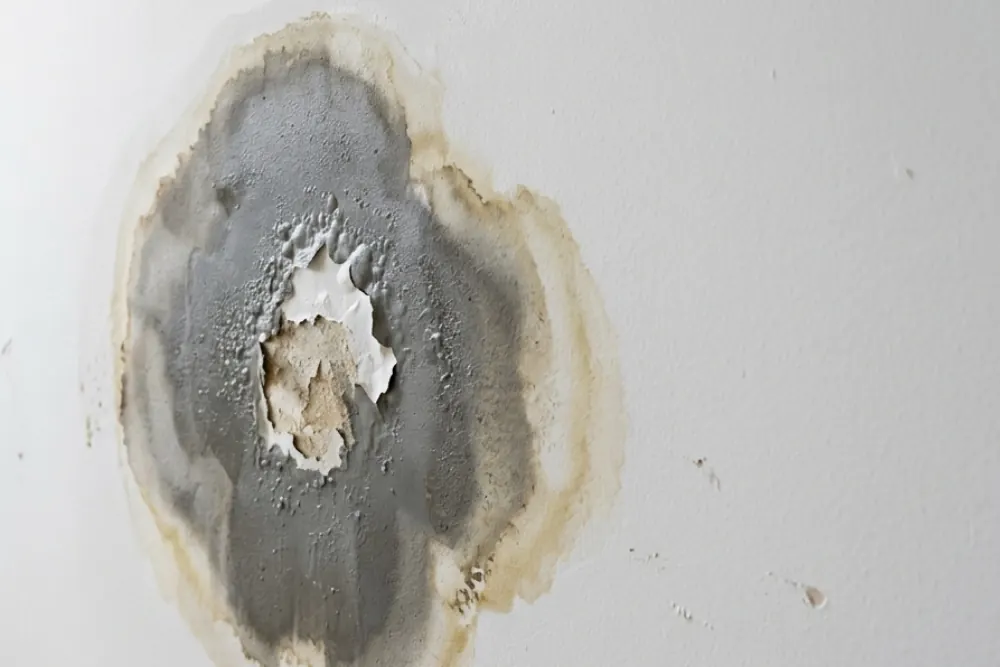
A plumbing fault rarely stays where it starts. Water follows gravity, pipes and the weakest points in a structure, and a small fault in one room appears as a stain in another. It helps to think in terms of three routes.
- Down. Water from a leak in a bathroom moves down through the slab, into the ceiling of the room below, along beams and down the walls. The visible stain may be a metre from the source.
- Along. A leak in a pipe in a wall can run along the pipe, along the top of a board or along a floor screed before it appears.
- Back. A blocked drain pushes waste back up the lowest drain it can reach, which is often a shower or a floor drain, not the sink that was used.
Following the water to its source is the first job of any plumber, and it is why we ask where and when you first saw the problem. A short video of the symptom helps. We do not open a wall on a guess, and we explain what we expect to find before we do. Prices exclude 5% VAT, and the price is fixed on WhatsApp before work starts.
When you are ready to hire, how to choose a plumber in Dubai covers listings, call-out fees and what to ask. For a bathroom renovation or a new fit-out, see bathroom renovation and fit-out plumbing.
How much does plumbing cost in Dubai?
Plumbing is a set of different jobs, and each has its own price page: drain unblocking, toilet installation, shower installation, pipe leak repair and the others in the table at the top.
Two things set a price on any job: the fixture or part, and the work. What moves the work is the access, whether it is a repair or a layout change, whether a wall or floor has to be opened and closed, and the building's rules. The visit fee is AED 50 + VAT, credited if the work goes ahead.
General plumbing work charged by the hour is from AED 120 + VAT. For other jobs we do not publish a starting price. Send a photo on WhatsApp and we give you a fixed price before we start. Prices exclude 5% VAT.
How home plumbing works: FAQs
What is the difference between supply, drain and vent plumbing?
Supply pipes carry clean water to fixtures under pressure. Drain pipes carry used water away by gravity, on a slope. Vent pipes let air in so the trap at each fixture keeps its water seal. A trap creates a water seal that blocks sewer gas, and a vent stops the trap water siphoning away. The first table on this page sets the three side by side.
What is a plumbing riser diagram?
A riser diagram is a vertical schematic, not to scale, of how the floors of a building stack and connect: tanks, pumps, rising mains, drain stacks and vents. It is how you read where the water comes from and goes to in a tower, and which valve isolates which floor.
What is an isometric plumbing drawing, and do I need one?
An isometric is a single-line, three-dimensional-style view of a fixture cluster or stack. Whether a bathroom renovation needs one is a question for the consultant or the building. For a simple swap, the fixture's installation drawing and the old pipes are the reference.
What is rough-in plumbing?
It is the stage where pipes and drains are placed in the walls and floor, before the fixtures go on, to the dimensions of the fixtures chosen. The toilet drain position is a typical example. The rough-in is tested before it is closed in.
Why do my pipes bang when I close a tap?
Water hammer occurs when flow is suddenly stopped or redirected. Shake the exposed pipe first: if it moves, clip it. Close hand valves slowly. If the bang remains, the fix is an arrestor on the supply line, and our water hammer arrestors page covers it.
Is push-fit plumbing allowed behind a wall?
Push-fit fittings are meant for joints you can reach. Behind a wall or under a floor a push-fit joint hides a leak until it does damage, so we use fused, cemented, soldered or pressed joints on concealed runs and keep push-fit for accessible places. See pipe fittings, and check your building management's rules before any joint is concealed.
Who pays for plumbing repairs in a rented flat in Dubai?
It depends on your agreement and on the cause. Wear and tear is often the landlord's, and damage the tenant caused is the tenant's. See the table above.
What does a plumbing camera inspection show?
It shows the pipe material, joints, low spots, cracks, roots and scale, with the distance to each. It cannot show wall thickness, soil support or water leaking into the ground. Our sewer line page covers the report.
What drawings should I ask for when a plumbing job is finished?
Ask for the marked-up drawing or photographs of the pipes and valves before they were closed, the test record, and the list of sizes fitted. Without it, the next plumber has to trace the pipes.
Book a plumber in Dubai
Tell us what is happening or what you plan, whether you own or rent, and send photographs of the area and any drawing you have. If water is escaping, close the nearest isolation valve first and call. We will find the cause, give you the options and a price in writing, do the work and hand over a note.
WhatsApp: +971 55 407 7427 · Request a quote
Visit us: Office 871, Oasis Mall, Al Quoz 1, Dubai, UAE
Related services: Emergency plumber · Plumbing maintenance · Plumbing company in Dubai · Leak detection · Drain unblocking · Pipes and piping · Pipe fittings · Valves · Toilet installation · Shower installation