
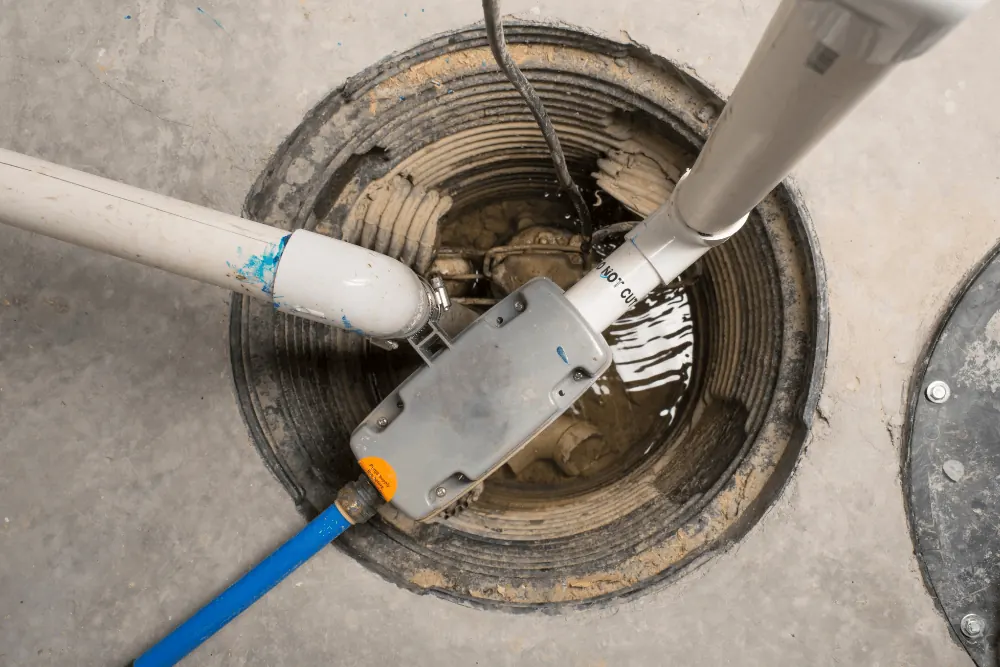
Pump pressure in Dubai: what we do
- Pressure switch. Setting, cleaning or replacing it.
- Tank precharge. Checking and resetting the air charge on a pressure vessel, with the system pressure released.
- Pressure testing. Proving new or repaired pipework with a test pump, and telling you the test pressure, the hold time and the result.
- Pool filter and pump gauges. See our pool plumbing page for the pool side.
- Pressure that is too high. A regulator, a relief valve or a lower cut-out. See pressure valves.
- Emergency visits. We answer calls and send a plumber 24 hours a day, 7 days a week, and we do not promise an arrival time.
- Areas. Across Dubai. The list is near the end of this page, and the full list of areas is on its own page.
Reading the units
On this page pressure is in bar. One bar is roughly the push of ten metres of water height, so a pump that lists its head in metres is quoting the same thing as a pressure figure. Some labels use other units, and the same pressure can be written several ways. If a label is in a unit you do not know, send us a photo and we convert it for you. Do not guess, because a unit mistake of ten times is easy to make and can burst a pipe or a tank.
The pressure switch: cut-in, cut-out and the gap between
A pressure switch turns the pump on when the pressure in the pipe falls to the cut-in setting and off when it climbs to the cut-out setting. The gap between the two is the differential. The pump runs between the two numbers and rests when the tank can supply the taps. Common household switches come set with a gap of roughly one and a half bar, and the cut-out must stay under the rating of the tank and the pipes.
- The two nuts do different things. The larger nut raises the cut-in and moves the cut-out with it. The smaller nut adjusts the differential. Narrowing the differential lets you raise the cut-in without pushing the cut-out too high.
- A cut-out that is too high can keep the pump from ever switching off, and strains fixtures.
- A cut-out above the tank's rating can burst the tank. Make sure the tank line has a relief valve.
- A differential that is too narrow makes the pump start and stop in short bursts until the motor burns out.
- A well-adjusted switch still fails if the air charge in the tank is wrong. That is the next section.
Our booster pump page has the version for a house set. A pump that starts more than a few times a minute is cycling too fast. The cut-out should sit a little below the highest pressure the pump can build against a closed valve, so that the pump can actually reach it.
A switch switches the pump's power, so fitting one is electrical work. Check the contact rating against the pump's running current before you buy. Our own electricians do the electrical side.
The tank and the switch: where the air charge fits
A pressure tank sits beside the switch and decides how often the switch is called on. The tank, its air charge, how it is sized and what a waterlogged tank looks like are all on our pressure tank page. What matters here is the link between the two: the tank's air charge is set a little under the switch's cut-in. Change the cut-in, and the charge has to be reset to match.
The gap between cut-in and cut-out is the working range of the system, and the pump runs from the lower number up to the higher one every time a tap is opened enough to drain the tank. A narrow gap makes the pump start often. A wide gap makes the pressure swing at the tap. Most domestic switches have a fixed gap, and the adjusting nut on the switch moves both numbers together. A second, smaller nut changes the gap.
If the pump starts and stops every few seconds, the first check is the tank, and we describe that on the pressure tank page. If the tank is sound, we look at the switch contacts, the gap and any small leak that drops the pressure between draws.
Reading the gauge
The gauge turns a feeling into a number. The pump's own gauge, if it has one, shows the line pressure as the pump cycles. A screw-on gauge on a hose tap, as our low water pressure page describes, shows what a fixture sees. Read both, because the pump can reach its cut-out while the tap at the far end gets less.
| What you see | What to know | Next step |
|---|---|---|
| The needle climbs slowly to the cut-out, the pump stops, and it falls slowly with use | A healthy cycle | Note the cut-in, the cut-out and the minutes between starts |
| The pump runs and the needle never reaches the cut-out | A cut-out above what the pump can reach, a leak, a worn impeller, air in the suction pipe, a blocked strainer or suction line | Check for a running tap or toilet, then the suction side |
| The needle sits well above the cut-out | The switch is not cutting out, or the gauge is wrong | Cross-check with a second gauge, switch the pump off at the breaker and WhatsApp us |
| The needle swings between two readings a few seconds apart | Short cycling, usually a waterlogged tank | The tank precharge section above |
| The needle drops quickly when the pump stops and no tap is open | A leak downstream, or a non-return valve that is not holding | Check for wet patches and a running toilet, then call us |
A shift in any of these readings is the earliest sign of trouble, so write the normal cut-in and cut-out down while the system is healthy. A gauge reads the pressure in the pipe where it is screwed in. It does not read the air side of the tank, which needs the system pressure released first.
When the pressure is too high
A cut-out that is too high strains fixtures and pipes. Pressure above the tank's rating can burst the tank, which is why a relief valve belongs on the tank line. Three points for Dubai homes:
- Supply pressure can be high before it reaches your pump. A pressure reducing valve is common where the incoming pressure is high. Our pressure valves page covers where a regulator is installed. We do not alter anything on the supplier's side of the meter.
- A house pump sits after the tank. The fixtures downstream see the pump's pressure, so a regulator after the pump can be right, and the pump's cut-in has to sit above the regulator's set point or the valve hunts, as our booster pump page explains.
- High pressure is one of the causes of banging pipes. See water hammer arrestor for the surge arithmetic.
Pressure testing pumps: the other kind of pump
A pressure testing pump does not supply water. It builds pressure in a closed, filled line so a plumber can see whether the line holds. It is a hand lever pump, an electric pump or a drill-driven pump, with a gauge and a hose. The test shows a leak in new pipework before a wall is closed or a floor tiled. It is a different tool from the supply pump and a different job from leak detection.
The test pressure and the hold time are not set by the pump in the plumber's hand. They come from the pipe maker's instruction and the project specification, and they differ between pipe materials and systems. The test pressure is always above the working pressure and never above the rating of any pipe or fitting in the line, and the gauge is allowed to fall only so far. If the specification names no figure, ask the consultant or the building's technical office for it in writing before the test. A line tested to the wrong figure can be damaged by the test or can pass when it should not.
- Isolate meters, pumps, heaters, tanks, regulators and anything not rated for the test pressure. Leave the valves on the pipework under test open.
- Fill from the lowest point with every bleed point open, and close each one when water runs without bubbles.
- Keep the temperature steady. Air temperature changes the gauge pressure, so test at a constant temperature. Plastic pipe also grows a little under pressure, so the gauge can fall in the first minutes and pressure may need topping up. A drop in the first minutes can be the pipe growing, not a leak.
- Hold for the time the procedure names, reading the gauge at the start and the end.
- Record the test pressure, the hold time, the start and end readings and the date.
- If it fails, find the leak, repair it and run the whole test again.
The test pump must reach the procedure's pressure with room to spare, and the gauge must read in the unit the procedure uses.
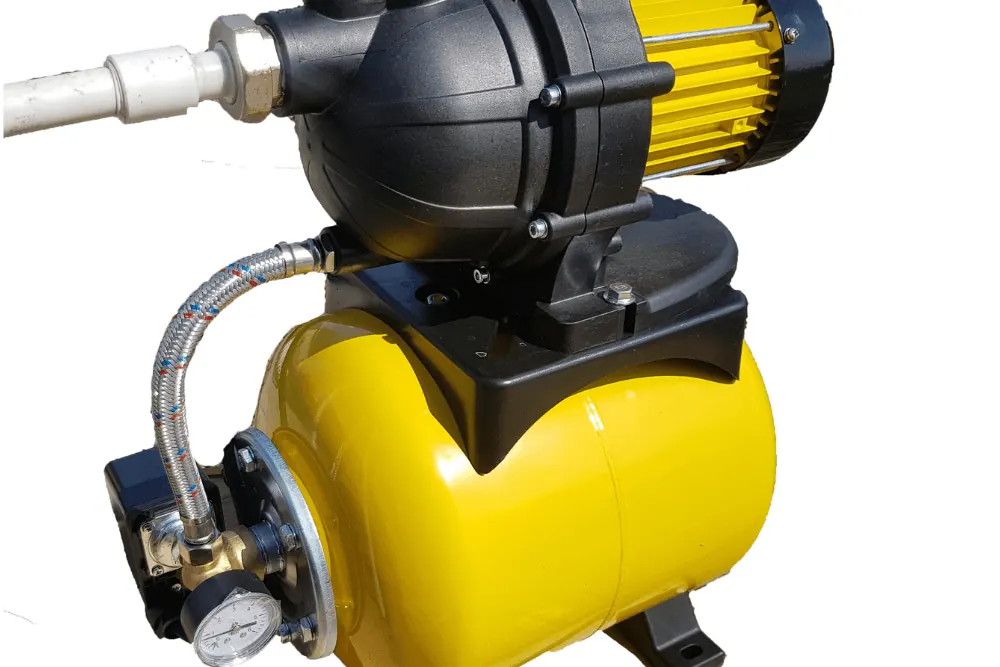
Pool pump pressure
A pool filter has a gauge on the top, and the reading means something only against the pool's own clean reading. Find your baseline by reading the gauge right after the filter has been cleaned or backwashed.
| Gauge compared with baseline | What it usually means |
|---|---|
| At baseline | The filter is clean and the flow is normal |
| Noticeably above baseline | The filter is dirty, so clean or backwash it, especially if the flow has also dropped |
| Well below baseline | Water is not reaching the filter fast enough, which points to a blockage on the suction side |
| Does not return to baseline after cleaning, or climbs again within a day or two | The filter media may need replacing |
For a low reading, check the suction side in this order: the skimmers, then the pump lid O-ring and basket, then the impeller, then suction-side leaks that let air in. A pump that shows a normal gauge but little flow at the returns is also worth a look at the multiport valve position. Our pool plumbing page covers the backwash line, the multiport valve and pressure testing the pool's pipes.
No pressure, or losing pressure
A pump with no pressure and a pump that is losing pressure show the same symptom from different causes.
| Where | What to know |
|---|---|
| Suction lift | A surface pump can lift water only so far on suction. See the limits on our pumps overview |
| The pump itself | A worn impeller, a pump that has run dry |
| Control side | A failed switch, contacts burned or the port blocked, a cut-out set too high, a tank that has lost its charge |
| Downstream | A leak, an open tap, a failed regulator |
| Power | A tripped breaker or RCD, a float switch holding the pump off |
Switch the pump off at the breaker if it runs dry or the tank is empty, and WhatsApp us.
Pressure at the top of a tower or a villa roof tank
Pressure falls with height. In a villa, the top-floor shower is the first to complain when the pump setting is too low, and the ground-floor fittings are the first to suffer when it is too high. In a flat, the building's pumps decide, and the floor you are on matters. If you live high up and the shower dribbles in the evening peak, the supply is probably the cause and not your fixtures, and a reading from a gauge at your own tap, at the same time on several days, is the best evidence to give management. If you live low down and the taps bang and the hoses fail, the pressure may be too high and a regulator on your own branch may help. See pressure valves.
What a pump pressure visit includes
We start with the gauge. We note the cut-in and cut-out, count how often the pump starts, and look at the tank, the switch, the strainer and the unions. We check the air charge with the water side released. We read the pressure at the far tap. Then we say which part is at fault and what it costs to put right, with the price fixed on WhatsApp before we start. Often the fix is small: a recharge, a clean port or a re-set switch. If the pump itself is worn, we say so, and show you why.
Permission in Dubai: who decides on pump pressure work
Changing a pressure setting, replacing a switch or testing the pipes touches the landlord and the building, and a switch touches the electrics.
- The meter side. The pipe up to and including the supplier's meter is not ours to alter. See our valves overview.
- Building management. In a flat, a shared booster set or a riser is the building's, and we do not change its settings or isolate its pipes without management.
In practice: resetting the switch or the tank charge on a pump you own, in your own villa, needs no one's approval but yours. In a rented home, tell the landlord in writing first. A pressure test that isolates a riser or a floor needs the building. Tell us what your building asks for and we work to it.
When the job is finished
Ask for these. They cost nothing to produce.
- The settings written down: the cut-in, the cut-out and the tank air charge, in bar, with the date.
- The gauge reading before and after, and the time between starts over an hour of normal use.
- For a pressure test: the procedure followed, the test pressure, the hold time, the start and end readings and the date.
- The make, model and rating of any switch, tank or test fitting fitted, with a photograph of the label.
- A note of what was isolated and confirmation it was reopened.
- FAM's workmanship warranty, in writing. The warranty runs for 30 days and covers our labour only. Parts carry the manufacturer's warranty only.
How we work
- You message us with the pump make if you know it, a photograph of the gauge and the tank label, and what the pump is doing.
- We say what we think the cause is and whether it can wait.
- We visit. The visit fee is AED 50 + VAT, credited if the work goes ahead.
- We give a price in writing, with parts and work shown separately.
- Check permission. In a rented or managed property, ask the landlord or building management whether they need to approve this work before the visit.
- We read the numbers first: the cut-in, the cut-out, the precharge and the starts per hour.
- We make the change and test it, and for a pipe test we hold it for the time the procedure names.
- We hand over the settings, the readings and the test record.
Where we work in Dubai
We cover all of Dubai, including Dubai Marina, JBR, Downtown Dubai, Business Bay, Jumeirah Lakes Towers, Palm Jumeirah, Al Barsha, Jumeirah Village Circle, Dubai Hills, Mirdif, Deira and Al Quoz. See the full list of areas.
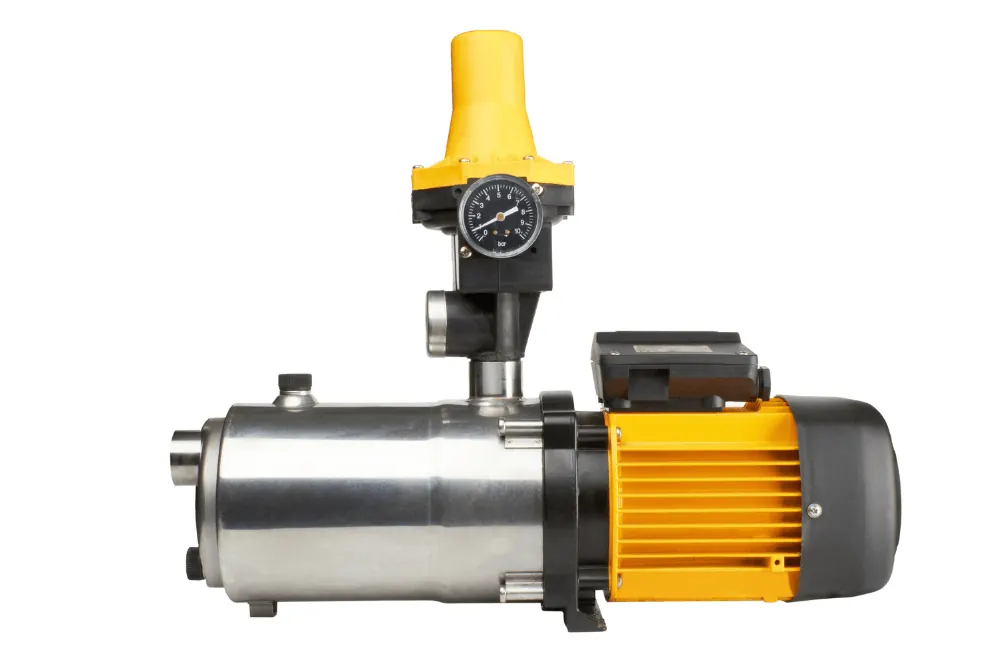
Finding the cause of a pressure complaint
Pressure problems are reported in many ways: a weak shower, a pump that never stops, a pump that keeps starting, a gauge that will not settle. The cause is often not the pump.
| Complaint | First suspect | How to check |
|---|---|---|
| Weak at every tap | Supply, tank level, a blocked strainer or a failing pump | Check the tank, the strainer and the gauge at the pump |
| Weak at one tap | A blocked aerator, a partly closed valve | Clean the aerator and open the valve |
| Strong then weak | A pressure tank with no air | Check the precharge with the pump off and the tank drained |
| Pump runs and the pressure never rises | A leak, a worn impeller or air in the line | Look for leaks, bleed air, check the flow |
| Pump short-cycles | A waterlogged tank or a leaking non-return valve | Check the tank precharge and the valve |
| Pressure jumps and the pump hunts | A faulty pressure switch or a clogged gauge port | Test the switch and clean the port |
| Pressure drops overnight with no use | A leak, or a foot valve or non-return valve that leaks back | Isolate sections and watch the gauge |
The effect of pressure on fittings
High pressure is not harmless. A setting above what the pipes, the heater, the appliances and the taps are rated for shortens their life. Washing machine hoses burst, cisterns fill noisily, mixers leak and water hammer appears. Low pressure causes its own problems, such as a heater that will not light, a shower that dribbles and a washing machine that fills slowly. The target is a pressure in the range that suits the lowest and highest items in the system. A pressure gauge at the pump and another at the farthest fixture tell the story.
Switch contacts, the pressure port and what wears
A pressure switch is a spring, a diaphragm and a pair of contacts. The diaphragm senses the water pressure through a small port. When the pressure drops to the cut-in, the spring closes the contacts and the pump starts. At the cut-out, the diaphragm overcomes the spring and the contacts open.
Three things wear. The contacts pit and burn from arcing, and a pitted pair can weld shut, which leaves a pump running past the cut-out. The port blocks with scale and grit, which makes the switch slow and the readings strange. The adjusting springs lose their set over years. A switch that clicks but does not start the pump, or a pump that does not stop, points here, and the switch is cheaper to replace than to repair.
We isolate the power before any cover comes off, and we never bridge a switch to make a pump run. A bridged switch has no cut-out, and a pump with no cut-out can burst a pipe or a tank. If the pump will not stop and the pressure keeps rising, switch it off at the isolator and WhatsApp us.
Fitting a gauge and reading it over a day
A gauge turns a guess into a number. We fit it close to the tank, where the reading is steady and not distorted by the flow, and note the cut-in and cut-out. Over a day, a few extra readings tell more than one. A pressure that drops at the same hour every day points to a building supply pattern. A pressure that falls overnight with no taps open points to a leak or a check valve that does not hold. A cut-in that creeps down points to a switch that is drifting.
Keep a note of the readings with the date and time, and send us a photo of the gauge dial and the switch label. That is usually enough to say whether a visit is needed.
Pump and tank interplay
In a system with a pressure tank, the pump, the tank and the switch depend on each other. The tank's air cushion holds a volume of water so the pump does not start for every small draw. If the cushion is lost, the pump starts and stops at every use. If the switch is set with a gap that is too narrow, the pump cycles. If the gap is too wide, the pressure swings. The three need to be set together, and one change affects the others. We check all three when we look at a pressure problem.
What to note before calling
- The reading on the gauge when the pump is running, and when it has stopped
- How often the pump starts in ten minutes
- Whether it is worse at certain times of day
- The make and model of the pump, and the age
- Any noises, leaks or warm casings
- A short video of the gauge and the pump
With these, we can tell you what to expect and what a visit involves. We give a fixed price on WhatsApp before we start. Prices exclude 5% VAT.
Pump pressure and the pipework it feeds
A pump does not produce pressure on its own. The pressure at a tap is the result of the pump, the height, the friction in the pipes and what else is running. A pump that works well on a short pipe may disappoint on a long one with many bends. Long runs of small pipe lose pressure as water speed rises. A larger pipe at the same flow loses far less.
When a household complains of low pressure at the far end of the house, check the pipe size and run before blaming the pump. A pump with a good gauge reading at its own outlet but a poor one at the far tap points to pipe losses or a restriction, such as a part-closed valve, a blocked strainer or a scaled pipe. A pump that reads low at its own gauge points to the pump, the suction or the tank.
Reading both gauges, one near the pump and one at the far end, tells you which. We take both readings on a visit, say what they mean and quote the fix, with the price fixed on WhatsApp before we start. Prices exclude 5% VAT.
How much does pump pressure work cost in Dubai?
- The work. Setting a switch, recharging a tank, replacing a switch or running a pressure test.
- What moves the price. Whether the fault is the switch, the tank or the pump, the size of the line to test, access, and the floor and building.
We do not publish a starting price for this job. Send a photo on WhatsApp and we give you a fixed price before we start. Prices exclude 5% VAT.
Pump pressure FAQs
What should I set my pressure switch to?
Pick the pair that gives your top floor enough pressure without straining the fixtures, and keep the cut-out under the tank's and pipes' ratings. We set it with a gauge, and we tell you the numbers.
How do I know the switch is set correctly?
With a gauge on the line, open a tap and watch the needle fall to the cut-in, where the pump should start. Close the tap and watch it rise to the cut-out, where the pump should stop. If the readings do not match the label on the switch, the switch has drifted or the gauge is wrong. We check the gauge against a second one, and adjust the switch nut a little at a time.
Why does my pressure swing between very low and very high?
The gap between cut-in and cut-out is too wide, or the tank is not cushioning the swing. A modest gap is normal. A wider gap shows at the shower as hot and cold surges and as a pump that works hard. For short cycling, see our pressure tank page.
What do cut-in and cut-out mean?
Cut-in is the pressure at which the switch starts the pump, and cut-out is the pressure at which it stops. The gap between them is the differential.
Why does my pump run and never stop?
A cut-out higher than the pump can reach, a leak, a worn impeller, air in the suction pipe or a blocked strainer. A cut-out set too high can also keep the pump from switching off. Check for a running tap or toilet, then WhatsApp us.
What pressure should a pressure test use?
The pipe maker's instruction and the project specification set it. It is above the working pressure and never above the rating of any part in the line. Ask for the figure in writing before the test.
How long should a pressure test hold?
It depends on the pipe and the specification, from tens of minutes to several hours, with a limit on how far the gauge may fall. We follow the time the procedure names and record the readings.
What should a pool filter gauge read?
There is no single figure. Note the reading right after cleaning and call that your baseline. Clean or backwash when it climbs noticeably above it, and look for a suction-side blockage when it falls well below.
How much does a pressure switch cost?
A pressure switch is a small part cost, and most of the bill is the visit and the setting-up. We give a fixed price on WhatsApp after you tell us the pump and the fault. Prices exclude 5% VAT.
Book a pump pressure visit in Dubai
Tell us what the pump is doing, what the gauge says, and whether you own or rent. A photograph of the gauge, the switch and the tank label helps. If the pump is running dry or the tank is empty, switch it off at the breaker and call. We will read the numbers, give you the options and a price in writing, do the work and hand over the settings.
WhatsApp: +971 55 407 7427 · Request a quote
Visit us: Office 871, Oasis Mall, Al Quoz 1, Dubai, UAE
Related services: Pumps overview · Booster pump · Low water pressure · Water hammer arrestor · Pressure valves · Water tank installation · Pool plumbing · Leak detection · Hoses · Emergency plumber