
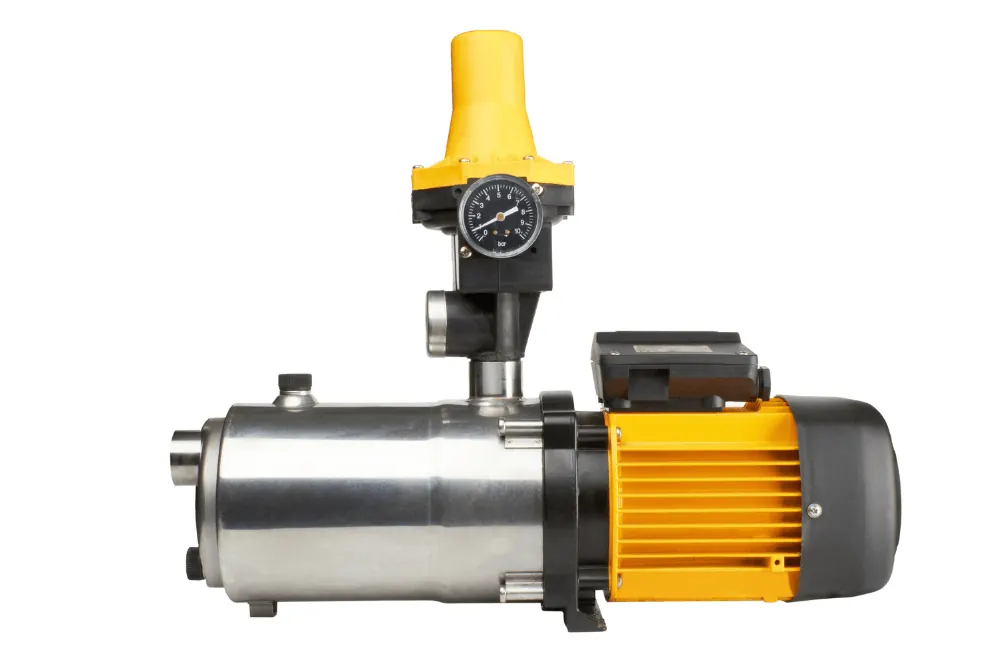
Jockey pump in Dubai: what we do
A fire-fighting system in Dubai is designed, installed, tested and maintained by approved fire contractors. We do not carry out fire-system work. What we do is the plumbing around it:
- Telling you what you have. Whether the pump on your plant-room photograph is a fire-system jockey pump, a domestic booster, or something else sold under the same name.
- Domestic pressure pumps in the same plant room. The booster set, the transfer pump and the tank controls are on booster pump installation and repair and transfer pumps.
- Plumbing around a pump. Isolation valves, check valves and pipework in water systems that are not part of the fire-fighting installation. See NRV valves and valves.
- Faults on the water side. Leaks, air in the line and cycling that point to the pipework. See leak detection and low water pressure.
- Emergency visits. We answer calls and send a plumber 24 hours a day, 7 days a week, including nights, weekends and public holidays.
- Areas. Across Dubai. The list is near the end of this page, and the full list of areas is on its own page.
The names: which pump is which
| Name | What it is | Where it is covered |
|---|---|---|
| Jockey pump or pressure maintenance pump | A small, high-pressure, low-flow pump on a fire system that makes up slow pressure loss | This page |
| Main fire pump | The large pump, electric or diesel, that supplies the water in a fire | An approved fire contractor. Not covered here |
| Booster set | A domestic pump that keeps pressure on the water in a building | Booster pump |
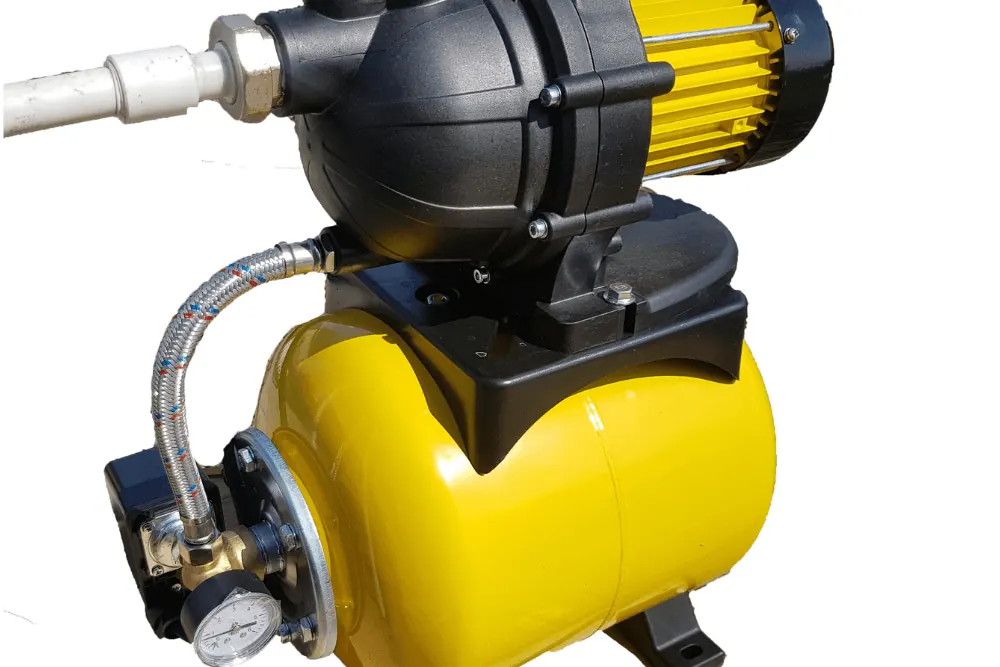
| Pressure tank pump | A pump with a pressure tank and a switch, on a villa or a small building | Pressure tank pressure |
| Transfer pump | Moves water from one tank to another | Transfer pump |
A pump is a jockey pump because of where it is connected and what it is set to do, and not because of its casing.
What a jockey pump does
The job is to hold the pressure steady and make up small losses, so the main fire pump stays off until there is a real demand. A fire system loses a little pressure all the time through weeping joints, valve seats and seals. If the main pump started to make up every one of those losses, it would start many times a day, which wears it and wastes energy. The jockey pump absorbs that slow loss so the alarm and the large pump respond only to a drop that a leak cannot explain.
This is also why a jockey pump that keeps starting is information. It tells you the system is losing water, and a faster refill hides the leak without removing it.
Whether your building has a jockey pump at all is decided by the approved fire-protection design for that building, and the approved drawings say what is fitted. Ask the fire consultant or the approved contractor who holds them.
The start and stop pressures
A jockey pump works from a pressure switch or a controller, and the settings are a ladder: the jockey pump stops at the top, starts a step lower, and the main pump starts a step below that, so the main pump runs only when the jockey pump has failed to hold the pressure.
The steps are small, a fraction of a bar between one rung and the next. That is a narrow margin, and it explains why the pressure sensing has to be done carefully (see the piping section).
The numbers belong to one pump and one building. A set of pressures lifted from an article and typed into a controller would be a guess. The settings for your building come from the approved design and the pump's curve, and they are written on the controller's commissioning sheet. Ask for that sheet.
Sizing a jockey pump
A jockey pump has to be big enough to make up the system's leakage and small enough that a real demand still drops the pressure and starts the main pump.
- The leakage rate sets the minimum. The pump's flow must be at least the normal leakage of the pipework, at a discharge pressure that is a little above the system's.
- It is a small fraction of the main pump's flow. The exact figure comes from the leakage of the actual pipework and from the approved design, and not from a rule of thumb.
Aboveground pipework against buried mains
A jockey pump on a system with large underground mains has to be larger than one on aboveground piping alone, because buried mains leak more. For an aboveground-only system, the jockey pump's flow should be less than a single sprinkler's flow, so that an open sprinkler pulls the pressure down and starts the main pump.
The risk in sizing up
If the jockey pump is too big and the controller is set for a larger pressure drop, the jockey pump could respond to a fire instead of the main pump, and the building might not be alerted. This is the reason the answer to a leak that makes the jockey pump run too frequently is not a larger jockey pump. The design numbers come from the approved fire design, not from us.
Piping, controller and approval
A jockey pump is a small pump with a short list of parts around it.
| Part | What to know |
|---|---|
| Pump type | Often a vertical multistage centrifugal pump, chosen for a high pressure at a low flow |
| Suction side | An isolation valve on the suction, so the pump can be taken out without draining the system |
| Discharge side | A check valve and an isolation valve on the discharge. The check valve is the part that holds the pressure while the pump is off |
| Sensing line | A small line from the system to the pressure switch or controller. It is the only signal that starts and stops the pump |
| Controller or pressure switch | Holds the stop and start settings. A transducer on the line can feed a controller |
| Power | The jockey pump runs from the building supply. Whether it needs emergency power is a decision of the fire design |
A jockey pump holds pressure only as long as the discharge check valve does. The sensing line is the only signal that starts and stops the pump, and a line without damping could pass every pressure ripple to the switch, so the sensing line normally has a small orifice or snubber.
An approved pump
Fire-protection pumps are approved products, and they are bought and installed through an approved fire contractor. Ask the contractor for the pump's approval document before it is bought.
Reading a maker's page
A maker's page for a jockey pump range often gives a maximum pressure, a maximum flow, a maximum head and a list of motor sizes, and these are not available together. A pump cannot deliver its top flow and its top head at the same time, because the motor would have to be far larger than the one listed. The flow, the head and the motor of the particular pump are on its curve and its nameplate, and those are what to ask for. A page with no flow, no head, no power and no approval named tells you the pump family and nothing about the duty.
Short cycling, constant running and other faults
A jockey pump that starts every few minutes, or that never stops, is telling you something about the system. Two explanations are common, and they have different remedies:
- The set pressures are too close together, so the pump starts and stops on small ripples. This points to the control band.
- A leak in the system is growing, so the pump has to run more often to make up the loss. This points to the pipework.
If the pump has cycled quickly since commissioning, the band is a candidate. If it cycled slowly once and has speeded up over weeks, a leak that is growing is a candidate. A written record of the pump's starts per day, kept from the day it was commissioned, is what separates the two, and it costs nothing to start.
A checklist for the conversation with your contractor:
- A leaking or stuck discharge check valve that lets the pressure fall back.
- Weeping joints, valve seats, seals or a drain left slightly open.
- Air in the system or the pump.
- A failing pressure switch or transducer, or a blocked sensing line.
- Start and stop settings too close together.
- A worn pump that no longer reaches its stop pressure.
The domestic equivalent of cycling is the pressure tank that fills and empties too fast, and its causes and checks are on pressure tank pressure. It is a different system, and the logic of a band that is too narrow carries across. Do not move a set point on a fire system to stop the cycling. The settings are part of the approved design, and the ladder above shows how little margin there is.
Testing and records
Fire pumps and their jockey pumps are tested by the maintenance contractor on a regular schedule, and the intervals are in the contract and the approved design. Ask the maintenance contractor for the test record and the contract scope, and ask whether the jockey pump is on it.
Fire-system work in Dubai
This is general information and not a statement of the rules in force for your building.
| Point | What it means for you |
|---|---|
| An approved contractor does the fire work | Only an approved fire contractor installs, tests and certifies a fire system. We are not that contractor for the fire installation |
| Fire products are approved products | Ask for the approval document for the pump and the controller |
| Installations follow the fire design | A fire pump is built to the designer's specification, with approval before and after completion and regular testing. FAM does not do fire-system work |
The approved fire contractor and the building's fire consultant can tell you what applies to your building.
What the plant room should look like
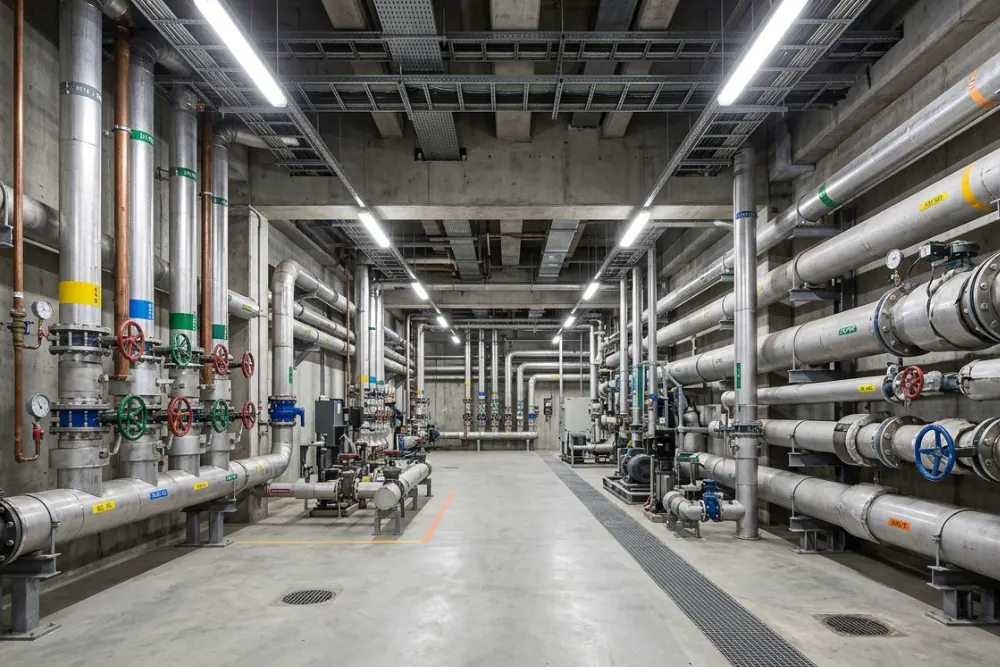
A well-kept pump room tells you a lot before you touch anything. The jockey pump, the main pump and the controller each have a label. The floor is dry, and there is a floor drain that is not blocked. The room has light and ventilation, because a motor in a hot closed room runs hot. The valves are labelled open or closed, with their normal position shown. The gauges read in bar and are not cracked or fogged. There is a clear path to the door and a space round each pump. A plant room that is full of boxes, paint tins and spare tiles, with a wet floor and a hand-written note on a panel, is a plant room where nobody is looking after the equipment. As a facilities manager you can fix the housekeeping without touching a valve.
What we do near a jockey pump
On the plumbing side, we deal with leaks from domestic pipework in the same room, drains and floor gullies, flexible connectors on domestic pumps, and the water supply to the room's wash point. If water is coming from a pipe we cannot identify, we stop and ask which system it belongs to before we touch it. A weeping flange on a fire line is a call to the fire contractor, and we tell you so, in writing, with a photograph and the time. We will also tell the contractor what we saw if you ask us to, so the report reaches the right person. See leak detection and pipe leak repair.
Reading a pressure gauge without touching anything
A gauge on the fire line shows the pressure the system is holding. It is worth a look and a photograph on each walk through the plant room. A steady reading, a little above where it was last week, means the jockey pump is keeping up. A needle that creeps down over minutes and jumps up when the pump starts shows the normal sawtooth of a healthy system. A needle that is always low, or that falls fast and stays down, is a reason to call the fire contractor the same day. Write down the reading and the time and keep a log. A fortnight of readings shows more than one visit.
Permission in Dubai: who decides on a jockey pump
A jockey pump sits in a plant room or a pump room that belongs to a building, and the system it serves belongs to the building's fire design. The fire-system rules are in the section above.
- Building management. A fire pump room is shared by every unit, and work that lowers or isolates the fire-fighting pressure affects every unit, so it goes through building management.
A tenant has no reason to touch a jockey pump, and the message to send is to building management, with the symptom and the date it began. For an owner or a facilities manager, the first call is to the approved fire contractor who holds the maintenance contract.
When the job is finished
Ask for these. They cost nothing to produce.
- The pump's nameplate, photographed: maker, model, voltage, frequency, running current, rated flow and head.
- The commissioning sheet, with the jockey stop and start pressures and the main pump start pressure written down in bar.
- The duty point, written down: the leakage flow the pump was sized for, and the pump curve with the mark on it.
- The piping, shown to you: the suction and discharge isolation valves, the discharge check valve with its arrow against the flow, and the sensing line with its damping orifice.
- A start count, from the day of commissioning, so a change in the number of starts can be seen.
- The approval documents for the contractor, the pump and the controller.
- FAM's workmanship warranty, in writing, for the plumbing work we did. The warranty runs for 30 days and covers our labour only. Parts carry the manufacturer's warranty only.
How we work
- You message us with a photograph of the pump's nameplate, the controller and the valves around it, and what the pump does or fails to do.
- We say whether the job is ours. A pump that belongs to the fire-fighting system goes to an approved fire contractor. We do not take fire-system work.
- We give a price in writing for the work we take, with the parts and the labour shown separately.
- Check permission. In a rented or managed property, ask the landlord or building management whether they need to approve this work before the visit.
- We check the system first: the pressure on the gauge, the number of starts, and where the water could be going. The visit fee is AED 50 + VAT, credited if the work goes ahead.
- We do the work we have agreed, the pipework, the check valve, the isolation valves or the water-side fault, and test it against the settings on the commissioning sheet.
- We hand over the readings, the settings and the warranty.
Where we work in Dubai
We cover all of Dubai, including Dubai Marina, JBR, Downtown Dubai, Business Bay, Jumeirah Lakes Towers, Palm Jumeirah, Al Barsha, Jumeirah Village Circle, Dubai Hills, Mirdif, Deira and Al Quoz. See the full list of areas.
What a worried building owner can check without touching anything
A jockey pump is part of a fire system, so what you can safely do is look and record, then pass what you see to the approved fire contractor. We do not carry out fire-system work, and we do not adjust the pump, its pressure settings or its controller. A short checklist is still useful to a facilities manager.
- Is the pump running all the time? A jockey pump that runs without stopping suggests a leak in the system or a failed valve. Tell the fire contractor.
- Does it start and stop often? Frequent short starts show a leak or a faulty pressure switch. Note how many starts in an hour, if you can.
- Is there water around it? A weeping gland or a wet floor is worth a photo.
- Is there a fault light or an alarm on the panel? Photograph it and the time.
- Is the room clear? Plant rooms get used as stores. A pump needs space around it and a clear path to the door.
- Is the panel locked and labelled? A panel left open and unlabelled is a risk.
Write down what you see with dates. A short log is more use to a contractor than "it keeps making noise".
Faults that look like the pump but are not
| What you see | What it may really be | Who deals with it |
|---|---|---|
| The pump keeps starting | A leaking joint, a weeping valve or a drain valve left slightly open | The fire contractor for the fire system. We deal with leaks on the domestic water side |
| A fault alarm on the panel | A tripped overload, a power fault or a failed pressure switch | The fire contractor |
| A noisy pump | A worn bearing, cavitation from poor suction, or a loose mount | The fire contractor |
| A pressure drop in the system | A leak, an air pocket or a closed valve | The fire contractor |
| A small pump in a plant room that is not on the fire system | A booster, transfer or circulation pump sold under the same name | Us, for the water side |
If you are unsure which system a pump belongs to, send us a photo of the pump, its label and the pipework around it. We tell you plainly whether it is a domestic pump we can look at or part of the fire system we cannot.
Sharing a plant room with other trades
Fire pumps, domestic boosters, transfer pumps and tank controls often share one room. That is where mistakes happen. A valve closed on the wrong system, a pipe cut that was thought to be spare, or a cable moved can all cause harm.
- Label every valve, pipe and panel by system.
- Never close a valve on a fire system to work on another. Ask the contractor first.
- Never use a fire system tapping for a hose, a wash point or a temporary supply.
- Tell the fire contractor before any plumbing work in the room.
- Keep records of who worked on what and when.
When we work in a shared plant room on the domestic side, we agree with building management where we may work and which valves we may use. We do not touch anything on the fire side.
When a domestic pump is called a jockey pump
Shops and websites use the name for pumps that are not on a fire system. A small pressure pump that keeps a line at pressure may be sold as a jockey pump, even if it has no connection to fire protection. The way to tell is the system it serves. A pump that feeds taps, showers and appliances is domestic. A pump connected to fire hose reels, sprinklers or hydrants is part of the fire system.
For a domestic pump that keeps the pressure steady, ask what the cut-in and cut-out pressures are, what the tank is, and whether the pump is protected against running dry. These are the same questions that apply to a booster. See booster pump installation and repair and pressure tank pressure.
Questions to put to the fire contractor
If you manage a building, put these to the approved contractor who maintains your fire system:
- When was the jockey pump last tested, and what were the readings?
- What are the set pressures, and who last changed them?
- How many starts per day is normal for this system?
- Where is the test record kept, and when is the next test due?
- Is there a log of faults and what was done?
A contractor who answers clearly shows that the system is looked after.
What we can do for you
We can tell you which pump you have, look at the water pipework in the same plant room, repair leaks on domestic lines, and coordinate access so that trades do not clash. If your issue is a fire-system fault, we tell you so, in writing, and do not attempt it.
What we will not do, and why
We will not adjust a fire-system pump, its pressure settings, its controller or its pipework, and we say so in writing before any other work starts. A change to a fire system that looks small can stop it working when it is needed, and the work belongs to the approved fire contractor. If you are unsure whether a job touches the fire system, send us a photo and we tell you plainly which side of the line it is on.
How much does a jockey pump cost in Dubai?
- The pump and controller. A jockey pump set is priced by its flow and head, its motor, its controller and its approvals. A fire pump set with a controller, an electric main pump and a diesel pump costs far more than a jockey pump alone.
- The work. Fitting and commissioning a jockey pump on a fire system is approved-contractor work. We price only the plumbing around it.
- What moves the price. The pump's flow and head, the controller, the approvals, the pipework, the access, and building approval.
We do not publish a starting price for this job. Send a photo on WhatsApp and we give you a fixed price for the plumbing work before we start. Prices exclude 5% VAT.
Jockey pump FAQs
What does a jockey pump do?
It keeps a fire-fighting system at pressure so the main fire pump does not start for small leaks. It makes up slow losses through weeping joints and valve seats, and the main pump starts only when the pressure falls further.
Is a jockey pump the same as a fire pump?
No. The main fire pump supplies the water in a fire and can be electric or diesel. The jockey pump is the small pump that tops up the pressure. The main fire pump is not used as the pressure maintenance pump.
What size jockey pump do I need?
The flow for your building comes from its leakage and its approved design. It is a small fraction of the main pump's flow, and the approved fire design decides. See the sizing section above.
What pressure does a jockey pump start and stop at?
It depends on the building and its pump, so do not copy a set from an article. Ask for your commissioning sheet, which has the stop, start and main pump start pressures written down.
Why does my jockey pump keep starting and stopping?
Either the set pressures are too close together, or the system is losing water through a leak that is getting worse. A start count kept from commissioning tells you which. Do not move a set point on a fire system. See the cycling section above.
Why does my jockey pump run all the time?
The system is losing water faster than the pump can make it up, or the pump is worn and cannot reach its stop pressure. Find the leak or the fault. A bigger pump is not the answer, because an oversized jockey pump could respond to a fire instead of the main pump.
Can a booster pump act as a jockey pump?
A pressure maintenance pump on a fire system must be an approved one, and whether any given booster can be used is a fire-design decision. A booster set sold for a house is not that decision. See booster pump installation and repair.
Does a jockey pump need approval?
Fire-protection products, pumps included, are approved products, and only an approved contractor installs and certifies fire systems. Ask the contractor who holds the approval for the pump's approval document.
What does a pump maker's series name tell me?
A series name is a family, and the nameplate has the duty. A range sold up to a maximum flow and up to a maximum head does not give both together, so ask for the pump curve and the nameplate for the flow, the head and the motor.
How much does a jockey pump cost in Dubai?
It depends on the pump's flow and head, its controller and its approvals, and fitting it on a fire system is work for an approved fire contractor. For the plumbing around it, send a photo on WhatsApp and we give you a fixed price before we start, excluding 5% VAT.
Book a jockey pump visit in Dubai
Tell us what the pump is connected to, the pump's nameplate if you can read it, what the controller and the pressure gauge show, the number of starts per day if you know it, and whether you own, rent or manage the building. A photograph of the pump, the valves and the controller helps. We will identify what you have, say whether it is work we do or work for an approved fire contractor, give you the options and a price in writing for the plumbing, and hand over the readings and the settings.
WhatsApp: +971 55 407 7427 · Request a quote
Visit us: Office 871, Oasis Mall, Al Quoz 1, Dubai, UAE
Related services: Booster pump installation and repair · Water pumps · Transfer pumps · Pressure tank pressure · NRV valves · Pressure valves · Valves · Emergency plumber · how plumbing works in a Dubai home